

Washington, D.C. Admission Act This bill provides for admission into the United States of the state of Washington, Douglass Commonwealth, composed of most of the territory of the District of Columbia. The commonwealth shall be admitted to the Union on an equal footing with the other states. The Mayor of the District of Columbia shall issue a proclamation for the first elections to Congress of two Senators and one Representative of the commonwealth. The bill applies current District laws to the commonwealth and continues pending judicial proceedings. The commonwealth (1) shall consist of all District territory, with specified exclusions for federal buildings and monuments, including the principal federal monuments, the White House, the Capitol Building, the U.S. Supreme Court Building, and the federal executive, legislative, and judicial office buildings located adjacent to the Mall and the Capitol Building; and (2) may not impose taxes on federal property except as Congress permits. District territory excluded from the commonwealth shall be known as the Capital and shall be the seat of the federal government. The bill maintains the federal government's authority over military lands and specified other property. The bill provides for expedited consideration of a joint resolution repealing the Twenty-third Amendment to the Constitution, which provides for the appointment of electors of the President and Vice President. The bill continues certain federal authorities and responsibilities, including regarding employee benefits, agencies, courts, and college tuition assistance, until the commonwealth certifies that it is prepared to take over the authorities and responsibilities. The bill establishes the Statehood Transition Commission to advise the President, Congress, and District and commonwealth leaders on the transition.
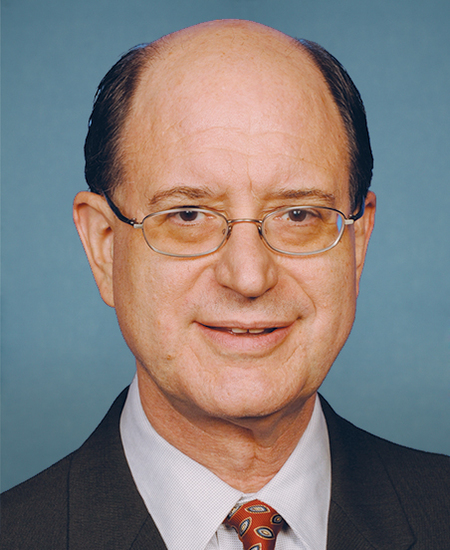
Rep. Brad Sherman
Sponsored bills
This resolution recognizes the need for education, research, and medical interventions to address infertility and disparities associated with that disease.
Fighting Emerging Narcotics Through Additional Nations to Yield Lasting Results Act or the FENTANYL Results Act This bill creates two programs, establishes a reporting requirement, and otherwise modifies provisions to facilitate global cooperation against synthetic drug trafficking. Specifically, the bill requires the Department of State to establish a program to provide capacity-building assistance for law enforcement agencies of specified countries to identify, track, and detect certain synthetic drugs (e.g., fentanyl). The State Department must also carry out an international exchange program for drug demand reduction experts to provide educational and professional development on demand-reduction matters relating to the illicit use of narcotics and other drugs. The bill requires the State Department to include new sections in its annual international narcotics control strategy report that contain (1) an assessment of the countries likely involved in the trafficking of synthetic opioids; and (2) policies of responding to new psychoactive substances. The bill also expands the definition of major illicit drug producing country to include countries that produce synthetic drugs. Under current law, foreign assistance may be withheld from such countries.
Global Electoral Exchange Act of 2021 This bill authorizes the Department of State to establish a Global Electoral Exchange Program to promote sound election-administration practices around the world. The State Department may award grants to qualified, tax-exempt, U.S.-based organizations that have expertise and experience in relevant topics, such as election-system integrity. Grants may be used to design programs to bring relevant individuals, such as election administrators and poll workers, together to study and discuss election procedures. The State Department shall periodically report to Congress on the program's activities.
Countering Russian and Other Overseas Kleptocracy Act or the CROOK Act This bill requires various actions designed to combat public corruption in foreign countries. The bill establishes within the Department of the Treasury the Anti-Corruption Action Fund to help foreign states fight public corruption and develop rule-of-law-based governance structures. For certain fines and penalties imposed under the Foreign Corrupt Practices Act, an additional fine shall be imposed and deposited into the fund. The Department of State must (1) manage U.S. government efforts to fight foreign public corruption, and (2) establish an interagency task force to assist in coordinating such efforts. Each U.S. embassy must have a point of contact responsible for coordinating the embassy's anti-corruption efforts. The State Department must report to Congress on its anti-corruption activities and make various reports publicly available online.
This resolution states that the August 9, 2020, election in Belarus was neither free nor fair and, as such, the House of Representatives does not recognize Alyaksandr Lukashenka as the country's legitimate president. The resolution also states that the people of Belarus have the right to determine the country's future without unwelcome intervention from outside actors and condemns the human rights violations committed by Belarusian authorities.
Access to Contraception for Servicemembers and Dependents Act of 2021 This bill addresses Department of Defense (DOD) contraceptive care and family planning services. Specifically, the bill prohibits cost-sharing with respect to TRICARE beneficiaries for specified prescription contraceptives. Additionally, the bill prohibits cost-sharing for TRICARE Select and TRICARE Prime beneficiaries in relation to any in-network method of contraception or contraceptive care (including with respect to insertion, removal, and follow-up), any sterilization procedure, or any related patient education or counseling service. The bill requires DOD to provide information on all methods of emergency contraception and care to sexual assault survivors at its medical treatment facilities. Upon request by a sexual assault survivor, DOD must provide such emergency contraception or a prescription for emergency contraception. Finally, DOD must establish a uniform standard curriculum for education programs on family planning for all members of the Armed Forces. Such education programs must be provided to service members during their first year of service and at other appropriate times, as determined by each military department.
Civilian Climate Corps for Jobs and Justice Act This bill establishes a Civilian Climate Corps Program and generally revises benefits provided to national service program participants. The bill establishes a Civilian Climate Corps to operate (1) a national climate service program; and (2) a national climate service grant program to help communities respond to climate change and transition to a clean economy, including through reducing carbon emissions. The bill also provides for allowances for participants in certain national service programs, including the Volunteers in Service to America (VISTA) program and the National Civilian Community Corps. The bill expands the exclusion from gross income, for income tax purposes, to exclude amounts received as educational awards or benefits and income attributable to discharges of student loan debt under the National and Community Service Act of 1990.
Secure and Fair Enforcement Banking Act of 2021 or the SAFE Banking Act of 2021 This bill generally prohibits a federal banking regulator from penalizing a depository institution for providing banking services to a legitimate cannabis-related business. Prohibited penalties include terminating or limiting the deposit insurance or share insurance of a depository institution solely because the institution provides financial services to a legitimate cannabis-related business and prohibiting or otherwise discouraging a depository institution from offering financial services to such a business. Additionally, proceeds from a transaction involving activities of a legitimate cannabis-related business are not considered proceeds from unlawful activity. Proceeds from unlawful activity are subject to anti-money laundering laws. Furthermore, a depository institution is not, under federal law, liable or subject to asset forfeiture for providing a loan or other financial services to a legitimate cannabis-related business. The bill also provides that a federal banking agency may not request or order a depository institution to terminate a customer account unless (1) the agency has a valid reason for doing so, and (2) that reason is not based solely on reputation risk. Valid reasons for terminating an account include threats to national security and involvement in terrorist financing, including state sponsorship of terrorism. Finally, the bill decreases the cap on the surplus funds of the Federal Reserve banks. (Amounts exceeding this cap are deposited in the general fund of the Treasury.)
Southeast Asia Strategy Act This bill directs the Department of State to submit to Congress a strategy for engagement with Southeast Asia and the Association of Southeast Asian Nations (ASEAN). The strategy shall include various elements including (1) an identification of enduring U.S. interests in the region and efforts to bolster ASEAN's effectiveness; (2) a list of ongoing and planned initiatives to strengthen U.S. relationships in the region, including efforts to promote inclusive economic growth and energy innovation; and (3) a summary of ongoing efforts to promote human rights and democracy and strengthen the rule of law.