

Maddy summaryThe Wild Horse and Burro Protection Act of 2025 requires the Bureau of Land Management (BLM) to eliminate helicopter and fixed-wing aircraft use in rounding up wild horses and burros over a two-year phase-out period. It mandates that any remaining aircraft used for these operations must have cameras recording the process, with footage made public in BLM reports. The bill addresses findings that helicopter roundups cost taxpayers over $69.5 million since 2012 and that the BLM spends less than 1% of its budget on fertility controls - a more humane, cost-effective alternative. The legislation also directs the Government Accountability Office to report on humane alternatives, job opportunities, and aircraft impacts on horse populations within one year of enactment.
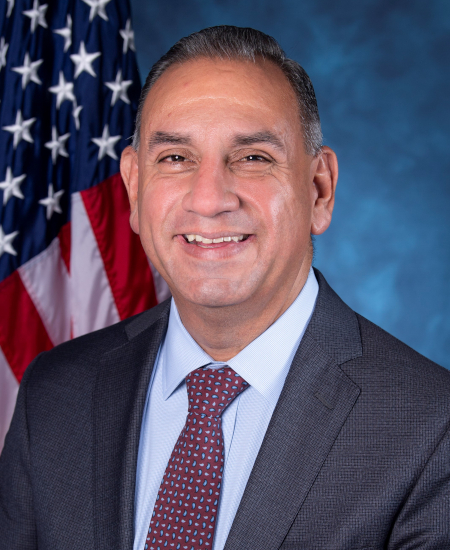
Rep. Gilbert Ray Cisneros, Jr.
Sponsored bills
Maddy summaryThe Expanding Access to Mental Health Services in Schools Act of 2025 creates a federal grant program to help high-need schools hire and retain mental health professionals like counselors, psychologists, and social workers. It targets schools in the top 15% of need (based on student poverty or counts) that lack required staff ratios, such as one counselor per 250 students. Grants fund recruitment incentives (e.g., student loan repayment), retention programs, and evidence-based mental health services, with recipients required to contribute 25% of costs from non-federal funds. Schools must report annually on staff numbers, student-to-staff ratios, and retention rates to track progress toward improved mental health access.
Maddy summaryHRES 550 is a non-binding House resolution recognizing June 2025 as LGBTQIA+ Pride Month. It formally encourages all U.S. citizens to celebrate Pride Month to learn about LGBTQIA+ history, including the Stonewall Inn and Compton's Cafeteria uprisings. The resolution affirms that LGBTQIA+ rights are human rights and emphasizes the ongoing struggle for equality. It has no legal effect but serves as a symbolic statement of support for the LGBTQIA+ community and its history.
Maddy summaryHRES 543 is a symbolic House resolution (not a law) introduced by multiple representatives. It affirms the constitutional right to peaceful protest under the First Amendment and condemns violent acts by some individuals during demonstrations, such as vandalism and looting. The resolution specifically criticizes the President’s 2025 deployment of National Guard and Marines to Los Angeles without proper legal authority (violating 10 U.S.C. § 12406 and the Posse Comitatus Act) and without coordination with California’s governor. It also denounces inflammatory rhetoric that escalated tensions and supports law enforcement efforts to protect public safety during protests. The resolution has no binding effect but formally expresses congressional position on these issues.
Maddy summaryThe GLOBE Act of 2025 aims to advance global LGBTQI human rights by requiring the U.S. State Department to document and report on violence and discrimination against LGBTQI people worldwide. It establishes a permanent Special Envoy for LGBTQI rights at the State Department and creates an interagency group to coordinate U.S. government responses to threats against LGBTQI populations. The bill authorizes sanctions against foreign individuals responsible for human rights violations against LGBTQI people, including banning them from entering the United States. It also includes provisions to improve U.S. foreign assistance programs to better protect LGBTQI rights and makes changes to immigration policy to better protect LGBTQI asylum seekers.
Maddy summaryThe CONNECT for Health Act of 2025 expands Medicare telehealth coverage by removing geographic restrictions that limited where patients could receive care, expanding the types of health care providers who can offer telehealth services, and eliminating the requirement for an in-person visit before receiving telemental health services. The bill includes specific provisions to support telehealth use for Native American health facilities, rural health clinics, and Federally Qualified Health Centers. It requires the Centers for Medicare & Medicaid Services to collect and publish data on telehealth usage and impacts, and to develop resources to improve accessibility for people with disabilities and limited English proficiency. Program integrity measures are added to monitor telehealth billing practices and prevent fraud while maintaining coverage for telehealth services during public health emergencies.
Maddy summaryThe Women's Health Protection Act of 2025 would protect access to abortion services across the United States by prohibiting states from imposing restrictions that are more burdensome than those on comparable medical procedures. The bill directly affects people seeking abortion care and health care providers by banning restrictions such as mandatory in-person visits, requirements for specific tests, limitations on telemedicine, and rules based on a patient's reason for seeking abortion. It prohibits state laws that single out abortion for unnecessary restrictions while allowing post-viability abortions when necessary to protect a patient's life or health. The bill preempts conflicting state laws and provides enforcement mechanisms through private lawsuits and actions by the Attorney General.
Maddy summaryThis bill prohibits state officials from blocking abortion access for patients traveling from other states, including restricting providers who offer legal abortions in their state to out-of-state patients. It protects people traveling across state lines for legal abortions, those assisting such travel, and the interstate transport of FDA-approved abortion medication. Violations can be challenged by the Justice Department or affected individuals through civil lawsuits seeking injunctions and damages. The law applies broadly across all states, territories, and tribal nations, defining "abortion service" to include both medical procedures and related care.
Maddy summaryThe Caring for Survivors Act of 2025 increases monthly dependency and indemnity compensation for surviving spouses of veterans. It changes the calculation method from a fixed $1,154 to 55% of a specific veteran compensation rate, effective six months after enactment. The bill also reduces the required continuous disability rating period for survivors from 10 years to 5 years, and provides a proportional payment for cases where the rating period is shorter than 10 years. Surviving spouses of veterans who died before January 1, 1993, receive the greater of their current benefit or the new calculation. This directly affects surviving spouses eligible for benefits under Title 38, U.S. Code, particularly those with veterans who died prior to 1993.
Maddy summaryHRES 533 is a non-binding House resolution calling on the President to lift the indefinite suspension of U.S. refugee admissions, which has left over 100,000 refugees stranded in limbo since January 2025. It specifically references Executive Order 14163 (2025) that halted refugee arrivals, citing the plight of refugees conditionally approved for resettlement, including Afghans, Rohingya, and Sudanese. The resolution reaffirms U.S. commitments under the Refugee Act of 1980 and international obligations, urging restoration of the U.S. Refugee Admissions Program to protect vulnerable refugees. It also calls for increased international cooperation, support for frontline host countries, and meeting global refugee protection pledges. The resolution does not create new law but expresses congressional intent to address the refugee crisis.