

Maddy summaryThe GAP for Military Service Act (HR 6381) requires the Government Accountability Office (GAO) to study the feasibility of a one-year active duty military service program. The GAO must examine suitable military roles, training needs, international program examples, service details, costs, and implementation barriers, then report to Congress within one year. This bill does not create a new program but provides Congress with data to evaluate potential future military recruitment options. It directly affects congressional decision-making on military service policies, not individual service members or the public.
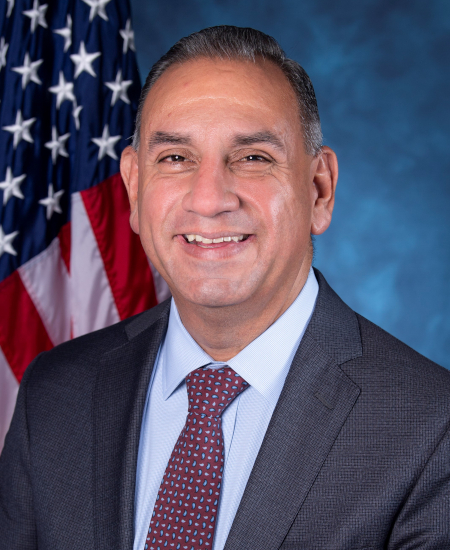
Rep. Gilbert Ray Cisneros, Jr.
Sponsored bills
Maddy summaryHR 6384, the Defense Health Agency Prevention Services Enhancement Act, requires the Secretary of Defense to provide a briefing to the House Armed Services Committee within 180 days of enactment. This briefing must assess the feasibility, cost, and current efforts related to consolidating military prevention services - such as sexual assault, suicide, harassment, and domestic violence prevention - into single facilities at each U.S. military installation. The bill does not change existing services but mandates a study to evaluate potential consolidation. It directly affects military installations and the prevention programs serving service members and their dependents.
Maddy summaryHR 6391, the Save Oak Flat from Foreign Mining Act, repeals Section 3003 of the 2014 National Defense Authorization Act that would have transferred Oak Flat (2,422 acres in Arizona’s Tonto National Forest) to Resolution Copper for mining. The bill withdraws Oak Flat from all public land use, preventing the foreign-owned mining venture (Rio Tinto/BHP) from extracting copper beneath the site for export to China. It directly protects the area, which is a sacred site for Indigenous peoples and a National Register Historic Property, from a mine projected to consume 250 billion gallons of groundwater over 40 years and cause significant land subsidence. The bill halts a process that would have allowed foreign corporations to mine copper from public land without requiring domestic smelting or benefiting U.S. consumers.
Maddy summaryThis bill requires military departments to report to Congress on promotion opportunities for enlisted members in six critical specialties: air traffic controllers, engineers, intelligence analysts, cyber specialists, linguists, and public affairs officers. Within 180 days of enactment, the military must provide detailed data including direct enlistment options, bonus availability, promotion rates, average time in grade, and challenges faced by members in these roles. The report must cover the three most recent promotion cycles, broken down by rank level (E-6 to E-9), and include analysis of advancement barriers. This transparency measure directly affects enlisted service members in these specific military occupations seeking career advancement. The bill mandates factual reporting but does not change existing promotion policies or requirements.
Maddy summaryHRES 856 is a non-binding resolution expressing the House of Representatives' view that the U.S. Department of Agriculture (USDA) should use its existing contingency funds and interchange authority to fund the Supplemental Nutrition Assistance Program (SNAP) for November 2025. The resolution cites that the USDA holds over $5 billion in contingency funds set aside for emergencies and has legal authority under the Department of Agriculture Organic Act to transfer funds between nutrition programs to maintain SNAP benefits. This would directly support approximately 42 million people relying on SNAP, including 16 million children, 8 million seniors, 4 million people with disabilities, and 1.2 million veterans, preventing disruption during a potential funding gap. The resolution does not create new law but urges the administration to use existing resources to ensure continued food assistance.
Maddy summaryThis bill grants posthumous U.S. citizenship to noncitizens who served honorably in the U.S. military during World War II while enlisted in the Philippines and died between September 1, 1939, and December 31, 1946. It amends the Immigration and Nationality Act to include these veterans under specific eligibility criteria: they must have died from service-related injuries or diseases, and met enlistment requirements during that historical period. The bill removes barriers by clarifying that the standard naturalization requirements (section 319(d)) and related provisions (section 1703 of the 2004 Defense Act) do not apply to this group. This allows descendants to petition for citizenship on behalf of qualifying deceased service members through a certification from the relevant military department.
Maddy summaryHR 6354, the "Cut the Burden, Keep the Benefits Act," establishes a hotline operated by the Small Business Administration's Chief Counsel for small businesses, small organizations, and small governmental jurisdictions to report government actions (like rules or regulations) causing significant economic burdens. The hotline collects submissions via email, website, or phone, with the Chief Counsel required to analyze frequent complaints and regulatory impacts. Annual reports to Congress must detail affected industries, quantify regulatory costs (including paperwork burdens), and recommend ways to minimize impacts on small entities. The bill directly affects small businesses (defined as under 500 employees) by creating a formal channel to flag regulatory challenges, not by immediately changing regulations.
Maddy summaryHR 4491, the SBA IT Modernization Reporting Act, requires the Small Business Administration (SBA) to implement specific recommendations from a 2024 GAO report about risks in its newly deployed IT systems. The bill mandates that SBA’s Administrator submit, within 180 days of enactment, a detailed implementation plan to Congress outlining how the agency will manage risks for all IT modernization projects. This plan must include 11 specific requirements, such as documenting risk sources, using GAO’s established guidelines for scheduling (GAO-16-89G) and cost estimation (GAO-20-195G), and involving cybersecurity experts in contractor selection. The SBA must also provide a briefing to congressional committees 30 days after submitting the plan.
Give Kids a Chance Act of 2025 This bill expands the Food and Drug Administration’s (FDA’s) authority with respect to research on rare pediatric diseases, including by permitting the FDA to take enforcement action against drug sponsors that fail to satisfy pediatric study requirements and by reauthorizing programs that support pediatric research. Specifically, the bill modifies requirements relating to molecularly targeted pediatric cancer investigations to permit research on new drugs in combination with active ingredients that have already been approved, provided certain conditions are met; permits the FDA to take enforcement action against drug sponsors that fail to comply with pediatric study requirements, if such sponsors demonstrated a lack of due diligence in satisfying the requirement; renews the FDA’s authority to award priority review vouchers to sponsors of new products intended to treat rare pediatric diseases through September 30, 2029; and reauthorizes through FY2027 certain funding for the National Institutes of Health to support priority pediatric research. The bill also provides statutory authority for the FDA’s interpretation of the orphan drug exclusivity period. The bill specifies, consistent with FDA regulations, that the seven-year market exclusivity period for drugs for rare diseases or conditions (i.e., orphan drugs) prohibits the approval of the same drug for the same approved use or indication with respect to the disease or condition. (In Catalyst Pharmaceuticals, Inc. v. Becerra , a court rejected the FDA’s interpretation and held that orphan drug exclusivity extends to all uses or indications for the disease or condition.)
Maddy summaryThis bill prohibits federal funding for White House construction or renovations during any government shutdown (funding gap), except for projects directly related to health or safety. It directly affects White House maintenance and development projects by blocking non-essential work when Congress fails to pass a budget. The key provision bans all non-essential spending on White House grounds during budget lapses, with explicit health/safety exceptions. The bill aims to prevent new projects from starting during shutdowns without altering existing contracts or ongoing work.