

Maddy summaryThe AI-WISE Act requires the Small Business Administration (SBA) to create and maintain free, publicly available online educational resources about artificial intelligence specifically for small business owners. These resources must cover practical topics like understanding AI limitations, identifying AI-generated outputs, managing risks, protecting user privacy, and determining when AI tools are suitable for business use - without favoring any specific AI product or company. The SBA must develop these materials within 180 days of the bill’s enactment, consulting with an Advisory Working Group of AI experts and small business outreach professionals. This initiative directly affects small business owners by providing accessible, neutral guidance to help them navigate AI adoption safely and effectively.
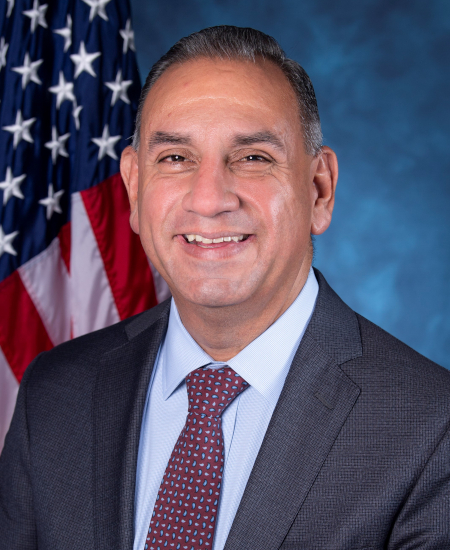
Rep. Gilbert Ray Cisneros, Jr.
Sponsored bills
Maddy summaryThis bill requires the Small Business Administration (SBA) to annually analyze risks across all loans guaranteed under its 504 program, which provides long-term financing for small business real estate and equipment purchases. The SBA must submit detailed reports to Congress by December 1 each year, including risk analyses by industry, loan size, borrower type (e.g., new businesses), loan age, and default management. Reports must also include public data on development companies handling loans, loan defaults, and enforcement actions. The bill directly affects the SBA’s oversight of the 504 program and the development companies administering these loans.
Maddy summaryHR 5764, the "AI for Main Street Act," amends the Small Business Act to require the Small Business Administration (SBA) to provide guidance and training to small business concerns on using artificial intelligence. It directly affects small businesses by adding new SBA responsibilities to help them evaluate AI for operations, including best practices, cybersecurity, data protection, regulatory compliance, and customer trust. Key provisions mandate the SBA to offer information, training, and outreach on incorporating AI into business processes, such as planning for unexpected circumstances. The bill does not authorize new funding for these activities. It defines "artificial intelligence" using the existing term from the National AI Initiative Act.
Maddy summaryThe Main Street Parity Act (HR 5763) adjusts eligibility rules for small businesses seeking SBA loans to acquire, build, convert, or expand facilities. It modifies Section 502(3)(C) of the Small Business Investment Act by removing two specific criteria and reorganizing the remaining requirements. This change directly affects small businesses applying for these particular SBA loans, simplifying the application process by eliminating outdated or redundant conditions. The bill makes technical adjustments to the loan criteria without creating new programs or altering funding levels.
Maddy summaryThe Northern Mariana Islands Small Business Access Act expands eligibility for the federal microloan program to include the Commonwealth of the Northern Mariana Islands (CNMI), which was previously excluded. This change, made by amending the Small Business Act, allows small businesses in the CNMI to access low-interest loans through the same program currently available to businesses in Guam. The bill updates two sections of the law to insert "the Commonwealth of the Northern Mariana Islands" after "Guam" in eligibility requirements. As a result, CNMI small business owners will gain access to federal funding to support startup costs, equipment purchases, or business expansion.
Maddy summaryHCONRES 68 would require the President to remove U.S. military forces from Venezuela unless Congress has explicitly authorized their use through a declaration of war or a specific law. This applies to any U.S. Armed Forces currently stationed in Venezuela without such authorization. The resolution is based on the War Powers Resolution, which mandates congressional oversight of military deployments. It directs the immediate withdrawal of unapproved forces without adding new time limits or conditions.
Maddy summaryThe MOLD Act (HR 7188) establishes uniform health and safety standards for military housing managed by private contractors, directly affecting approximately 700,000 service members and their families living in privatized housing across 78 developments. It requires the Defense Secretary to set enforceable limits on indoor humidity (below 50%), mandate third-party inspections after tenant complaints or unit turnover, and hold contractors fully responsible for mold remediation, relocation costs, and property damage. The bill also mandates public reporting of complaints, inspection results, and remediation timelines, and requires contractors to use certified professionals for mold assessments. These provisions aim to reduce mold-related health risks and improve accountability in privatized military housing.
Maddy summaryThis bill amends the Department of Defense's Transition Assistance Program (TAP) and the Department of Veterans Affairs' Solid Start Program to enhance mental health support during military-to-civilian transitions. It requires TAP to provide specific information on suicide risk factors (including depression, homelessness, and relationship strain), treatment options for conditions like PTSD and substance abuse, and the impact of losing social support systems. The Solid Start Program must now assist veterans in enrolling in VA healthcare and educate them about available mental health resources. The Secretaries of Defense and Veterans Affairs must jointly report to Congress within one year on the materials developed under these changes.
Maddy summaryHR 7163, the PUBLIC SAFETY Act, increases federal funding for local law enforcement by amending two key programs. It extends the deadline for COPS Hiring Program grants to September 30, 2030, and waives certain requirements for smaller jurisdictions (under 175 officers) and tribal governments to access funds. The bill appropriates $45 billion for fiscal year 2025 for the Byrne Justice Assistance Grant (JAG) Program, available until September 30, 2029. These changes directly affect local police departments, counties, municipalities, and tribal governments seeking federal funding to hire officers and support public safety initiatives. The core policy change is expanding access to funding for smaller agencies while significantly increasing overall grant availability.
Maddy summaryHR 7154, the Streamlining Small Business Contracts Act of 2026, raises the maximum dollar limit for certain sole-source contracts awarded to small businesses under the Small Business Act. The bill amends four specific sections (8(a)(1)(D)(i)(II), 8(m)(7)(B), 8(m)(8)(B), 31(c)(2)(A)(ii), and 36(c)(2)) to increase the threshold from $7 million to $10 million for these contracts. This change directly affects small business concerns that qualify for the specified contracting authorities, allowing them to secure larger contracts without competitive bidding. The key mechanism is simply adjusting the dollar limit in the relevant provisions of the Small Business Act.