Maddy summaryHR 5220, the Congressional Power of the Purse Act, strengthens Congress's authority over federal spending by preventing the executive branch from withholding appropriated funds. The bill requires federal agencies to report on budget management, adds penalties for failing to comply with congressional oversight requirements, and establishes new procedures for congressional review of national emergencies. It directly affects federal agencies, the executive branch, and the balance of power between Congress and the President regarding budget authority. The law aims to increase transparency and accountability in how government funds are managed and spent.
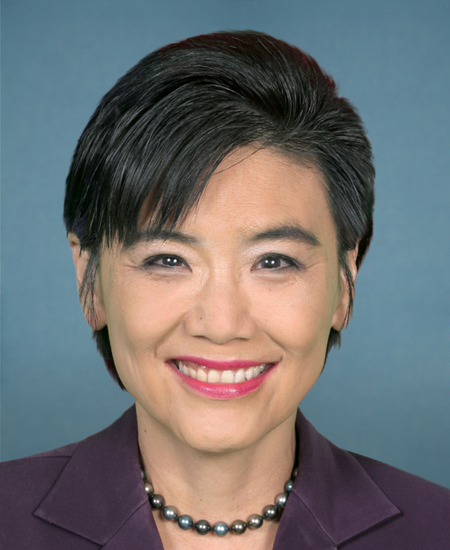
Rep. Judy Chu
Sponsored bills
Maddy summaryThis bill modifies the Family and Medical Leave Act (FMLA) to extend eligibility to school support staff, including paraprofessionals, cafeteria workers, bus drivers, and clerical staff. It allows these employees to qualify for FMLA leave if they work 60% of their expected monthly hours (instead of the standard 1,250 hours), based on their school’s assigned schedule. Employers must maintain records of expected hours for each staff member. The change directly benefits part-time and seasonal education support staff who previously faced barriers to FMLA coverage.
Maddy summaryThis resolution (HRES 680) recognizes suicide as a serious public health issue and designates September 8, 2025, as "988 Day" to highlight the national three-digit crisis hotline (988 Suicide and Crisis Lifeline). It does not create new laws or funding but formally supports existing efforts to raise awareness about the 988 hotline, which connects people in mental health crisis to 24/7 support services. The resolution emphasizes the hotline's role in suicide prevention, citing data showing it handled nearly 18 million contacts since 2022 and was reported as helpful by 98% of users. It urges continued public education about the hotline, particularly for high-risk groups like LGBTQI+ youth, and encourages broader access to mental health services.
Maddy summaryThis bill extends preferential U.S. trade benefits for Haitian exports until 2037 (previously ending in 2025) under the Caribbean Basin Economic Recovery Act. It requires Haitian producers to comply with core labor standards and Haitian labor laws related to minimum wages, working hours, and safe conditions to maintain these benefits. The bill also creates a new technical assistance program where the U.S. Trade Representative will work with Haitian government agencies, businesses, labor groups, and trade support institutions to boost exports - focusing on agricultural processing, apparel sector competitiveness, and export strategy development. These changes directly affect Haitian exporters seeking U.S. trade preferences and U.S. agencies administering trade programs.
Maddy summaryThe Empowering Striking Workers Act of 2025 would expand unemployment insurance eligibility to workers unable to work due to labor disputes, including strikes or lockouts. It sets a 14-day waiting period (or earlier if replacements are hired, a lockout starts, or the dispute ends) before benefits begin, treating these workers as "unemployed" under federal law. The bill also removes the standard requirement for these workers to actively seek other employment to qualify for benefits. This directly affects workers involved in labor disputes, such as those on strike or unable to work due to employer lockouts.
Maddy summaryThis resolution (HRES 677) is a formal statement by the House of Representatives affirming the Federal Reserve's independence from political influence. It specifically supports Chairman Jerome Powell and the Board of Governors in making monetary policy decisions based on economic data, not political pressure. The resolution urges the President and executive branch to respect the Fed's statutory independence and avoid actions or rhetoric that could undermine its credibility. It emphasizes that maintaining this independence is critical for economic stability, price control, and global confidence in U.S. financial markets.
Maddy summaryThe Quiet Communities Act of 2025 reestablishes the Environmental Protection Agency’s Office of Noise Abatement and Control, which was defunded in 1982. This office will provide grants to states for local noise control programs, conduct national research on noise health impacts, develop public education materials, and create regional technical assistance centers. The bill authorizes $25 million annually (2026-2030) to fund these activities, directly supporting communities affected by noise pollution - particularly the estimated 28 million U.S. residents with hearing impairments linked to noise exposure. It emphasizes state/local solutions, market incentives, and coordination with other agencies to address noise from aircraft, traffic, and other sources.
Maddy summaryHR 5110, the Federal Disaster Housing Stability Act of 2025, prevents landlords and mortgage servicers from taking certain actions against tenants and homeowners during declared disasters. It prohibits evictions and late fees for renters in covered dwellings (most residential rentals) for 120 days after a disaster declaration, and blocks foreclosure proceedings for covered mortgage loans (standard home loans on 1-4 unit properties) for six months. The law applies to disasters declared under federal, state, or tribal emergency authorities, ensuring renters cannot be forced out for nonpayment and homeowners cannot face foreclosure sales during this period. It directly affects tenants in rental housing and homeowners with qualifying mortgages in disaster areas.
Maddy summaryHR 5073, the INFORM Act of 2025, requires immigration authorities to notify the immediate family of a detained individual within 24 hours if they are transferred to a different detention facility. This applies directly to immigrants held under U.S. immigration law and their immediate family members, defined as parents, children, spouses, and certain extended family like step-relatives or domestic partners. The law mandates that notifications include the reason for the transfer and full contact details (name, address, phone number, and point of contact) for the new facility. It establishes a specific timeline and content requirement for these notifications to improve transparency during detention transfers. The bill focuses on procedural changes for facility transfers, not on altering detention policies or immigration eligibility.
Maddy summary# Summary of Proposed FEMA Reform Legislation (FEMA Act of 2025) This comprehensive legislative document proposes significant reforms to the Robert T. Stafford Disaster Relief and Emergency Assistance Act, with four main sections addressing: ## 1. Disaster Assistance Reforms - **Expanded eligibility** for assistance, including clarifying that absence of a fixed address doesn't disqualify individuals from sheltering assistance - **Improved rental assistance** with consideration of local post-disaster rent increases - **Direct assistance** for those unable to use financial assistance, with no requirement to show other assistance can cover costs (except insurance) - **Enhanced notices** for applicants, including documentation of denial decisions - **Clarification of displacement assistance** eligibility, stating insurance shouldn't be considered a duplication of benefits ## 2. Mitigation Program Enhancements - **Preapproved project mitigation plans** requiring states to develop plans with peer review processes - **Improved allocation of funds** with formulas prioritizing vulnerable communities, high-risk areas, and rural/economically distressed communities - **Resilient buildings** requirements for housing retrofits using the latest building codes - **Streamlined application processes** for hazard mitigation funds across multiple programs - **Study on mitigation benefits** to evaluate cost savings and effectiveness ## 3. Transparency and Accountability Measures - **Public dashboards** for both individual assistance (431) and public assistance (432) showing application status, approvals, denials, and funding - **Transparency requirements** for disaster declarations with detailed justifications for approvals/denials - **GAO studies** on numerous topics including: - Identity theft in disaster assistance (409) - Insurance utilization for public assistance facilities (410) - Wildfire management plans (411) - Effectiveness of alerting systems (412) - Cost savings of repair/rebuilding reforms (415) - **Prohibition on political discrimination** in assistance distribution ## 4. Workforce and Operational Improvements - **Study on workforce retention** in noncontiguous communities - **Pilot program** for preliminary damage assessments in remote communities - **Fast-moving disasters working group** to develop best practices for rapid response The legislation focuses on improving efficiency, transparency, and effectiveness of disaster relief programs while prioritizing vulnerable populations and communities with higher risk of disasters. It also emphasizes data-driven decision making through required studies and reports to continuously improve disaster management policies.