

Maddy summaryThe Fair Competition for Small Business Act of 2025 amends the Clayton Act to allow legal claims for violations of the Sherman Antitrust Act or for violations of the bill's own section (section 2). This technical change would directly affect small businesses and other entities involved in antitrust litigation by expanding the grounds for lawsuits under the Clayton Act. The key mechanism is a modification to the Clayton Act that references the bill's provisions, creating a new basis for claims. The bill does not specify additional substantive rules beyond this amendment.
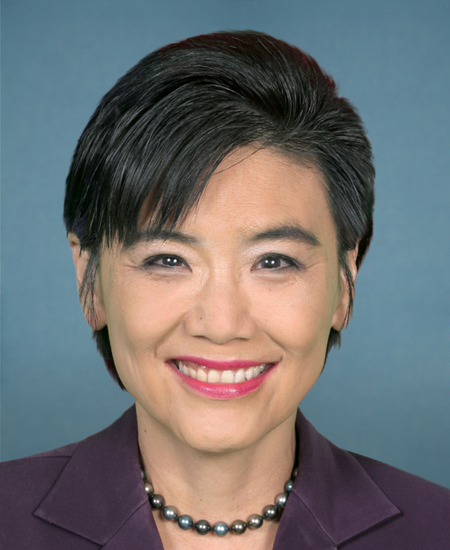
Rep. Judy Chu
Sponsored bills
Essential Caregivers Act of 2025 This bill prohibits certain health care facilities from limiting the access of essential caregivers to residents of those facilities, including during designated emergency periods. Specifically, the bill generally prohibits Medicare skilled nursing facilities, Medicaid nursing facilities, Medicaid intermediate care facilities, and associated inpatient rehabilitation facilities from restricting the access of essential caregivers to residents of the facilities, including during emergency periods in which visitation rights are otherwise restricted. During emergency periods, facilities may restrict access for an initial period of up to seven days and for one additional maximum seven-day period (if the additional period is approved by the state health department). Facilities may restrict access for a total of 7 days (or 14 days with the approval of the state health department) during an emergency period. Essential caregivers must agree to comply with any safety protocols set by the facility, which may be no more stringent for caregivers compared to those for staff. Caregivers who fail to comply with these requirements may be denied access, subject to an appeals process.
Maddy summaryThis bill amends a section of federal law to change the reference from "the White House" to "the People's White House" in a specific legal citation (Section 307104 of Title 54, U.S. Code). It is a purely procedural change to the text of the law, not a substantive policy shift. The bill does not alter historic preservation standards, protections, or funding for the White House grounds. It simply updates the formal name used within the legal code.
Maddy summaryHR 6731, the "Restore Trust in Government Act," requires Members of Congress, the President/Vice President, and their spouses or dependent children to divest certain financial investments during federal service. It defines "covered investments" broadly (including stocks, commodities, and derivatives) but excludes Treasury bonds, municipal bonds, family farm interests, and some Alaska Native Settlement stock. Covered individuals must sell holdings within 90-180 days of taking office or enacting the law, with limited exceptions for qualified blind trusts or spouses’ occupational trading. Violations incur a 10% fee on the investment value and require returning profits, paid to the Treasury. Ethics offices enforce these rules, publish penalty details, and issue divestiture certificates.
Maddy summaryHR 6735, the Connecting Caregivers to Medicare Act of 2025, requires Medicare to improve access to beneficiary health information for family caregivers. It mandates the Secretary to provide outreach and education about authorizing caregivers to access personal health data through 1-800-MEDICARE, using a standardized CMS-10106 authorization form. The bill requires clear, multilingual information to be included in Medicare notices, on Medicare.gov, and in Medicare Advantage plan communications, along with training for call center staff. It also directs the development of best practices to prevent fraud related to caregiver access and requires feedback opportunities for caregivers. This affects Medicare beneficiaries (Part A/B enrollees), their family caregivers, and Medicare providers.
Maddy summaryThe EFFECTIVE Food Procurement Act would require the U.S. Department of Agriculture to change how it buys food for programs like school meals and food banks. The bill directs USDA to prioritize purchasing foods that support beginning farmers, socially disadvantaged producers, and environmentally sustainable practices, while emphasizing worker well-being and climate-friendly food production. USDA would need to report annually on how much it spends on these priority food categories and track greenhouse gas emissions from its food purchases. The bill also creates a pilot program for "best value" procurement that considers more than just cost, and provides grants to help small and minority farmers meet USDA vendor requirements. These changes aim to make USDA's $20 billion+ annual food procurement more equitable and environmentally sustainable.
Maddy summaryThe Protect America's Workforce Act cancels an executive order issued on March 27, 2025, that excluded certain groups from federal labor-management relations programs, making it legally unenforceable. It also ensures that all collective bargaining agreements between federal agencies and labor unions, which were active as of March 26, 2025, remain fully effective until their agreed terms expire. This directly affects federal agencies, labor unions, and the employees covered by these agreements. The bill prevents federal funds from being used to implement the canceled executive order while preserving existing labor agreements.
Maddy summaryHRES 948 is a commemorative resolution honoring the 50th anniversary of Southeast Asian refugee resettlement in the United States, directly affecting over 3 million Southeast Asian Americans. It recognizes their contributions to U.S. society, including military service during the Vietnam War era and ongoing cultural, economic, and social impacts. The resolution specifically commemorates key historical milestones (like the fall of Saigon and Khmer Rouge genocide) and acknowledges challenges these communities continue to face, such as health disparities and language barriers. It does not create new policies but affirms the nation's commitment to supporting refugees and immigrants. The resolution was introduced by Representatives Tran, Meng, Barragán, and others in December 2025.
Maddy summaryThe Empowering App-Based Workers Act requires digital labor platforms (like ride-hail and delivery services) to disclose how they use algorithms and electronic monitoring tools to determine worker pay and assignments. It caps the percentage of consumer payments that platforms can keep (take rate) at 25% for ride-hail services and mandates detailed weekly pay statements showing compensation, take rate, and other work metrics. The bill prohibits platforms from using algorithms to set different pay rates for similar work based on protected characteristics like race or gender. These provisions directly affect app-based workers, platform companies, and consumers, aiming to create more transparent and fair working conditions in the gig economy. The bill does not override existing state or local laws that provide greater protections for workers.
Maddy summaryThe Keeping All Students Safe Act prohibits the use of unlawful seclusion and restraint in schools receiving federal funding, including physical restraint that restricts breathing or blood flow, chemical restraint not prescribed for medical treatment, and mechanical restraint. The bill requires schools to use less restrictive interventions first, mandates that staff using physical restraint be trained and certified through State-approved programs, and requires immediate parent notification after any restraint incident. States must develop plans to monitor compliance, collect and report data on restraint incidents (disaggregated by race, disability status, and school type), and implement positive behavioral interventions. The bill provides $40 million annually for five years to support states in implementing these requirements and improving school climate through evidence-based approaches.