

HIV Epidemic Loan-Repayment Program Act of 2021 or the HELP Act of 2021 This bill directs the Health Resources and Services Administration (HRSA) to carry out a loan repayment program for certain health care providers who agree to provide HIV treatment or HIV dental care in (1) a designated health professional shortage area, (2) a clinical site that is funded under the Ryan White HIV/AIDS Program, or (3) an area that meets requirements specified by HRSA. For each qualifying year of service, HRSA pays one-fifth of the principal and interest on any eligible loan, with total loan repayment after five years; repayment is capped at $250,000 per borrower.
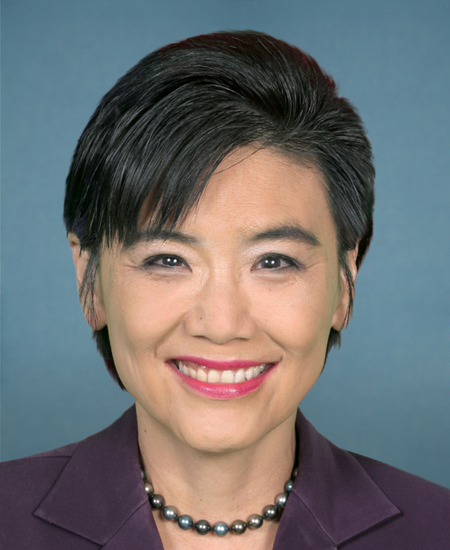
Rep. Judy Chu
Sponsored bills
Energy Innovation and Carbon Dividend Act of 2021 This bill imposes a fee on the carbon content of fuels, including crude oil, natural gas, coal, or any other product derived from those fuels that will be used so as to emit greenhouse gases into the atmosphere. The fee is imposed on the producers or importers of the fuels and is equal to the greenhouse gas content of the fuel multiplied by the carbon fee rate. The rate begins at $15 per metric ton of CO2-e in 2021, increases by $10 each year, and is subject to further adjustments based on the progress in meeting specified emissions reduction targets. The bill includes exemptions for fuels used for agricultural or nonemitting purposes, exemptions for fuels used by the Armed Forces, rebates for facilities that capture and sequester carbon dioxide, and border adjustment provisions that require certain fees or refunds for carbon-intensive products that are exported or imported. The fees must be deposited into a Carbon Dividend Trust Fund and used for administrative expenses and dividend payments to U.S. citizens or lawful residents. The fees must be decommissioned when emissions levels and monthly dividend payments fall below specified levels.
International Human Rights Defense Act of 2021 This bill establishes in the Department of State a permanent Special Envoy for the Human Rights of LGBTQI (lesbian, gay, bisexual, transgender, queer, or intersex) Peoples who shall serve as the principal State Department advisor regarding human rights for LGBTQI people and represent the United States in diplomatic matters relevant to the human rights of LGBTQI people. The special envoy shall periodically provide Congress with a U.S. global strategy to prevent and respond to criminalization, discrimination, and violence against LGBTQI people. The State Department and the U.S. Agency for International Development may provide assistance to prevent and respond to such activities against LGBTQI people. The bill also requires that annual country reports on human rights practices include information on criminalization, discrimination, and violence based on sexual orientation and gender identity.
This joint resolution nullifies the rule finalized by the Social Security Administration on November 16, 2020, that outlines when its administrative appeals judges may hold hearings and issue decisions on individual cases. Currently, these judges serve an appellate function where they review, at the request of Social Security claimants, the decisions of the administrative law judges who issue decisions in individual cases.
This resolution urges the Department of State to take action on unpaid Peruvian agrarian reform bonds by encouraging Peru to negotiate in good faith with U.S. bondholders regarding payment of these bonds.
This resolution recognizes the accomplishments and example of Cesar Estrada Chavez. The resolution also encourages the people of the United States to commemorate his legacy and to always remember his rallying cry, "Si, se puede!" (which means "Yes, we can!").
Public Servants Protection and Fairness Act of 2021 This bill establishes an alternative formula to calculate Social Security retirement benefits for those who receive pensions for certain non-covered employment. (The existing formula is known as the windfall elimination provision.) The alternative formula adjusts an individual's total lifetime earnings based on the proportion of covered earnings (i.e., earnings subject to Social Security payroll taxes). It applies to individuals who (1) first become eligible for benefits after 2022, (2) have earnings from non-covered service performed after 1977, and (3) have less than 30 years of coverage (i.e., years in which a beneficiary is considered to have contributed a substantial amount into the Social Security trust funds). Beneficiaries receive the higher benefit amount as calculated under the alternative method or the existing formula. In addition, the bill provides rebates for certain beneficiaries currently impacted by the existing formula. The Social Security Administration must include non-covered earnings in Social Security account statements, and the Government Accountability Office must study the availability of certain information related to retirement plans maintained by state and local governments.
Designates the facility of the United States Postal Service located at 401 Main Street in Brawley, California, as the "Helen Fabela Chavez Memorial Post Office Building."
Equitable Data Collection and Disclosure on COVID-19 Act of 2021 This bill expands data collection and reporting on demographic information and disparities related to COVID-19 (i.e., coronavirus disease 2019). During the COVID-19 emergency, the Centers for Disease Control and Prevention (CDC) and the Centers for Medicare & Medicaid Services must publish data on COVID-19 testing, treatment, vaccinations, and outcomes on the CDC website. They must update the data daily and disaggregate it by race, ethnicity, and other demographic factors. In addition, the Indian Health Service must consult with tribal nations about COVID-19 data collection and reporting. The Department of Health and Human Services must make a summary of final statistics related to COVID-19 publicly available and report specified information to Congress within 60 days of the end of the COVID-19 emergency. The bill also establishes the Commission on Ensuring Data for Health Equity. The commission must determine approaches to using data to reduce disparities in health outcomes, including specifically with respect to COVID-19. In addition, it must provide recommendations to improve demographic data collection and use in future public health emergencies.
Investing in Our Communities Act This bill reinstates the exclusion from gross income for interest on certain bonds issued to advance the refunding of a prior bond issue. The exclusion was repealed for bonds issued after 2017.