

Maddy summaryThis bill exempts H-1B visa holders working in healthcare from a presidential restriction that requires a $100,000 payment for entry into the United States. It directly affects foreign medical professionals and healthcare workers who hold H-1B nonimmigrant visas. The legislation removes the additional fee requirement for these workers while limiting any fees that may be charged to the standard amount already established under immigration law. The bill defines healthcare workers using the existing definition from the Affordable Care Act and was introduced in the 119th Congress in March 2026.
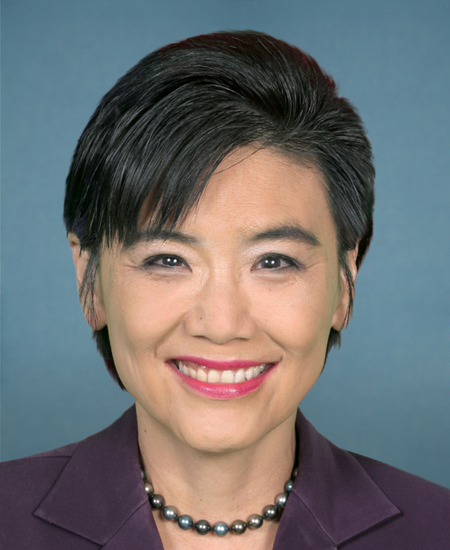
Rep. Judy Chu
Sponsored bills
Maddy summaryThis resolution commemorates the fifth anniversary of the March 16, 2021, Atlanta spa shootings that killed eight people and denounces ongoing anti-Asian hate and xenophobic rhetoric. It honors the victims, condemns the violence, and calls for improved hate crime reporting and support services for affected communities. The measure also urges efforts to combat online disinformation, promote education on Asian American history, and expand federal programs aimed at preventing hate crimes.
Maddy summaryHCONRES 78 is a symbolic resolution designating March 10, 2026, as "Abortion Provider Appreciation Day" to honor abortion providers and staff. It recognizes their work amid rising violence, clinic closures, and abortion restrictions following the Dobbs decision, citing threats and challenges faced by providers. The resolution expresses congressional support for providers' safety and access to abortion care, condemning policies that restrict access. It does not create new laws or alter existing policies - it solely affirms Congress’s stance through a symbolic gesture. This is a procedural resolution focused on recognition, not policy change.
Maddy summaryThis bill, known as the Fair Wages for Home Care Workers Act, would change federal labor rules to require overtime pay and minimum wage protections for certain babysitters. It specifically targets casual babysitting work that is irregular or intermittent, while excluding trained medical professionals like nurses and home health aides from these changes. The law would also allow babysitters to perform up to 20% of their work time on unrelated household tasks without losing their protected status. These amendments would apply to workers covered by the Fair Labor Standards Act of 1938 who provide custodial care for infants or children in private homes.
Maddy summaryThis bill reorganizes the Corporation for National and Community Service into a new executive department called the AmeriCorps Administration, which would oversee national service programs. It creates a seven-member Advisory Board with representatives from different age groups and political parties to advise on program policies and priorities. The legislation increases financial support for participants by raising living allowances and educational awards, while also establishing a new National Service Foundation to accept private donations for the programs. Additionally, the bill sets a goal of serving 1 million participants annually by 2036 and creates an outreach program to notify young people aged 17-30 about service opportunities.
This concurrent resolution directs the President to terminate the use of U.S. Armed Forces from hostilities against Iran or any part of the Iranian government or military unless a declaration of war or authorization to use military force for such purpose has been enacted. The resolution specifies that it shall not be construed to prevent the United States from defending itself from imminent attack.
Maddy summaryHR 7827 restricts the Department of Defense from purchasing or selling military-style assault weapons and certain high-capacity ammunition (like .223 Remington) in commercial markets. It imposes strict requirements on dealers selling firearms or ammunition, including mandatory NICS background checks, limits on high-volume sales, security measures (like surveillance systems), and electronic recordkeeping for transactions. Dealers must also meet crime trace limits (fewer than 24 crime guns traced annually) and implement training on recognizing straw purchases and preventing illegal sales. Government-owned weapons plants must annually report commercial sales data to Congress, including customer locations and revenue.
Maddy summaryThis bill, the Supplemental Security Income Restoration Act of 2026, updates eligibility rules and benefit amounts for the Supplemental Security Income (SSI) program, which provides financial assistance to low-income elderly, blind, and disabled individuals. Key changes include raising income and resource limits to help more people qualify, adjusting benefit calculations to better reflect poverty guidelines, and extending the program to U.S. territories like Puerto Rico and Guam. The legislation also removes certain financial penalties, excludes retirement accounts and tribal welfare payments from eligibility calculations, and clarifies how state tax credits are treated when determining income.
Maddy summaryHR 7856, the Fair Housing for Survivors Act of 2026, amends the Fair Housing Act to explicitly prohibit housing discrimination based on being a survivor of domestic violence, sexual assault, or severe trafficking in persons. It adds "survivor of domestic violence, sexual assault, or severe trafficking" as a protected class in the law, alongside existing categories like race or national origin. This means landlords, housing providers, and programs cannot deny housing, evict, or otherwise discriminate against individuals due to their status as a survivor. The bill directly affects survivors who face housing barriers, including those with protective orders, shelter histories, or past evictions linked to abuse.
Maddy summaryHR 3553, the BRUSH Fires Act, requires the U.S. Forest Service to conduct a study evaluating wildfire mitigation methods in shrubland ecosystems (like chaparral and sagebrush) to reduce fire risk and damage to nearby communities. The study will assess fuel management practices, invasive species control, ember ignition prevention, and factors hindering effective wildfire management. It mandates a report within 90 days of study completion, identifying best practices, research gaps, and opportunities to improve Forest Service coordination with local entities. The bill directly affects communities near shrublands and Forest Service managers by gathering data to inform future fire prevention strategies. This is a procedural study bill, not a policy change, with no direct funding or regulatory requirements.