Supply Chain Disruptions Relief Act This bill modifies the treatment of liquidations of new motor vehicle inventory as qualified LIFO (last in first out accounting method) inventory. It allows new motor vehicle dealers to elect to wait until the end of 2025 to replace their inventory for purposes of determining income attributable to the sale of such inventory during 2020 and 2021.
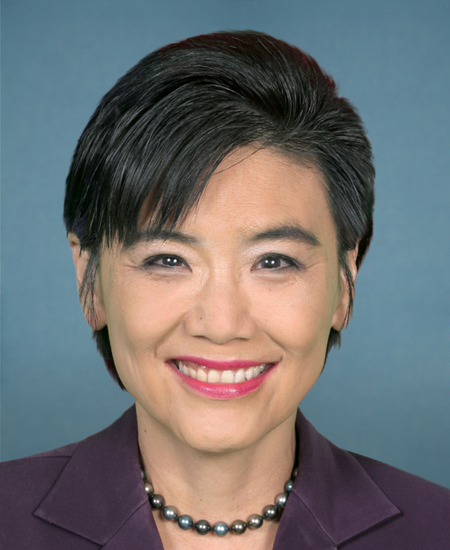
Rep. Judy Chu
Sponsored bills
This resolution recognizes the Islamic faith as one of the great religions of the world, acknowledges the onset of Ramadan (the holy month of fasting and spiritual renewal for Muslims), and expresses respect to Muslims in the United States and throughout the world on this occasion.
This resolution recognizes the accomplishments and example of Cesar Estrada Chavez. The resolution also encourages the people of the United States to commemorate his legacy and to always remember his rallying cry, "Si, se puede!" (which means "Yes, we can!").
Children's Act for Responsible Employment and Farm Safety of 2022 or the CARE Act of 20 22 This bill revises labor provisions for protecting child workers, including those employed in agriculture, and increases the civil penalties for violations of such provisions and imposes new criminal penalties for violations resulting in the death or serious injury or illness of a child worker. Specifically, the bill revises the definition of oppressive child labor to prohibit the employment of children under 14 years of age and imposes new employer reporting requirements for work-related injuries or deaths of agricultural employees under the age of 18. The Department of Labor must analyze, collect, and report on data concerning children under the age of 18 who are employed in agriculture and each work-related injury, illness, or death of any such child. Labor must also revise regulations to prohibit the employment of a child under the age of 18 as a pesticide handler.
This bill excludes from the gross income of a taxpayer up to $10,200 in unemployment compensation issued to the taxpayer for calendar year 2020, but not received until 2021. This exclusion applies to taxable years beginning after December 31, 2020.
Securing a Strong Retirement Act of 2022 This bill makes various changes with respect to employer-sponsored retirement plans, including providing for the automatic enrollment of employees in certain plans and increasing the age at which participants are required to begin receiving mandatory distributions.
Strengthen Kids' Mental Health Now Act of 2022 This bill establishes several requirements to support the provision of behavioral health services under Medicaid and other programs, particularly for children. For example, the bill temporarily requires payment for pediatric mental, emotional, and behavioral health services under Medicaid to align with Medicare payments to providers. The bill provides for a 100% Federal Medical Assistance Percentage (i.e., federal matching rate) for any associated additional expenditures. The Centers for Medicare & Medicaid Services must issue guidance on how state Medicaid programs may expand the availability of telehealth services and mental, emotional, and behavioral health services. In addition, the Health Resources and Services Administration must award grants to support (1) pediatric behavioral health care integration in communities, (2) pediatric mental health and substance use disorder workforce training, and (3) the infrastructure of pediatric hospitals and rural health clinics with respect to behavioral health services.

Anna Westin Legacy Act of 2022 This bill requires the Substance Abuse and Mental Health Services Administration to maintain the National Center of Excellence for Eating Disorders (NCEED). The bill specifies required activities for NCEED, including providing training for frontline health care providers and other professionals.
Honoring the Oath Act of 2021 This bill establishes the Military Family Immigration Advisory Committee and modifies the naturalization procedures for a noncitizen in the Armed Forces. U.S. Immigration and Customs Enforcement shall notify the committee when any individual in removal proceedings is a (1) member of the Armed Forces, (2) veteran, or (3) noncitizen spouse or minor child of such an Armed Forces member or veteran. The committee shall review the case of any such individual and make recommendations to the Department of Homeland Security (DHS) and the Department of Justice as to how the case should be resolved. Such an individual shall not be removed until the committee has provided its recommendations. DHS and the Department of Defense shall jointly carry out a program allowing a noncitizen individual who serves on active duty in the Armed Forces (and any noncitizen spouse or minor children of the individual) to become a U.S. citizen if the individual is not otherwise ineligible for citizenship. The Armed Forces member shall be given the opportunity to apply for citizenship during the accession process into the Armed Forces. DHS shall adjudicate such an individual's application by the last day of the individual's active service in the Armed Forces.
Veteran Deportation Prevention and Reform Act This bill provides protections from deportation for noncitizen veterans and contains other related provisions. U.S. Immigration and Customs Enforcement (ICE) must identify each individual in removal proceedings who is a member of the Armed Forces, a veteran, or a noncitizen spouse or minor child of such an individual. That individual may not be removed until (1) ICE has transferred that individual's case files to an advisory committee created under this bill, and (2) that committee has provided recommendations as to the outcome of the case. The Department of Homeland Security (DHS) shall create a system to share information across various agencies about noncitizen veterans who may be subject to removal to ensure that such a veteran's military service is taken into consideration in immigration-related cases. DHS shall also create a system for (1) identifying noncitizens who are or may be veterans, and (2) collecting data relating to such noncitizens who are in removal proceedings or may have been removed. DHS and the Department of Defense must jointly carry out a program to naturalize a noncitizen (and the noncitizen's spouse and minor children) who serves on active duty in the Armed Forces and is not otherwise ineligible for citizenship if that noncitizen submits an application. DHS shall also establish a program for eligible noncitizen veterans (generally those not convicted for certain serious crimes) to obtain permanent resident status. Similarly, the Department of Justice shall provide permanent resident status to such an eligible veteran in removal proceedings or subject to a final order of removal.