

Maddy summaryThe SUPPLY Act establishes a federal program to insure second loans (additional financing) for building accessory dwelling units (ADUs) on single-family properties. This insurance, administered by the Department of Housing and Urban Development, covers up to 30% of a standard one-unit home loan amount or 100% of the property value after construction (with potential increases based on 50% of projected rental income). Homeowners seeking to add ADUs - such as backyard cottages, converted basements, or detached units - can use this insurance to secure financing, with a government premium of up to 1% annually. The bill also requires Fannie Mae and Freddie Mac to purchase and securitize these insured loans, potentially expanding access to ADU financing.
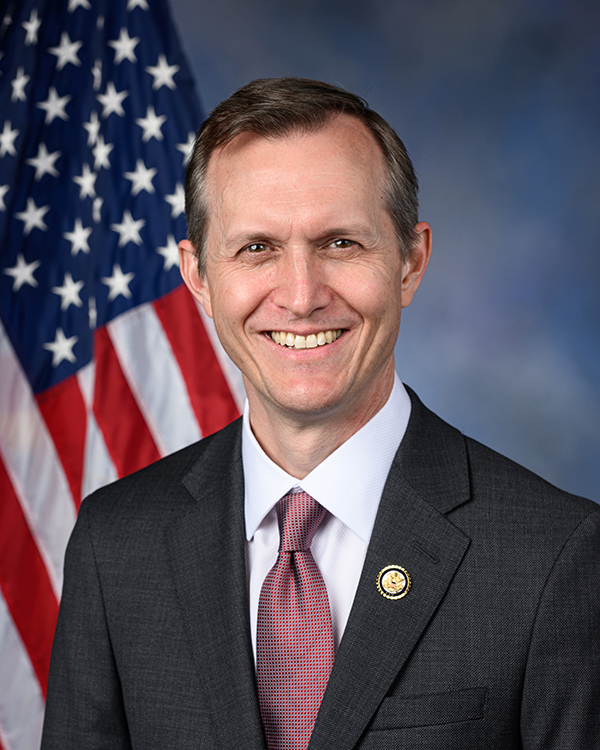
Rep. George Whitesides
Sponsored bills
Maddy summaryHR 4477, the PRICE Act, creates a new federal grant program to improve affordable manufactured housing communities. It provides funds for infrastructure, repairs, safety upgrades, and community services in communities that are affordable to low- and moderate-income residents (at or below 120% of area median income) and either owned by residents or committed to remaining affordable. Eligible projects include replacing homes (excluding pre-1976 units), weatherization, accessibility modifications, and resident services like eviction prevention. The program prioritizes projects that preserve long-term affordability for low-income residents and is open to community groups, local governments, tribes, and nonprofit housing organizations.
Maddy summaryHR 4382 authorizes the U.S. Mint to produce commemorative coins for the 2028 Los Angeles Olympics/Paralympics and 2034 Salt Lake City Winter Olympics/Paralympics. It specifies gold, silver, and half-dollar coin designs with defined mintage limits (e.g., up to 100,000 $5 gold coins for each event), all bearing inscriptions like "2028" or "2034" and standard coin features. A surcharge ($5-$50 per coin) is added to sales, with all funds directed to the respective Olympic committees to support event hosting and legacy programs like youth sports. The bill ensures no net cost to the government by requiring surcharge revenues to cover all design, production, and marketing expenses before funds are disbursed.
Maddy summaryThe Improving Atmospheric River Forecasts Act aims to enhance forecasts of atmospheric rivers - narrow bands of moisture that cause heavy rain, snow, and flooding, particularly in the western U.S. - to reduce damage to communities and infrastructure. It authorizes a five-year pilot project (2026-2030) with $15 million annually to improve forecast models for mountainous terrain and atmospheric rivers, requiring coordination with NOAA, academic partners, and the National Weather Service. The bill also establishes a long-term program mandating NOAA to develop new forecast tools, incorporate social science for clearer public communication, and create annual budget plans for research and partnerships. These changes directly affect NOAA’s operations and water management efforts in the western U.S., without altering existing laws or imposing new regulations on the public.
Maddy summaryThis bill requires online contact lens sellers to provide a secure electronic method for customers to transmit their contact lens prescriptions, directly affecting online retailers. It mandates that such electronic transmissions comply with HIPAA privacy rules and that any protected health information sent via email must be encrypted. The law updates existing rules to modernize prescription verification for online sales while maintaining privacy protections.
Maddy summaryThe Expanding Access to Mental Health Services in Schools Act of 2025 creates a federal grant program to help high-need schools hire and retain mental health professionals like counselors, psychologists, and social workers. It targets schools in the top 15% of need (based on student poverty or counts) that lack required staff ratios, such as one counselor per 250 students. Grants fund recruitment incentives (e.g., student loan repayment), retention programs, and evidence-based mental health services, with recipients required to contribute 25% of costs from non-federal funds. Schools must report annually on staff numbers, student-to-staff ratios, and retention rates to track progress toward improved mental health access.
Maddy summaryHRES 543 is a symbolic House resolution (not a law) introduced by multiple representatives. It affirms the constitutional right to peaceful protest under the First Amendment and condemns violent acts by some individuals during demonstrations, such as vandalism and looting. The resolution specifically criticizes the President’s 2025 deployment of National Guard and Marines to Los Angeles without proper legal authority (violating 10 U.S.C. § 12406 and the Posse Comitatus Act) and without coordination with California’s governor. It also denounces inflammatory rhetoric that escalated tensions and supports law enforcement efforts to protect public safety during protests. The resolution has no binding effect but formally expresses congressional position on these issues.
Maddy summaryThe CONNECT for Health Act of 2025 expands Medicare telehealth coverage by removing geographic restrictions that limited where patients could receive care, expanding the types of health care providers who can offer telehealth services, and eliminating the requirement for an in-person visit before receiving telemental health services. The bill includes specific provisions to support telehealth use for Native American health facilities, rural health clinics, and Federally Qualified Health Centers. It requires the Centers for Medicare & Medicaid Services to collect and publish data on telehealth usage and impacts, and to develop resources to improve accessibility for people with disabilities and limited English proficiency. Program integrity measures are added to monitor telehealth billing practices and prevent fraud while maintaining coverage for telehealth services during public health emergencies.
Maddy summaryHR 4169, the Preventing Crimes Against Veterans Act of 2025, creates a new federal crime for schemes to defraud veterans of their benefits. It adds Section 1352 to Title 18, making it illegal to knowingly execute or attempt to execute a scheme to defraud an individual of veterans' benefits or to obtain such benefits fraudulently for them. The law specifically defines "veterans' benefits" as any federal benefit for veterans, dependents, or survivors, and sets penalties of fines, up to 5 years in prison, or both. This directly affects veterans and their families by strengthening legal tools to prosecute fraudsters targeting their benefits.
Maddy summaryHR 4167, the Expanding Access to Lending Options Act, amends the Federal Credit Union Act to extend the maximum time federally chartered credit unions can hold mortgage loans from 15 years to 20 years (or longer by NCUA regulation). This change directly affects federally chartered credit unions by allowing them to offer longer-term mortgage products to members. The key provision modifies Section 107(5) of the Federal Credit Union Act, specifically updating the time limit for mortgage loans held by credit unions. The bill also includes a non-binding sense of Congress statement emphasizing safety and soundness in NCUA oversight, but the core policy change is the extended mortgage holding period.