

Maddy summaryHR 9650 requires federal agencies to purchase WaterSense-labeled water-efficient products (like fixtures or appliances) when procuring water-consuming items, unless cost or availability prevents it. It establishes an EPA grant program to provide rebates or incentives for households to buy WaterSense products, prioritizing low- and middle-income families through eligible entities like state governments or utilities. The bill also makes these rebates non-taxable income for individuals and expands existing tax exclusions for water conservation measures. These changes directly affect federal agencies, local governments, and households purchasing water-efficient products.
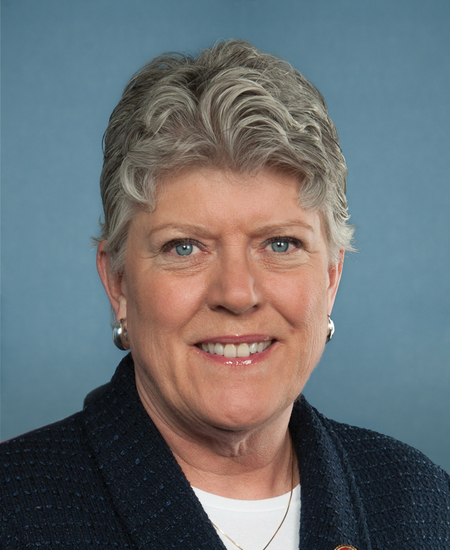
Rep. Julia Brownley
Sponsored bills
Maddy summaryThe BASIC Act (HR 9669) creates a system to help college students access federal assistance programs that address basic needs like food, housing, and healthcare. It requires federal agencies to share data to identify students who might qualify for programs like SNAP, Medicaid, or housing assistance, and mandates that colleges provide students with information about these programs. The bill authorizes $1 billion in funding for planning grants (up to $75,000 per institution for 2 years) and implementation grants (up to $1 million per institution for 5 years) to help colleges develop and carry out strategies to address student food insecurity, housing insecurity, and other basic needs. Community colleges, historically Black colleges, and other minority-serving institutions receive priority for funding, with at least 25% of funds reserved for each category.
Maddy summaryThe Veterans Accessibility Advisory Committee Act of 2024 establishes a new advisory committee within the Department of Veterans Affairs (VA) to improve accessibility for veterans and others with disabilities. The committee, composed of 15 voting members including veterans with disabilities, accessibility experts, VA staff, and veterans service organization representatives, will advise the VA Secretary on making services, facilities, information, and technology more accessible. It must meet at least twice yearly, assess accessibility barriers through reviews of complaints and facility assessments, and submit biennial reports to the VA Secretary and Congress detailing progress, unmet needs, and recommendations. These reports will guide the VA in complying with accessibility laws like the Americans with Disabilities Act and Section 508 of the Rehabilitation Act. The committee will operate for 10 years from the bill’s enactment.
Maddy summaryHR 9639, the AI Ads Act, amends the Federal Election Campaign Act to prohibit using AI-generated content (like deepfakes or synthetic media) in campaign materials as fraudulent misrepresentation of campaign authority or fraudulent fund solicitation. It directly affects political campaigns, candidates, committees, and anyone creating campaign ads by requiring that AI-generated content cannot falsely claim to represent a candidate, party, or committee. The bill updates existing rules to explicitly include "content generated in whole or in part with artificial intelligence" within the definitions of fraud under Sections 322(a)(1) and 322(b)(1). This ensures that misleading AI-generated ads - such as those falsely attributing a statement to a candidate - would be treated as illegal fraud under current campaign finance law.
Maddy summaryThis bill prohibits U.S. Department of Transportation agencies from procuring or using LiDAR technology produced by companies from China, Iran, North Korea, or Russia in federal contracts or projects. It applies to all Department of Transportation contracts and funded projects starting June 30, 2026, affecting contractors and grantees receiving transportation funding. Contractors must certify they will not use prohibited LiDAR, with limited waivers permitted only for national security needs. The law directly restricts the use of specific foreign technology in U.S. infrastructure development.
Maddy summaryHRES 1448 is a non-binding House resolution stating that the House believes every person has the right to emergency health care, including abortion care, during medical emergencies. It specifically addresses concerns that abortion restrictions force medical providers to choose between treating patients in life-threatening situations or risking criminal charges. The resolution highlights that such restrictions disproportionately harm Black, Indigenous, people of color, immigrants, low-income individuals, and LGBTQI+ patients. It does not change existing laws but expresses congressional support for ensuring access to emergency care without legal barriers. The resolution was introduced by multiple House members and referred to the Energy and Commerce Committee.
Maddy summaryThis bill creates a federal grant program to fund supportive services for residents in affordable housing properties. It provides 5-year competitive grants to non-profit organizations or tribes managing properties assisted by programs like the low-income housing tax credit or Section 8 housing. Grantees must use at least 25% of funds for staff salaries/benefits and can cover services including health access, education, financial literacy, aging-in-place support, and disability services - though residents cannot be required to accept these services. The program targets residents of qualifying affordable housing properties, focusing on improving health, economic stability, and community integration.
Maddy summaryHRES 1437 is a ceremonial resolution designating the week beginning September 9, 2024, as "National Hispanic-Serving Institutions Week." It recognizes Hispanic-serving institutions (HSIs) - colleges and universities with at least 25% Hispanic enrollment - and their role in educating low-income students, advancing economic mobility, and serving 31.7% of all undergraduate students. The resolution calls for the public and organizations to observe this week with ceremonies and activities during Hispanic Heritage Month. It does not create new laws, allocate funding, or change existing policies - it is purely a symbolic gesture of recognition.
Maddy summaryThis bill designates the U.S. Postal Service facility at 130 South Patterson Avenue in Santa Barbara, California, as the "Brigadier General Frederick R. Lopez Post Office Building." It updates all official U.S. government references to the building to reflect this new name, with no policy changes or funding impacts.
Maddy summaryThis symbolic resolution expresses congressional support for designating September 29, 2024, as "Veterans of Foreign Wars of the United States Day" to honor the organization's 125th anniversary. It requests the President issue a proclamation encouraging government agencies and the public to observe the day with ceremonies, though it creates no new laws or policy changes. The resolution recognizes the VFW's historical service to veterans but does not directly affect any individuals or programs.