

Maddy summaryHR 10138 amends the law governing appointments to the Board of Veterans' Appeals. It requires the Chairman to prioritize recommending individuals with at least three years of legal experience related to veterans' laws when suggesting candidates to the Secretary. This change directly affects who is considered for Board membership, aiming to ensure new members have relevant legal expertise in veterans' benefits. The bill focuses on procedural appointment criteria, not on changing veterans' benefits or services.
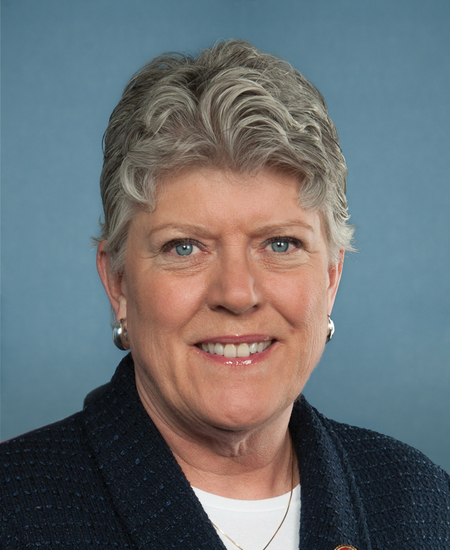
Rep. Julia Brownley
Sponsored bills
Maddy summaryHRES 1581 is a symbolic resolution expressing congressional support for designating November 2024 as "Prematurity Awareness Month." It highlights the U.S. maternal and infant health crisis, including higher preterm birth rates and disparities affecting Black and Native American women and their infants. The resolution urges Americans, communities, and organizations to observe the month through events and education focused on preterm birth prevention. It does not create new laws or funding but aims to raise public awareness about this health issue, which contributes to infant mortality and costs an estimated $25.2 billion annually.
Maddy summaryThis bill prohibits Medicaid from covering conversion therapy for any enrollee. It amends federal law to block Medicaid payments for any therapy aimed at changing a person's sexual orientation or gender identity (defined as "conversion therapy" in the bill), starting in the first full quarter after the law takes effect. The prohibition applies to all Medicaid providers who offer such therapy for compensation, but explicitly excludes support for gender transition, acceptance-based care, and interventions focused on safety or unlawful conduct. It directly affects Medicaid recipients seeking therapy and providers who previously billed for conversion therapy services.
Maddy summaryHRES 1577 is a resolution expressing congressional support for National Adoption Day (November 23, 2024) and National Adoption Month (November 2024). It highlights that over 108,000 children in U.S. foster care are waiting for adoption and encourages Americans to consider adoption to help provide safety, permanency, and well-being for children. The resolution does not create new laws but formally recognizes the importance of adoption and urges the public to support efforts to place children in permanent families. It directly affects public awareness and encourages citizen engagement during these designated observances.
Maddy summaryThis bill expands VA health care eligibility to include family members and others who lived or worked at specific locations where veterans have a presumption of service-connected illness (e.g., military bases with known environmental hazards). It covers individuals exposed to the same conditions as veterans at those locations, such as spouses, children (including those in utero), and workers. The VA must provide care for "covered illnesses" already recognized for veterans at those sites, but only after exhausting third-party insurance claims and within annual funding limits. Annual reports to Congress will track usage, denials, and pending applications starting in 2026.
Maddy summaryThe Half-Century Update for Water Access and Affordability Act establishes a federal program to provide financial assistance to low-income households struggling to pay water bills. It requires states and water utilities to implement programs that offer direct bill discounts, debt relief, water efficiency upgrades, and crisis assistance to households earning up to 200% of the poverty level or 80% of local median income. The bill prohibits disconnections for non-payment, allows automatic enrollment for households already receiving other federal assistance, and mandates data collection to track program impacts on water service access. The legislation authorizes $20 billion annually from 2025-2035 to fund this assistance, with specific requirements to ensure universal access and prevent discrimination in program implementation.
Maddy summaryHR 10090, the "Keeping Guns from High-Risk Individuals Act," expands existing federal firearm prohibitions. It bars individuals convicted of a crime of violence (as defined in Section 16 of Title 18) within the last five years, or convicted of stalking, from purchasing or possessing firearms. This directly affects people with these specific recent convictions, adding them to the list of those prohibited under Section 922(d) (sales) and Section 922(g) (possession) of the U.S. Code. The bill makes concrete policy changes by broadening the categories of individuals barred from gun access based on certain criminal histories.
Maddy summaryThis bill modifies how disability benefits are treated for homeless disabled veterans seeking housing assistance. It excludes certain disability payments (under Chapter 11 or 15 of Title 38, U.S. Code) from income calculations when determining eligibility for HUD-assisted housing programs, including the supported housing program under Section 8(o)(19) and housing on Department property. Specifically, it ensures these benefits are not counted toward income for housing eligibility, though they still count for "adjusted income" definitions. The bill directly affects disabled veterans applying for HUD housing assistance who receive these specific disability benefits. It makes a concrete change to income calculation rules without altering benefit amounts or creating new funding.
Maddy summaryThis bill requires the Department of Veterans Affairs (VA) to establish standard practices for all suicide prevention and mental health grant or pilot programs run through the Veterans Health Administration. It mandates these programs must set clear, measurable goals, create detailed evaluation plans for data collection and analysis, and regularly share progress with relevant stakeholders. The VA must also conduct thorough post-program evaluations to assess effectiveness and share successful strategies. These rules apply to all such programs, regardless of when they began, ensuring consistent, evidence-based approaches to preventing veteran suicide.
Maddy summaryHRES 1548 is a non-binding resolution supporting the designation of October 2024 as "National Learning Disabilities Awareness Month." It highlights that specific learning disabilities affect 34% of students receiving special education services and notes significant academic challenges, with over 95% of affected 4th and 8th graders not proficient in reading or math in 2022. The resolution calls on schools to continue providing appropriate support for students with learning disabilities but does not create new laws or funding. It aims to raise public awareness about learning disabilities, not to change educational policies.