

Maddy summaryThe Assuring Medicare’s Promise Act of 2023 directs that taxes collected under the net investment income tax (a tax on investment income for high earners) be added to the Medicare Hospital Insurance Trust Fund, which helps finance Medicare Part A benefits. It modifies the tax code to include certain business income of high-income individuals (with modified adjusted gross income over $400,000 for single filers or $500,000 for joint filers) in the tax base, but includes a phase-in mechanism to limit immediate tax increases. This bill primarily affects high-income taxpayers and aims to strengthen Medicare’s financial stability by increasing trust fund revenue.
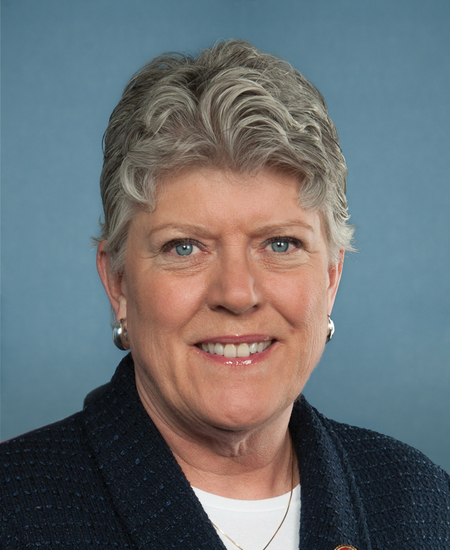
Rep. Julia Brownley
Sponsored bills
Maddy summaryHJRES 227 proposes a constitutional amendment to abolish the Electoral College and establish a direct national popular vote for President and Vice President. Under this amendment, voters would cast a single ballot for a presidential-vice presidential pair, and the pair receiving the most votes nationwide would be elected. The amendment requires ratification by three-fourths of state legislatures and would take effect one year after ratification, directly changing how the President and Vice President are chosen across all states and the District of Columbia.
Maddy summaryThis bill provides tax relief for individuals affected by specific disasters by excluding certain compensation payments from taxable income. It covers wildfire relief payments for losses incurred in federally declared wildfires after 2014 (including expenses like repairs, lost wages, and emotional distress), and payments related to the February 2023 East Palestine, Ohio, train derailment (covering property damage, closing costs, and inconvenience). Payments already covered by insurance or other sources are excluded from this tax benefit. The relief applies to payments received during 2020-2025 for wildfires and from February 2023 onward for the East Palestine incident, with extended deadlines for related tax claims.
Maddy summaryThis bill establishes a commission to study whether the Weitzman National Museum of American Jewish History in Philadelphia should be transferred to the Smithsonian Institution. The commission, composed of 8 members appointed by congressional leaders with expertise in Jewish American history and museum administration, will examine the museum's collections, financial status, governance, and feasibility of transfer within two years. The commission must submit a report detailing findings, a fundraising plan, and legislative recommendations for any potential transfer. The bill does not transfer the museum but creates a process to evaluate the possibility.
Maddy summaryHR 7438 directs the U.S. Treasury to mint commemorative coins for the 2026 FIFA World Cup, including 100,000 $5 gold coins, 500,000 $1 silver coins, and 750,000 half-dollar coins. The coins will be sold to the public at face value plus surcharges ($35, $10, and $5 per coin, respectively), with all surcharge revenue paid to FWC2026 US, Inc. for U.S. soccer programs. These funds must support soccer initiatives, particularly in underserved communities and youth development, as specified in the bill. The coins are legal tender but will only be issued during 2026, with no net cost to the U.S. government.
Maddy summaryThe CASC Act establishes a National Climate Adaptation Science Center and nine Regional Climate Adaptation Science Centers to provide scientific expertise for managing natural resources, cultural resources, and ecosystem services in response to climate change. These centers will conduct research, provide education and training, and offer advisory services to Federal agencies, States, Indian Tribes, Tribal organizations, Native Hawaiian organizations, and other partners. The National Center will coordinate with regional centers, develop research priorities, and conduct five-year merit reviews to ensure high-quality climate adaptation science. The bill requires centers to work with diverse partners including Tribal Colleges and Universities, Historically Black Colleges and Universities, and minority-serving institutions to ensure inclusive climate adaptation science.
Maddy summaryHR 7525, the Special District Grant Accessibility Act, requires the Office of Management and Budget (OMB) to issue guidance within 180 days clarifying how federal agencies recognize "special districts" as eligible recipients of federal grants. Special districts - state-created local entities like water districts or fire protection authorities that perform specific government functions - would directly benefit by gaining clearer pathways to access federal funding. Agencies must implement this guidance within one year and report on compliance to Congress within two years. The bill focuses on standardizing agency procedures, not creating new programs or altering grant eligibility criteria.
Maddy summaryHRES 1610 is a ceremonial resolution that commemorates the 40th anniversary of both the LA84 Foundation and the 1984 Summer Olympic Games in Los Angeles. It honors the foundation, established from the Games' $233 million surplus, which has since invested in youth sports programs serving 4 million young people across southern California. The resolution recognizes the 1984 Games' historical significance as the first privately financed Olympics, featuring milestones like the women's marathon debut and global broadcasting innovations. It has no policy impact or new funding - it solely celebrates these anniversaries through symbolic recognition.
Maddy summaryHR 6751 authorizes the U.S. Mint to produce commemorative coins honoring Roberto Clemente, a Hall of Fame baseball player and humanitarian, including 50,000 $5 gold coins, 400,000 $1 silver coins, and 750,000 half-dollar coins. The coins must feature Clemente's image and inscriptions like "Roberto Clemente" and "2027," with all sales including a surcharge ($5-$35 per coin) paid to the Roberto Clemente Foundation. The foundation, which supports youth sports, education, and disaster relief programs, will use these funds for its mission, while the U.S. Treasury must recover all production costs. The coins will be sold exclusively in 2027, with no net cost to the government.
Maddy summaryThe Jeanette Acosta Invest in Women’s Health Act of 2024 would expand access to preventive cancer screenings (including breast, cervical, ovarian, and uterine cancer screenings) for women, with a focus on low-income women, women of color, rural communities, and underserved populations. It authorizes $20 million annually for grants to health care providers - such as family planning centers - to increase screenings and establishes a training program for health care providers on best practices and cultural competency to address racial disparities. The bill also mandates a study analyzing cancer screening rates and disparities by race, income, geography, and insurance status, with reports to Congress every five years. These provisions aim to improve early detection, reduce mortality, and address systemic barriers in women’s cancer care.