

Maddy summaryThe Scientific Integrity Act requires federal agencies that fund, conduct, or oversee scientific research to adopt policies preventing political interference in scientific work. These policies must prohibit suppressing, altering, or delaying the communication of scientific findings and ensure hiring and decisions are based on expertise - not politics. Agencies must appoint a Scientific Integrity Officer to enforce the policies, handle complaints, and submit annual reports to Congress and the Office of Science and Technology Policy. The bill directly affects scientists and staff in covered agencies by safeguarding their ability to share research freely and maintain ethical standards in scientific communication.
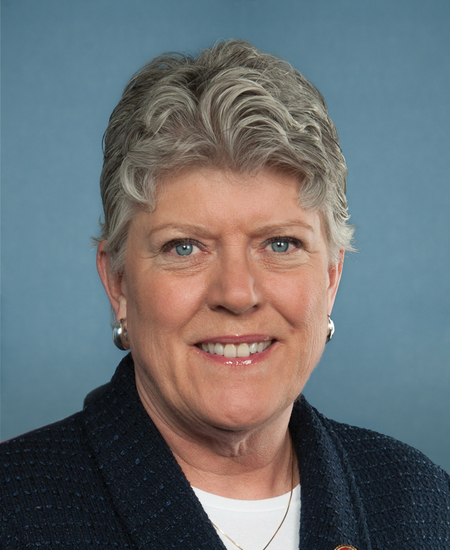
Rep. Julia Brownley
Sponsored bills
Maddy summaryHR 1102 establishes a commission to study the feasibility of creating a National Museum of Italian American History and Culture in Washington, D.C. The commission, composed of 8 members appointed by congressional leaders, will examine factors like location options, costs, fundraising potential, and impacts on existing museums, and must report back within 18 months. It will not create the museum itself but will develop recommendations for Congress on whether to proceed, with all funding coming from private sources - no federal funds may be used for the commission’s work. The bill focuses solely on the study process, not on building or operating the museum.
Maddy summaryHR 211, the Equal Access to Contraception for Veterans Act, eliminates out-of-pocket costs for specific contraceptives for veterans using VA healthcare. It amends Section 1722A of Title 38 to prohibit the VA from charging veterans copayments for contraceptive items that must be covered without cost-sharing under federal law (as required by Section 2713(a)(4) of the Public Health Service Act). This means veterans will not pay any amount for contraceptives covered by the federal mandate, such as birth control pills or IUDs, when obtained through the VA system. The bill directly affects veterans enrolled in VA healthcare seeking contraceptive services, ensuring no additional costs beyond what is already mandated for these items.
Maddy summaryHRES 116 is a non-binding House resolution condemning pardons granted to individuals convicted of assaulting Capitol Police officers. It expresses the House's disapproval of such pardons but does not alter any laws or affect legal proceedings. The resolution has no legal force and serves only as a formal statement of disapproval by the sponsoring lawmakers. It directly addresses the pardons of specific individuals found guilty in criminal cases related to the January 6, 2021, Capitol breach.
Maddy summaryHR 989 would turn Executive Order 11246 into law, requiring federal contractors and subcontractors to follow its equal employment nondiscrimination rules. This bill directly affects businesses working with the U.S. government by making these requirements legally binding. The key provision ensures the existing order has the full force of law, rather than being subject to executive changes.
Maddy summaryThis bill modifies corporate tax rules to prevent companies from avoiding US taxes by moving operations overseas. It targets tax breaks that companies currently use when they outsource work to foreign countries or reorganize as foreign entities (so-called "inverted corporations"). The bill requires companies to pay tax on foreign profits based on each country where they operate, limits tax deductions for interest by multinational corporations, and treats foreign corporations managed in the US as domestic for tax purposes. These changes aim to close loopholes that allow companies to reduce their US tax burden through foreign operations.
Maddy summaryThis bill establishes a federal right to access contraception, protecting individuals' ability to obtain contraceptives and health care providers' ability to offer them without government interference. It prohibits states from banning or restricting contraceptive services, products, or information, including laws that force providers to deny care based on personal beliefs or limit access to specific methods. The law immediately overrides conflicting state regulations and ensures that contraception remains available regardless of factors like race, income, disability, or location. It applies to all individuals and providers, building on existing federal protections like the Affordable Care Act's coverage requirements.
This resolution supports federal investment in public K-12 schools, affirms that the Department of Education (ED) plays a vital role in the public education system, and states that public education funding should not be diverted (e.g., through the use of vouchers) to privately run K-12 schools. The resolution also rejects any claim that the executive branch has the legal authority to (1) dismantle or relocate ED or any of its major offices; or (2) reduce federal funding for public education, block federal grants for education, or transfer funding burdens for education to state and local governments.
Maddy summaryHR 916, the Rosa Parks Commemorative Coin Act, authorizes the U.S. Treasury to mint and sell commemorative coins (gold $5, silver $1, and half-dollar) in honor of Rosa Parks, a pivotal civil rights leader whose 1955 bus protest sparked the Montgomery Bus Boycott. The coins, to be issued in 2029, will feature designs reflecting her legacy and be sold to the public at face value plus a fixed surcharge ($35 for gold, $10 for silver, $5 for half-dollar). All surcharge funds will be directed to the Rosa and Raymond Parks Institute for Self Development to support its youth development and civil rights education programs. The bill ensures the coins are legal tender, with the Treasury recovering all costs without net government expense.
Maddy summaryThe Stop Arming Cartels Act of 2025 prohibits civilian possession, sale, or transfer of rifles capable of firing .50 caliber ammunition, with exceptions for government use and rifles lawfully owned before the bill's enactment. It requires owners of such rifles to register them with the federal government within 12 months, without fees, and adds these rifles to the National Firearms Act registry. The bill also creates new federal firearm restrictions for significant foreign narcotics traffickers identified under the Foreign Narcotics Kingpin Designation Act and expands reporting requirements for rifle sales to include all rifles. This directly affects civilian rifle owners, sellers, and individuals designated as foreign narcotics traffickers.