

Maddy summaryHR 1659, the Truck Parking Safety Improvement Act, creates a federal grant program to address commercial truck parking shortages on highways. It authorizes $151 million annually (2025-2029) for states, local governments, tribes, and other eligible entities to build or improve public parking facilities for commercial motor vehicles. Projects must be on or near highways, include safety features, and provide free, publicly accessible parking - prohibiting fees for drivers. The bill also requires annual reports to Congress evaluating parking availability and project effectiveness.
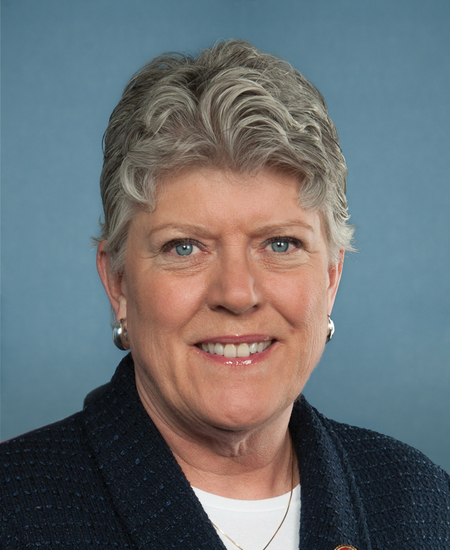
Rep. Julia Brownley
Sponsored bills
Maddy summaryThe PAST Act of 2025 amends the Horse Protection Act to ban harmful practices known as "soring," which deliberately cause pain to horses to exaggerate their gait for shows. It specifically prohibits devices like action devices (e.g., boots causing friction) and weighted shoes on Tennessee Walking Horses, Racking Horses, and Spotted Saddle Horses at events. The bill increases penalties, including escalating disqualifications for repeat offenses (180 days → 1 year → 3 years) and raises fines for violations to $5,000 per offense. It also requires stricter licensing for inspectors and mandates public posting of violation records to help event organizers enforce rules.
Maddy summaryThe American Dream and Promise Act of 2025 would create pathways to permanent residency for certain immigrant youth who entered the U.S. as children (Dream Act component) and for individuals from countries with Temporary Protected Status or Deferred Enforced Departure (American Promise Act component). To qualify, applicants must meet continuous physical presence requirements (since January 1, 2021 for Dream Act applicants, and for 3+ years for American Promise applicants), pass background checks, and satisfy educational or employment criteria. Conditional permanent resident status would be granted initially, with the option to convert to full permanent residency after meeting additional requirements like earning a degree, serving in the military for two years, or demonstrating three years of earned income. The bill includes fee exemptions for low-income applicants, establishes a grant program to assist applicants with legal help, and creates specific procedures for background checks and appeals.
Maddy summaryThis bill awards a Congressional Gold Medal to the 761st Tank Battalion (known as the "Black Panthers"), the first predominantly Black armored unit in World War II's European Theater. It recognizes their combat service from 1944-1946, including key roles in the Battle of the Bulge and breaking the Siegfried Line, despite facing racial prejudice during and after the war. The medal will be displayed at the National Museum of African American History and Culture, with bronze duplicates available for sale to cover costs. The bill commemorates the battalion's 130,000 enemy casualties inflicted, 50% casualty rate, and their 1978 Presidential Unit Citation. It does not create new laws or affect current policies.
Maddy summaryHR 1637, the Protect Veteran Jobs Act, allows veterans who were involuntarily dismissed without cause from federal civil service positions between January 20, 2025, and the bill’s enactment date to seek reinstatement to their former role or a qualified position. It directly affects eligible veterans dismissed during this period and requires federal agencies to report quarterly on veteran removals, including the number and reasons for each dismissal. Agencies must submit these reports to specified congressional committees until January 20, 2029, when the reporting requirement ends. The bill aims to restore employment opportunities for affected veterans while increasing transparency around federal hiring and dismissal practices.
Maddy summaryHR 1638, the CROWN Act of 2025, prohibits discrimination based on hair texture or hairstyle that is commonly associated with race or national origin, particularly affecting Black individuals who wear natural or protective styles like braids, locs, cornrows, twists, or Afros. The bill explicitly expands protections under existing federal civil rights laws (including the Civil Rights Act of 1964 and the Fair Housing Act) to cover hair-based discrimination in federally funded programs, housing, public accommodations, employment, and equal rights. It requires schools, employers, and other entities receiving federal funds to eliminate grooming policies that disproportionately target these hairstyles. The law clarifies that such discrimination violates federal law and provides enforcement through existing civil rights mechanisms.
Maddy summaryHR 1593, the Disaster Displacement Assistance Improvement Act of 2025, clarifies that insurance payments for disaster-related housing costs cannot be counted as "duplication of benefits" when determining eligibility for federal displacement assistance. This change directly affects disaster survivors who receive insurance payouts, allowing them to access both insurance funds and federal assistance for temporary housing. The bill amends the Stafford Act to define "displacement assistance" as support for hotel/motel stays, staying with others, or other housing options while removing the previous barrier to combining insurance and federal aid. The key provision ensures survivors aren’t denied federal help simply because they have insurance coverage for their housing losses.
Maddy summaryHR 1631, the Safe Access to Cash Act of 2025, amends federal robbery law to clarify that all network-connected ATMs and cash in transit (being loaded/unloaded) are considered under the care of banks, credit unions, or savings associations. This directly affects financial institutions by expanding their legal responsibility for ATM security, regardless of whether the ATM is on their premises or owned/operated by another entity. The bill defines "ATM" broadly to include any terminal used for withdrawals, deposits, or balance inquiries via a bank-issued card. Key provisions ensure these locations and cash are treated as part of the institution's protected property under robbery statutes. This creates a clear legal standard for holding financial institutions accountable for ATM security.
Maddy summaryThe Sustainable Aviation Fuel Act establishes national goals for reducing aviation greenhouse gas emissions, aiming for a 35% reduction by 2035 and net zero by 2050 compared to 2005 levels. It creates a low-carbon fuel standard requiring a 20% reduction in carbon intensity by 2030 and 50% by 2050, with a credit system allowing producers of sustainable aviation fuel to generate credits for sale to those who don't meet the standard. The bill requires the Department of Defense to purchase at least 10% sustainable aviation fuel for military aircraft by 2025 if cost-competitive and produced domestically. It also provides funding for research through the FAA and Department of Energy, and extends tax credits for sustainable aviation fuel production through 2032.
World Language Education Assistance Program Act or the World LEAP Act This bill requires the Department of Education to award competitive grants to local educational agencies to establish and carry out new, or improve existing, world language or dual language programs.