

Maddy summaryHRES 1056 is a non-binding House resolution designating April 10 as "Dolores Huerta Day" to honor her legacy. It recognizes Dolores Huerta's work as a civil rights and labor rights activist, including co-founding the United Farm Workers, advocating for farm workers' collective bargaining rights, and promoting women's equality. The resolution does not create new laws or policies but formally supports the commemorative designation. It specifically highlights her role in the 1975 California Agricultural Labor Relations Act and her founding of the Dolores Huerta Foundation. The resolution was introduced by 15 House members in April 2022 and referred to the Oversight Committee.
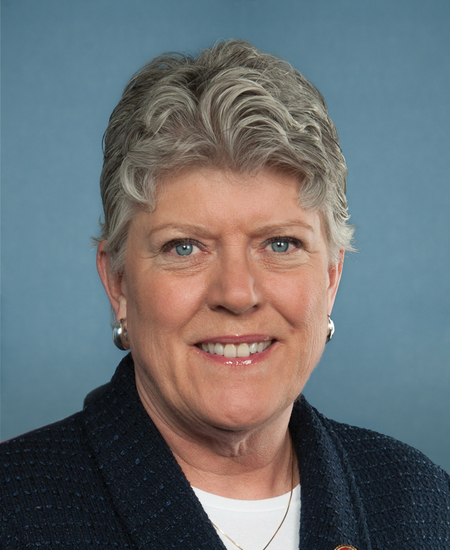
Rep. Julia Brownley
Sponsored bills
Security of the Economy, Climate, and other U.S. interests with Recent and Existing Food alternatives Act or the SECURE Food Act This bill requires the Office of the Director of National Intelligence to report to Congress on the effects of increased production and consumption of alternative proteins (e.g., proteins produced from plants or fungi) on the long-term national security interests of the United States.
Burma Unified through Rigorous Military Accountability Act of 2022 or the BURMA Act of 2022 This bill imposes sanctions pertaining to Burma (Myanmar) and addresses related issues. The President must impose property- and visa-blocking sanctions on certain foreign persons (i.e., an individual or entity), including those that (1) knowingly operate in Burma's defense sector, (2) are responsible for or complicit in undermining Burma's democratic processes, or (3) are senior leaders in Burma's military or government. The Department of the Treasury must prohibit or impose strict conditions on certain accounts used to facilitate transactions for such sanctioned persons. The President may impose sanctions on Myanma Oil and Gas Enterprise if such sanctions would support certain objectives, including reducing the Burmese military's ability to undermine democracy in Burma. Before removing certain foreign persons from a list of specially designated nationals and blocked persons (commonly known as the SDN list), the President must certify to Congress that the person in question has not knowingly engaged in certain activities, such as supporting terrorism. The bill authorizes Department of State and U.S. Agency for International Development activities in Burma and the surrounding region to support democracy activists, humanitarian assistance, and reconciliation efforts. The State Department may (1) continue to assist organizations supporting political prisoners in Burma, and (2) provide assistance to entities investigating crimes against humanity. The President must direct U.S. representatives to the United Nations to vote and advocate for certain actions related to Burma, such as cutting off assistance to Burma's government.
Ensuring Lasting Smiles Act This bill requires private health insurance plans to cover diagnosis and treatment of congenital anomalies and birth defects, such as reconstructive services and items. Coverage must include services and items that functionally improve, repair, or restore any body part that is medically necessary for normal bodily functions or appearance, as determined by the treating physician. Coverage limits and cost-sharing requirements for such services and items may not be more restrictive than those applicable to all medical and surgical benefits under the plan.
Supply Chain Disruptions Relief Act This bill modifies the treatment of liquidations of new motor vehicle inventory as qualified LIFO (last in first out accounting method) inventory. It allows new motor vehicle dealers to elect to wait until the end of 2025 to replace their inventory for purposes of determining income attributable to the sale of such inventory during 2020 and 2021.
This resolution recognizes the accomplishments and example of Cesar Estrada Chavez. The resolution also encourages the people of the United States to commemorate his legacy and to always remember his rallying cry, "Si, se puede!" (which means "Yes, we can!").
Children's Act for Responsible Employment and Farm Safety of 2022 or the CARE Act of 20 22 This bill revises labor provisions for protecting child workers, including those employed in agriculture, and increases the civil penalties for violations of such provisions and imposes new criminal penalties for violations resulting in the death or serious injury or illness of a child worker. Specifically, the bill revises the definition of oppressive child labor to prohibit the employment of children under 14 years of age and imposes new employer reporting requirements for work-related injuries or deaths of agricultural employees under the age of 18. The Department of Labor must analyze, collect, and report on data concerning children under the age of 18 who are employed in agriculture and each work-related injury, illness, or death of any such child. Labor must also revise regulations to prohibit the employment of a child under the age of 18 as a pesticide handler.
This bill excludes from the gross income of a taxpayer up to $10,200 in unemployment compensation issued to the taxpayer for calendar year 2020, but not received until 2021. This exclusion applies to taxable years beginning after December 31, 2020.
This bill allows a deduction from gross income (above the line deduction) for attorney fees and court costs awarded with respect to a qualifying wildfire disaster (i.e., any forest or range fire that is a federally declared disaster, occurs in a disaster area, and occurs in 2015 or later). The bill excludes from the gross income of a taxpayer, for income tax purposes, amounts paid to compensate victims for losses or damages in connection with a qualifying wildfire disaster.
Cabin Air Safety Act of 2022 This bill directs the Federal Aviation Administration (FAA) to implement regulations regarding smoke or fume incidents on aircraft (excluding helicopters). Specifically, the bill requires flight attendants, pilots, aircraft maintenance technicians, airport first responders, and emergency response teams to receive annual training on how to respond to incidents on aircraft; the FAA to develop a standardized form and system for reporting incidents involving smoke or fumes; the FAA to conduct an investigation after a report is submitted about incidents of smoke or fumes if anybody on the aircraft required medical attention; and air carriers to install and operate onboard detectors and other air quality monitoring equipment situated in the air supply system to enable pilots and maintenance technicians to locate the sources of air supply contamination, including carbon monoxide.