Prevent All Soring Tactics Act of 2022 or the PAST Act of 2022 This bill addresses the practice of soring horses. The soring of horses includes various actions taken on horses' limbs to produce higher gaits that may cause pain, distress, inflammation, or lameness. Specifically, the bill expands soring regulation and enforcement at horse shows, exhibitions, sales, and auctions, including by establishing a new system for inspecting horses for soring. In addition, the bill increases penalties for violations.
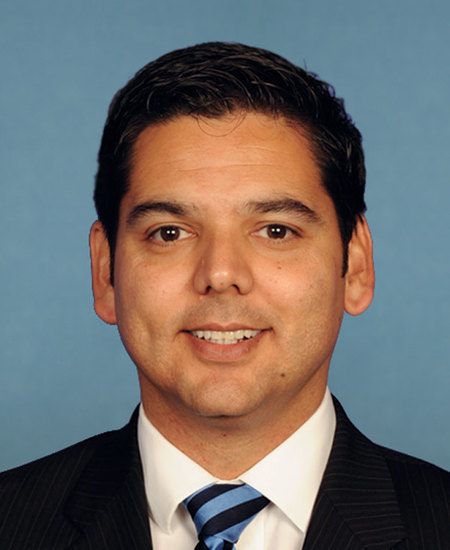
Rep. Raul Ruiz
Sponsored bills
Asunción Valdivia Heat Illness and Fatality Prevention Act of 2022 This bill directs the Occupational Safety and Health Administration to promulgate a standard that requires employers to implement certain measures for protecting workers from heat stress and related illnesses or injuries. Heat stress refers to the load of heat that a person experiences due to sources of heat or heat retention (including metabolic heat, environmental factors, and clothing or personal protective equipment) or the presence of heat in a work setting. Further, if an employer cannot reduce exposure to heat stress below hazardous levels through engineering controls (e.g., heat shields and insulation) or personal protective equipment (e.g., heat reflective clothing), the employer must implement a program that mitigates such exposure through access to appropriate hydration and cool-down spaces, acclimatization policies, and periodic paid rest breaks. Additionally, the bill establishes requirements concerning judicial review, implementation, enforcement, recordkeeping, and whistle-blower protections related to the standard. The bill also requires the Department of Labor to include questions about heat-related illness and injury in the National Agricultural Workers Survey (an employment-based, random-sample survey of U.S. crop workers that collects demographic, employment, and health information).
Maddy summaryHJRES 53 proposes a constitutional amendment to ban slavery and involuntary servitude as a criminal punishment. Currently, the 13th Amendment to the U.S. Constitution permits such punishments for crimes, creating a legal loophole. If ratified by 3/4 of state legislatures, this amendment would eliminate that exception nationwide, making it unconstitutional to impose forced labor or slavery as part of criminal sentences. The change would directly affect all states' criminal justice systems, particularly prison labor practices, by prohibiting these punishments for any offense.
This resolution expresses the sense that the federal government should adopt a global health solidarity strategy to end medically avertable deaths and respond to the full burden of disease in poor countries; the federal government should use laws and diplomatic influence to stop ongoing economic harms to the global South; and it is the duty of the federal government to issue reparations, including for slavery and colonialism.
This resolution recognizes Immigrant Heritage Month in honor of the contributions immigrants and their children have made to the United States. It also welcomes immigrants presently in the United States and individuals seeking to immigrate to the United States to contribute to the health, safety, diversity, and prosperity of the United States.
Afghan Adjustment Act This bill expands eligibility for special immigrant visas to certain Afghan nationals (and accompanying spouse and children) and addresses related issues. The Department of Homeland Security may provide such visas to Afghan nationals who provided qualifying service as a member of the Afghan Air Force or other specified entities and meet eligibility requirements, such as passing a background check. Currently, special immigrant visas for Afghan nationals are generally only available to those who were employed by or on behalf of the U.S. government in Afghanistan. Such visas shall also be available to an Afghan national who is a qualifying relative of a veteran or member of the U.S. Armed Forces. The bill also modifies procedures for providing lawful permanent resident status to certain classes of Afghan nationals, such as by (1) providing a streamlined process with specified vetting requirements for certain individuals, including those who provided support to the U.S. government in Afghanistan; and (2) preserving the eligibility of certain battered spouses whose eligibility for such status stemmed from a marriage that has terminated. Furthermore, the Department of State (1) must respond to inquiries from Members of Congress about specific applications from Afghan nationals seeking special immigrant or refugee status; and (2) establish an office in Afghanistan to perform certain tasks, such as issuing visas, if no U.S. embassies are operational in Afghanistan. The President must establish a task force to develop and implement a strategy to assist Afghan nationals who qualify for admission to the United States.
Let Doctors Provide Reproductive Health Care Act This bill sets out protections for and establishes programs to support health care providers (and those who assist such providers) who offer reproductive health care services that are lawful in the state where the services are provided. Reproductive health care services refer to abortion services; contraceptive services; in vitro fertilization; or other reproductive care, education, and counseling that is provided (1) at a health care site or via telehealth, and (2) in a medically accurate manner. The bill prohibits individuals, entities, and states from preventing, restricting, or otherwise interfering with the provision of lawful reproductive health care services by health care providers. The Department of Justice, individuals, or providers may bring a lawsuit to enforce this bill, and states are not immune from suits for violations. Furthermore, states may not use federal funds to pursue legal cases or similar proceedings (e.g., adverse licensing proceedings) against health care providers, individuals, or entities that offer or assist with lawful reproductive health care services. Additionally, medical malpractice insurers may not deny coverage to or sue a health care provider because the provider offers or assists with lawful reproductive health care services. The bill also funds grants to assist health care providers who offer or refer for abortion services and face legal issues relating to their provision of reproductive health care services with legal matters and improving security.

Renewing Immigration Provisions of the Immigration Act of 1929 This bill expands eligibility for a program that authorizes the Department of Homeland Security to, at its discretion, provide lawful permanent resident status to certain long-term residents of the United States, including individuals who are unlawfully present. Currently, this program, sometimes referred to as the Registry program, is only available to eligible non-U.S. nationals ( aliens under federal law) who entered the United States before January 1, 1972. The bill removes this entry cutoff date and opens up the program to eligible individuals who have resided in the United States for at least seven years. Existing requirements (e.g., the individual must not be inadmissible or deportable due to certain grounds related to crime or terrorism) continue to apply.
Seasonal Worker Solidarity Act of 2022 This bill modifies the H-2B (temporary nonagricultural workers) visa program and expands protections for aliens who report workplace violations. Changes to the H-2B program include requiring the Department of Labor to establish a centralized national electronic platform for U.S. workers to find and apply for positions that employers are seeking to fill with H-2B workers; requiring employers to recruit U.S. workers nationwide, including by posting the openings on the platform, before applying for H-2B visas; requiring employers to guarantee at least 40 hours of paid work per week for each H-2B worker (currently employers may guarantee fewer paid hours in certain instances); requiring employers to pay for housing for H-2B workers and transportation to and from the work site (currently employers are allowed to deduct fees for lodgings from an H-2B worker's pay); modifying the requirements for determining the minimum wage for H-2B workers; and prioritizing H-2B visas for certain employers, such as those that pay higher wages. Furthermore, an alien who has worked a certain amount of time as an H-2B worker may obtain permanent resident status, subject to various requirements. In addition, an alien who is likely helpful in an investigation of a workplace claim (i.e., an alleged violation of law or workplace-related injury) may qualify for a U visa for victims of criminal activity. The bill also removes statutory numerical limitations on U visas. The bill also provides protections for certain aliens who file or assist in the investigation of workplace claims.
Humanitarian Standards for Individuals in Customs and Border Protection Custody Act This bill imposes requirements and standards related to the care of aliens in U.S. Customs and Border Protection (CBP) custody. CBP must conduct an initial health screening of each individual in custody to identify those with acute conditions and high-risk vulnerabilities and to provide appropriate healthcare. CBP must conduct the screening within 12 hours of each individual's arrival at a CBP facility, and within 6 hours for certain priority individuals such as children and individuals with disabilities. The bill imposes various requirements related to providing such screenings, such as providing interpreters, chaperones, and mental health treatment when necessary. CBP must ensure detainees have access to drinking water, toilets, sanitation facilities, hygiene products, food, and shelter. The bill imposes certain standards relating to such requirements, such as the minimum amount of drinking water for each detainee and the acceptable temperature range of the shelters. The Department of Homeland Security (DHS) must enter into memoranda of understanding with various government agencies to address instances when surge capacity is necessary. The DHS Office of the Inspector General must conduct unannounced inspections of ports of entry, border patrol stations, and detention facilities and report the results to Congress. The Government Accountability Office must assess CBP's management of such facilities, whether CBP and DHS processes are in compliance with this bill's requirements, and the behavior of CBP personnel in carrying out this bill. DHS shall publicly release on its website, on a quarterly basis, aggregate data on complaints of sexual abuse at CBP facilities.