

Maddy summaryThis bill amends the law governing Basic Allowance for Housing (BAH) for uniformed service members stationed in the U.S. It changes the calculation method so that BAH amounts must equal the actual monthly cost of adequate housing in each location, as determined by the Secretary of Defense. This directly affects active-duty service members and their families who receive BAH for housing. The key provision replaces the previous formula with a requirement that BAH payments match local housing costs for members in the same pay grade and dependency status. The change ensures BAH reflects current housing expenses rather than an older calculation method.
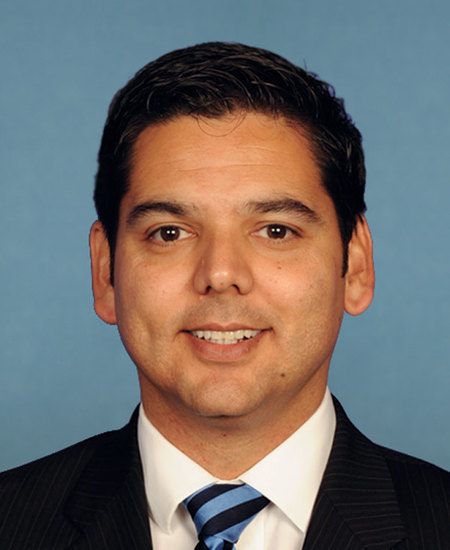
Rep. Raul Ruiz
Sponsored bills
Maddy summaryHR 2471, the Vote Without Fear Act, forbids unauthorized firearm possession within 100 yards of entrances to federal election sites (like polling places or ballot-counting locations for federal offices). It prohibits carrying or bringing firearms into this zone, with exceptions for law enforcement on duty, firearms remaining in vehicles, and lawful possession on private property. Violations carry up to 1 year in prison for basic possession or up to 5 years if firearms are intended for criminal use. This bill directly affects voters, election workers, and anyone near federal election sites during voting periods, aiming to enhance safety at these locations.
Maddy summaryHR 2469 requires the Secretary of Defense, within 180 days of enactment, to create a new risk assessment for toxic exposure (defined per 38 U.S.C. §101) affecting service members near burn pits and establish an outreach program. This program must inform affected service members about toxic exposure risks, available benefits, eligibility, and timelines through direct mail, email, text, and social media. By one year after enactment, the Department of Defense must publish a website listing resources for service members, veterans, dependents, caregivers, and survivors who experienced toxic exposure during service. The bill directly affects current and former service members who may have been exposed to toxins, ensuring they receive clear information about support programs.
Maddy summaryHR 2470, the Accessing Higher Education Opportunities Act, amends the Higher Education Act of 1965 to create new federal grant programs. It authorizes funding for student support services (like counseling and mentoring) to help students transition from four-year colleges to doctoral programs preparing them for health care careers, and for expanding dual enrollment and early college high school programs. The bill allocates $107,795,000 for the first fiscal year after enactment, with no provision for extending this funding beyond that initial period. These changes directly affect students at participating four-year institutions and the institutions offering these programs.
Maddy summaryThe International Human Rights Defense Act of 2023 creates a permanent Special Envoy at the State Department to coordinate U.S. efforts against discrimination and violence targeting LGBTQI+ people globally. The bill requires the development of an annual global strategy to address criminalization, discrimination, and violence based on sexual orientation, gender identity, or sex characteristics. It also mandates that U.S. country reports on human rights practices include detailed information about laws and practices affecting LGBTQI+ communities. The legislation authorizes U.S. foreign assistance programs to support LGBTQI+ rights through health services, legal protections, and community capacity building. This bill aims to strengthen U.S. diplomatic engagement on LGBTQI+ rights as part of broader human rights policy.
Maddy summaryHR 1831 would award Billie Jean King a Congressional Gold Medal to honor her lifelong advocacy for equal rights in sports and society. The bill directs the Secretary of the Treasury to strike the medal and have it presented by congressional leaders, recognizing her pivotal role in advancing women's equality through tennis (including founding the Women’s Tennis Association and securing equal prize money) and her broader impact on society through initiatives like Title IX advocacy.
Maddy summaryThis bill changes how U.S. foreign aid is provided to international health organizations. It prevents U.S. agencies from denying aid to foreign non-governmental organizations (NGOs) solely because they offer health services (like counseling or referrals) using their own funds, as long as those services follow local laws. It also stops applying stricter rules about how foreign NGOs can use their own funds for advocacy compared to U.S. NGOs receiving similar aid. The bill directly affects foreign health-focused NGOs that rely on U.S. foreign assistance funding.
Maddy summaryHR 1794 authorizes the minting of commemorative coins to honor the 2028 Los Angeles Olympic and Paralympic Games. It specifies four coin types ($5 gold, $1 silver, half-dollar clad, and proof silver $1) with defined weights, sizes, and mintage limits (e.g., up to 100,000 gold coins). A surcharge is added to each coin sale (e.g., $35 for gold coins), with all surcharge funds directed to the U.S. Olympic and Paralympic Properties to support legacy programs and the Games' operations. The coins must be issued only during 2028 and are legal tender, though the bill focuses solely on commemorative coinage, not policy changes.
Maddy summaryThis bill restores access to VA housing loans and educational benefits for Black World War II veterans who were denied GI Bill benefits due to racial discrimination, as well as for their living spouses, children, grandchildren, or direct descendants. It defines eligibility by requiring applicants to certify that their veteran relative was denied GI Bill benefits on racial grounds, with a five-year application window starting from the bill's enactment date. The VA must process these applications within 90 days and report to Congress on the number of recipients and total benefit value within one year. This addresses historical discrimination by creating new pathways to benefits for affected individuals and their families.
Maddy summaryThis bill modifies federal highway funding rules to prioritize safety for cyclists and pedestrians. It allows states and local governments to receive 100% federal funding for projects that connect existing bike/pedestrian infrastructure or reduce safety risks for these users, instead of the usual lower federal share. The bill also requires projects to align with state safety plans focusing on vulnerable road users and includes specific "Proven Safety Countermeasures" for cyclists/pedestrians. These changes directly affect states administering federal highway funds and local governments seeking to improve non-motorized transportation infrastructure.