

Maddy summaryThis bill establishes a federal system to coordinate efforts across agencies to address health risks from extreme heat. It creates a National Integrated Heat Health Information System (NIHHIS) and an interagency committee to develop a strategic plan for heat health planning and response. The bill authorizes funding for community resilience projects that prioritize historically disadvantaged communities and those with environmental justice concerns. It mandates a study to identify gaps in heat information and response systems across the country. The legislation aims to reduce health impacts of extreme heat, particularly for vulnerable populations including the elderly, low-income communities, and communities of color.
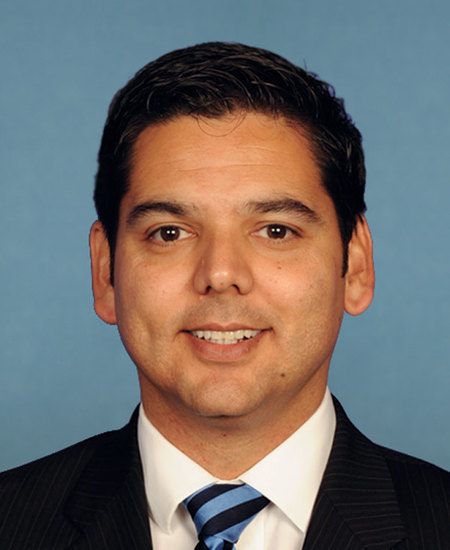
Rep. Raul Ruiz
Sponsored bills
Maddy summaryThis bill requires phone calls, texts, and chats to 9-8-8 (the national suicide prevention and mental health crisis hotline) to be routed to the nearest participating crisis center within 90 days of enactment, while protecting caller privacy by not revealing precise location. It mandates all phone carriers to transmit every 9-8-8 call or text - including those from prepaid or non-initialized handsets - and updates phone systems to allow direct 9-8-8 dialing without extra steps. The law affects crisis centers (by directing calls to their area), callers (through improved routing and privacy), and phone carriers (by requiring transmission compliance). These changes aim to make the 9-8-8 system more efficient and accessible for those seeking mental health support.
Maddy summaryHR 4884, the Mental Health for Latinos Act of 2023, directs the U.S. Department of Health and Human Services to create a culturally tailored mental health outreach strategy for Hispanic and Latino communities. The strategy must address language needs, reduce stigma, provide information on culturally appropriate treatments, and consider pandemic impacts, developed with community input. It requires annual reports to Congress on the strategy's effectiveness and authorizes $1 million for fiscal year 2024. The bill directly affects Hispanic and Latino populations by aiming to improve access to relevant mental health resources and outcomes.
Maddy summaryHR 4832, the Indian Programs Advance Appropriations Act of 2023, changes how funding is allocated for key Native American programs. It requires that starting in fiscal year 2024, new budget authority for specific accounts under the Bureau of Indian Affairs, Bureau of Indian Education, and Indian Health Service must be made available immediately for the current fiscal year *and* include advance funding for the next fiscal year. The bill mandates annual reports by July 31 each year, including workload estimates and resource sufficiency assessments developed with tribal consultation. This affects tribal programs funded through accounts like Operation of Indian Programs, Contract Support Costs, and Indian Health Services, aiming to improve budget planning predictability.
Maddy summaryThe provided context for HR 4060 (Food Access and Stability Act of 2023) only describes a technical amendment to an existing law (the Fiscal Responsibility Act of 2023), specifically modifying section 311(b)(2) by replacing subsection (a) with subsection (a)(1). It does not explain the policy substance, who is affected, or the practical impact of this change. Without additional details on the amendment's purpose or resulting policy shifts, a substantive summary cannot be generated. This appears to be a procedural adjustment rather than a new policy measure.
Maddy summaryThis bill establishes a federal pilot program to help homeless individuals access SNAP (Supplemental Nutrition Assistance Program) benefits. It authorizes $12.5 million annually (2024-2029) to fund grants for community organizations, homeless service providers, and public housing agencies to provide direct outreach, application assistance, transportation to SNAP offices, and staff training. The program specifically targets barriers like lack of documentation and awareness, focusing on helping homeless households enroll in SNAP by connecting them with existing resources. Grantees must report annually on outcomes, including the number of homeless individuals served and enrollment impacts. The pilot runs for up to 5 years, with funds supplementing (not replacing) existing state/local programs.
This resolution condemns Iran for the 1988 massacre of political prisoners. It also urges the Biden Administration and U.S. allies to publicly condemn the massacre and to pressure Iran to provide information to the families of the victims.
Maddy summaryHR 4963, the Tax Fairness for Workers Act, would restore tax deductions for certain employee expenses. It creates an above-the-line deduction for union dues and expenses paid by wage-earning employees, and allows miscellaneous itemized deductions for other work-related expenses (like uniforms or supplies) that were previously disallowed after 2017 tax law changes. These provisions directly affect employees who pay union dues or incur qualifying job-related costs. The bill amends specific sections of the Internal Revenue Code to make these deductions available for taxable years beginning after December 31, 2022. It does not change tax rates or provide new benefits, only reinstating previously eliminated deductions for eligible workers.
Maddy summaryThe Rebuild America's Schools Act of 2023 creates a $20 billion annual federal grant program to fund long-term improvements to public school facilities across the United States. It requires states to prioritize school districts serving high-poverty students (with high percentages of students eligible for free/reduced lunch) and those with deteriorating infrastructure, while mandating that recipient schools develop 10-year facilities master plans. The bill specifies that funds must be used for construction, renovation, and modernization projects that improve energy efficiency, address environmental health hazards (including lead, asbestos, and poor air quality), and ensure school safety, while requiring the use of American-made materials for construction projects.
Maddy summaryThis bill establishes new federal requirements for employers to prevent heat-related illness and injury among workers. It mandates that employers provide safe work environments by implementing specific measures, including access to cool water, scheduled rest breaks in shaded areas, employer-paid cooling equipment, and training for employees and supervisors on recognizing heat illness symptoms. The Secretary of Labor must create these standards within one year, requiring employers in high-heat occupations (like construction, agriculture, and outdoor labor) to adopt engineering controls, administrative schedules, and health protocols. Key provisions include ensuring hydration, rest, and language-accessible training, while preserving existing safety protections and allowing for updates as scientific evidence evolves.