

Maddy summaryHR 6433, the PARA-EMT Act of 2023, creates a federal grant program to address critical shortages in emergency medical services (EMS) personnel. It authorizes $50 million annually (2024-2028) for grants to EMS agencies to fund recruitment, training, and retention programs - including initiatives for veterans, rural communities, and youth - while requiring 20% of grants to support rural agencies. The bill also establishes a separate $20 million annual grant program to help veterans with military EMS training meet civilian certification requirements and mandates a federal study on projected EMS workforce needs through 2032. These provisions directly affect EMS agencies, training programs, and veterans seeking civilian EMS careers.
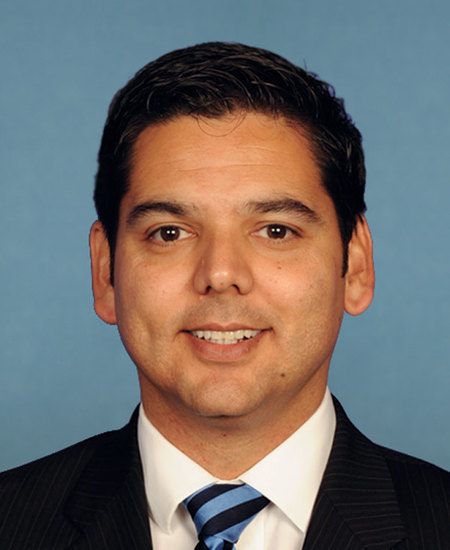
Rep. Raul Ruiz
Sponsored bills
Maddy summaryHR 6251, the HERO Act, provides $1 billion in federal grants to K-12 schools (both public and private) to purchase opioid overdose reversal drugs and develop staff training programs. Schools receiving funds must create emergency response plans for staff and implement educational resources on overdose prevention, CPR, and emergency response. Priority is given to schools in areas with high opioid overdose rates. Grantees must report drug usage and training outcomes to national health databases like NEMSIS and ODMAP.
Maddy summaryThe Advanced Coursework Equity Act aims to increase access to advanced courses like AP, STEM programs, and Algebra I for students in under-resourced schools, particularly focusing on historically underrepresented groups including Black, Latino, Native American students, students with disabilities, English learners, and low-income students. The bill establishes a federal grant program requiring states and schools to implement either "open enrollment" (allowing any student to enroll in advanced courses without academic prerequisites) or "universal screening" (systematically screening all students for advanced courses based on objective measures) to improve equitable access. It mandates data collection and reporting on enrollment and performance by student subgroups (race, disability, socioeconomic status, etc.) and sets specific 3-year equity goals for each subgroup. The grant program provides funding to states and schools to support these changes, with requirements for staff training, advisory councils, and communication with families about advanced course opportunities.
Maddy summaryThe SHIP Act imposes sanctions on foreign entities that knowingly handle Iranian petroleum, targeting those involved in port operations, transportation, refining, or ship-to-ship transfers of Iranian oil. Starting 90 days after enactment, the President must block assets, deny visas, and impose penalties on individuals or companies engaging in these activities, including family members or owners of sanctioned entities. It requires annual reports tracking Iran's oil exports, revenues, and key players like shipping companies and ports. The sanctions terminate if the President certifies Iran has stopped supporting terrorism and dismantled weapons programs.
Maddy summaryHR 5976, the Youth Mental Health Research Act, establishes a new NIH research initiative led by the National Institute of Mental Health. The bill directs collaboration between three NIH institutes to coordinate research on youth mental health, focusing specifically on building community resilience for at-risk youth and improving how mental health services reach young people in schools, communities, and other settings where they live and work. It authorizes $100 million annually for fiscal years 2024 through 2028 to fund this research. The bill does not create direct services but aims to generate evidence to inform future mental health support strategies for young people.
Maddy summaryHR 6201, the Iranian Sanctions Enforcement Act of 2023, creates the Iran Sanctions Enforcement Fund to cover costs related to seizing and forfeiting property from Iran or its designated proxies (like Hezbollah or the Revolutionary Guard Corps) that violate U.S. sanctions. The fund, initially $150 million, pays for investigative costs, property management, informant rewards, and equipment for federal, state, and local agencies involved in enforcement. It also establishes an Export Enforcement Coordination Center within Homeland Security to improve interagency cooperation on enforcing export controls targeting Iran. The bill requires annual reports on fund usage and mandates repayment of the initial $150 million by 2034, unless waived for national security reasons.
Maddy summaryHRES 832 is a symbolic resolution recognizing Día de los Muertos (Day of the Dead) as an annual cultural observance in the U.S. and globally. It acknowledges the holiday's origins in Mesoamerican traditions, its significance in honoring deceased loved ones through altars (*ofrendas*), and its role in celebrating Latino cultural heritage. The resolution specifically highlights the contributions of Mexican and Mexican American communities to U.S. society and culture, without creating new laws or obligations. It is a ceremonial gesture by Congress, not a policy with concrete effects on individuals or communities.
Maddy summaryThe PHASE Act of 2023 directs the National Institute of Standards and Technology (NIST) to identify innovative traffic control technologies that improve safety for pedestrians and cyclists without causing distraction. It requires the Transportation Secretary to conduct a study analyzing urban areas with rising pedestrian fatalities and test physical safety measures like crosswalk technology, better lighting, and accessible sidewalks. The bill also creates a $5 million annual grant program for cities, tribes, and municipalities to fund specific pedestrian safety infrastructure, including marked crosswalks, adaptive lighting, accessible curb ramps, and upgraded traffic signals. These grants must comply with federal regulations and the Americans with Disabilities Act. The law directly affects local governments seeking funding and aims to protect pedestrians and vulnerable road users through concrete infrastructure improvements.
Maddy summaryHCONRES 72 is a non-binding concurrent resolution recognizing the wage gap between Latina women and White, non-Hispanic men, where Latina women earn 57 cents for every dollar earned by White, non-Hispanic men working full-time. It highlights that this disparity results in Latina women losing over $1.2 million in potential earnings over a 40-year career and places them at risk of poverty. The resolution reaffirms congressional support for equal pay but does not create new laws or policy changes. It serves as a symbolic statement to raise awareness about systemic inequities affecting Latina women workers.
Maddy summaryHRES 771 is a non-binding resolution expressing the U.S. House of Representatives' support for Israel following Hamas' October 7, 2023, attack. It condemns Hamas' actions, affirms Israel's right to self-defense, and calls for the immediate release of hostages. The resolution also urges enforcement of existing laws restricting aid to terrorists and sanctions against Iran for supporting Hamas. It does not create new policies or allocate funds, as it is a symbolic statement of congressional support.