Maddy summaryThe provided context does not include sufficient details about HR 7060's specific provisions or policy changes. While the bill's title ("Military Spouse Job Continuity Act") suggests it relates to military spouses' employment, the context only lists a procedural amendment to 37 U.S.C. § 453(g) (striking a paragraph and redesignating another) without explaining the substance of the change. Without the actual bill text or a substantive summary describing how this amendment affects military spouses or job continuity, a factual summary cannot be generated. For accurate information, consult the full bill text or official legislative summaries from Congress.
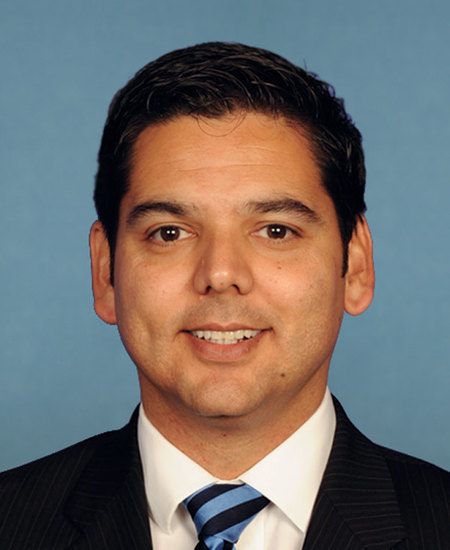
Rep. Raul Ruiz
Sponsored bills
Maddy summaryHR 7056, the Access to Family Building Act, establishes federal rights for individuals to access assisted reproductive technology (ART) like IVF without unreasonable restrictions, directly affecting patients seeking fertility treatments and health care providers offering ART services. The bill prohibits states from imposing limitations on ART that are more burdensome than those for comparable medical procedures, fail to advance safety, or unduly restrict access, while allowing health and safety regulations that are necessary and least restrictive. It creates federal enforcement mechanisms, including lawsuits by the Attorney General or affected individuals to challenge violating state laws, and preempts conflicting state regulations. The bill explicitly preserves state authority over health/safety regulations and does not alter existing state insurance coverage laws for ART.
Maddy summaryThe Stronger Communities through Better Transit Act establishes a new federal grant program to improve public transportation service. It provides funding to urban areas, states, and Indian tribes to cover up to 50% of public transit operating costs (up to 80% in persistent poverty areas and 100% for Indian tribes), with requirements to report on service frequency, access to jobs, and conduct community surveys. The program mandates that a majority of funds must benefit underserved communities and areas of persistent poverty, defined as census tracts with high poverty rates or minority populations. Recipients must maintain their transit funding levels and report on improvements in access to essential services. The bill authorizes $20 billion annually for fiscal years 2024-2027.
Maddy summaryHR 6081 amends the short title of the Lake Tahoe Restoration Act (Public Law 106-506) to honor Senator Dianne Feinstein, renaming it the "Dianne Feinstein Lake Tahoe Restoration Act." This change applies to all federal references in laws, maps, regulations, documents, or records that previously cited the original title. The bill does not alter the Act's policies or funding but updates its official name and all related references. It directly affects federal agencies and documents that reference the legislation. This is a purely procedural renaming with no substantive policy changes.
Maddy summary# Summary of "Protecting Communities from Plastics Act" (Title II) This comprehensive legislation addresses the environmental, health, and environmental justice impacts of plastics production and use. Key provisions include: ## Environmental Justice Protections - Requires environmental justice assessments for permits of "covered facilities" (plastics manufacturing facilities) - Mandates consultation with "fenceline communities" (communities near facilities) including: * Prompt notification in multiple languages * Public hearings with translation services * Community benefit agreements - Establishes a 45-day waiting period before approving permits after public hearings ## Regulatory Requirements - Amends Clean Air Act to establish new source performance standards for plastics facilities - Requires continuous monitoring of air emissions (benzene, nitrogen oxides, etc.) - Amends Clean Water Act to prohibit discharge of plastic pellets in wastewater - Requires financial assurance for facility closure and emergency response - Prohibits new facility permits within 5 miles of community buildings (schools, hospitals, etc.) ## Research and Monitoring - Requires study of microplastics in food (including fish, meat, fruits, vegetables) - Mandates research on microplastics in human bodies (urine, breastmilk, stool) - Establishes a pilot program to test technologies for microplastic removal - Requires inventory of plastics manufacturing and distribution ## Additional Provisions - Temporary permitting moratorium on new plastics facilities (during "temporary pause period") - Requires listing of discarded polyvinyl chloride as hazardous waste - Limits National Recycling Strategy to exclude chemical recycling technologies - Creates grants to reduce single-use plastics in agricultural packaging - Requires biodegradable alternatives to plastic weed barriers The legislation aims to address the disproportionate environmental and health impacts of plastics production on vulnerable communities while establishing comprehensive regulatory frameworks for plastics manufacturing and disposal.

Maddy summaryHRES 963 is a symbolic resolution honoring Korean American Day, which commemorates the January 13, 1903 arrival of the first large wave of Korean immigrants to the U.S. It recognizes Korean Americans' contributions to U.S. society, including their economic, cultural, and military impacts, and marks the 121st anniversary of this historic migration. The resolution urges all Americans to observe Korean American Day to appreciate these contributions. As a commemorative measure, it does not create new policies or affect specific groups beyond this ceremonial recognition.
CONtinuity in Necessary Evaluative Crisis Treatment Act of 2024 or the CONNECT Act of 2024 This bill requires the Substance Abuse and Mental Health Services Administration to award grants to certain crisis centers for providing follow-up care to individuals who receive suicide prevention and crisis intervention services.
Maddy summaryThe Affordable Connectivity Program Extension Act of 2024 allocates $7 billion in funding for the Affordable Connectivity Program (ACP) during fiscal year 2024. The ACP provides subsidies to low-income households to help cover the cost of internet service and connected devices like laptops or tablets. This funding ensures the program can continue supporting eligible households throughout the year, with the money remaining available until fully spent. The bill extends existing program funding without changing eligibility criteria or service requirements.
Maddy summaryHR 6888, the Clean Energy Workforce Act, provides $100 million in federal grants to develop clean energy job training programs. It directly affects local schools, career technical education centers, colleges, and industry partners by funding: (1) new or expanded training programs in clean energy fields (like renewable energy and climate adaptation), designed to be shared with other schools and accessible to diverse students; and (2) upgrades to school facilities to use renewable energy and improve energy efficiency. Grants require partnerships between educational institutions, industry representatives, and community groups to create replicable training that prepares students for jobs in growing clean energy sectors. The bill focuses on concrete workforce development, not environmental outcomes.
Maddy summaryThis bill designates the Elk River Trail in California's Headwaters Forest Reserve as the "Senator Dianne Feinstein Memorial Trail." It updates all official federal references - such as laws, maps, and documents - to reflect this new name. The bill directly affects the Elk River Trail and federal records mentioning it. No substantive policy changes or funding are involved; it solely honors Senator Feinstein through a trail naming designation.