

Maddy summaryThis bill clarifies that the President has no constitutional authority to withhold funds Congress has appropriated. It creates new legal mechanisms allowing private citizens and state/local governments to sue the federal government for impoundments of appropriated funds. The bill strengthens the Comptroller General's oversight role by requiring executive branch cooperation in investigations of potential violations. Federal employees who knowingly violate these provisions would face personal liability and lose immunity protections. The legislation aims to reinforce Congress's constitutional authority over the budget process.
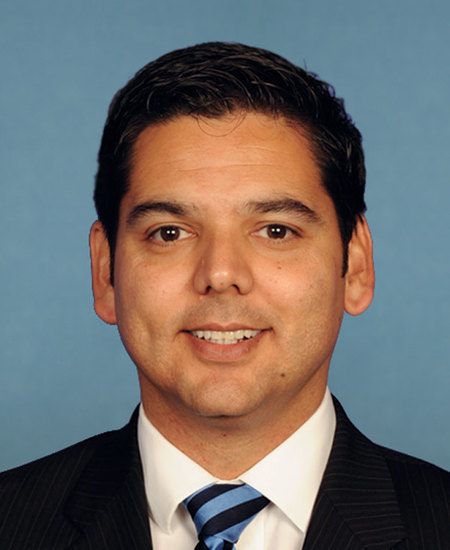
Rep. Raul Ruiz
Sponsored bills
Maddy summaryHR 3414 would expand Joshua Tree National Park by adding approximately 20,149 acres of land, as shown on a specific June 2024 map. The bill transfers management of this newly added land from the Bureau of Land Management to the National Park Service and allows the Secretary of the Interior to acquire the land through donation, purchase, exchange, or transfer (with restrictions on acquiring California-owned land). It also renames the Cottonwood Visitor Center as the Dianne Feinstein Visitor Center for all official references. The expansion directly affects park management and land use within the new boundary, with no changes to existing landowner rights beyond the specified acquisition rules.
Maddy summaryHR 3413, the Physician and Patient Safety Act, requires the Health and Human Services Secretary to create regulations ensuring physicians with hospital privileges receive a fair hearing and appeal process before any termination, restriction, or reduction of their professional activity or privileges at a hospital. The regulations must prevent hospitals from denying these hearings through third-party contracts, prohibit requiring physicians to waive their hearing rights as an employment condition, and keep hearings confidential unless there is an ongoing patient safety threat or data bank reporting is legally required. This directly affects physicians who hold hospital medical staff privileges and hospitals that grant or manage those privileges. The regulations must be finalized within 18 months of the bill's enactment. The bill focuses on procedural due process for physicians, not on altering clinical standards or patient care outcomes.
Maddy summaryHR 3368, the "Born in the USA Act of 2025," prohibits federal funding for Executive Order 14160 (which aimed to restrict birthright citizenship for children born in the U.S.). The bill directly affects federal agencies that might implement the executive order by blocking their use of funds for that purpose. Its key provision is a funding ban targeting the executive order and any similar future policies, without changing citizenship law. The bill does not alter birthright citizenship rights but prevents federal resources from being used to enforce the controversial executive order. It is a procedural measure focused on funding, not a substantive policy change to citizenship rules.
Maddy summaryHR 3376 creates the Water Affordability, Transparency, Equity, and Reliability Trust Fund, funded by increasing the corporate tax rate from 21% to 24.5% starting in 2025, with annual funding capped at $35 billion or 1/20th of 20-year infrastructure needs. The bill allocates funds to clean water programs (42%), safe drinking water programs (42.5%), household water well systems (1%), colonias assistance (0.5%), and Indian health services (3%), requiring specific prioritization of low-income and minority communities for many programs. It mandates an EPA study on water affordability, discriminatory practices, and civil rights violations in water service, including data collection on service disconnections affecting vulnerable populations. The bill also includes provisions for lead service line replacement, PFAS contamination response, and job training grants for water system operators with specific requirements to prioritize low-income communities.
Maddy summaryHR 2623, the Innovative Therapies Centers of Excellence Act of 2025, directs the Department of Veterans Affairs to establish at least five specialized medical centers focused on treating veterans with specific conditions like PTSD, depression, chronic pain, and substance use disorders using innovative therapies. These centers must meet strict criteria, including academic partnerships with medical schools, research capabilities, veteran advisory committees, and data-sharing systems for evaluating treatment effectiveness. The bill authorizes $30 million annually for these centers' research and education activities and requires the VA to submit annual reports to Congress on their operations and findings. It directly affects veterans seeking advanced treatments for covered conditions through VA facilities and establishes a peer review process to select designated centers based on scientific merit.
Maddy summaryHR 3184, the PFAS Alternatives Act, funds research to develop turnout gear (firefighter safety clothing) without harmful PFAS chemicals, directly affecting firefighters who wear this gear. It authorizes $25 million annually (2025-2029) for grants to eligible organizations to research and test PFAS-free gear, requiring partnerships with firefighting groups to translate findings into practice. The bill also allocates $2 million yearly (2027-2031) for training programs on safe gear use and decontamination. Its goal is to reduce firefighters' exposure to chemicals linked to occupational illnesses during operations.
Maddy summaryHRES 384 is a non-binding House resolution recognizing Cinco de Mayo's cultural and historical significance. It commemorates Mexico's 1862 victory at the Battle of Puebla against French forces, highlighting its role in Mexico's fight for independence and freedom. The resolution encourages U.S. citizens to observe Cinco de Mayo through ceremonies and activities, acknowledging its importance to Mexican and Mexican-American communities. As a ceremonial resolution, it has no legal effect or policy changes.
Maddy summaryHRES 383 is a symbolic resolution expressing congressional support for designating May 4-10, 2025, as Wildfire Preparedness Week. It aims to raise public awareness about wildfire safety and preparedness through educational initiatives, encouraging communities to adopt preventive measures like evacuation planning and reducing human-caused ignitions. The resolution does not create new laws, allocate funds, or directly affect any specific group - it solely promotes awareness of existing wildfire safety practices. It references wildfire statistics and safety strategies but only formally recognizes the week without implementing policy changes.
Maddy summaryHR 3200 increases the tax credit for battery production by raising the advanced manufacturing credit for electrode active materials from 10% to 25%. It requires that qualifying battery components meet specific sourcing thresholds: by 2026, at least 70% of critical minerals must be extracted, processed, or recycled in the U.S., U.S. free trade agreement countries, or North America, rising to 80% after 2026. The bill also mandates that 70% of battery component materials must be produced in North America by 2026, increasing to 100% after 2028. Components containing critical minerals or materials sourced from "foreign entities of concern" are excluded from the tax credit, and the changes apply to components produced and sold after December 31, 2025.