

Maddy summaryHR 1505, the Public Safety Employer-Employee Cooperation Act, establishes federal standards for collective bargaining rights for public safety officers (including police, firefighters, and emergency medical personnel) in states that do not meet minimum requirements. The Federal Labor Relations Authority (FLRA) will determine after 180 days whether a state law "substantially provides" key rights, such as forming unions, negotiating wages/hours, and using binding arbitration to resolve disputes. If a state fails this assessment, federal bargaining rules apply within two years, but existing state laws with stronger protections remain valid. The bill explicitly respects state laws that exceed its standards and exempts small jurisdictions (under 5,000 population or 25 full-time employees).
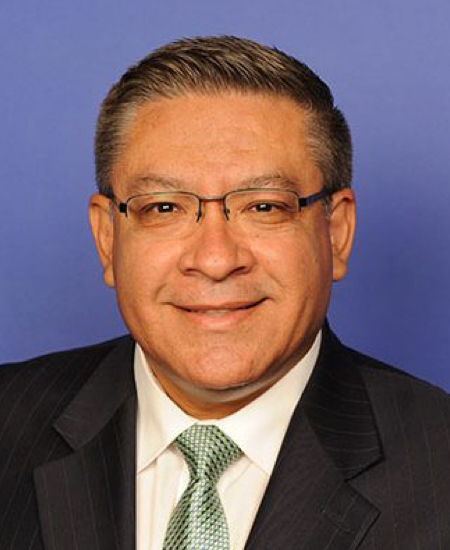
Rep. Salud O. Carbajal
Sponsored bills
Maddy summaryHR 1475, the SBA Disaster Transparency Act, requires the Small Business Administration (SBA) to publish all disaster assistance reports on its website. This bill amends existing law by adding specific language mandating that the SBA "publish on the website of the Administration" reports related to disaster assistance, including those submitted by state and local officials. The key mechanism is a procedural update to existing reporting requirements, ensuring all required reports are publicly accessible online rather than only being submitted internally. This directly affects the SBA (by changing its reporting process) and the public (by providing greater transparency into how disaster aid is distributed). The bill does not alter disaster assistance eligibility or funding levels.
Maddy summaryHR 1477 creates a new Animal Cruelty Crimes Section within the Justice Department's Environment and Natural Resources Division to enforce federal animal cruelty laws. This unit will coordinate with agencies like the FBI, USDA, and U.S. Marshals to investigate and prosecute cases, addressing current gaps in enforcement. The bill requires the unit to submit annual reports to Congress detailing prosecutions, convictions, and investigations where charges weren't filed. It does not change existing animal cruelty laws but establishes a dedicated federal unit to improve enforcement of current statutes.
Maddy summaryThis bill would require states to create a simplified process for out-of-state healthcare providers to join Medicaid and CHIP programs. Qualified providers (those already enrolled in Medicare or another state's program with low fraud risk) could enroll without excessive screening and would be approved for five years. It directly affects children under 21 enrolled in Medicaid or CHIP by expanding access to providers outside their state, particularly in underserved areas. The change applies to all states' Medicaid programs but takes effect three years after enactment.
Maddy summaryHR 1484 requires the Federal Aviation Administration (FAA) to commission the National Academies of Sciences to convene experts and issue a report on the health impacts of air traffic noise and pollution within 30 days of the bill's enactment. The report will summarize current scientific knowledge on these health effects and must be submitted to the FAA, Health and Human Services, the Environmental Protection Agency, and specific congressional committees. This bill creates a new study requirement but does not change existing regulations or funding; it solely mandates the collection of expert consensus on the health impacts of aviation noise and emissions.
Maddy summaryHRES 142 is a non-binding resolution recognizing the 80th anniversary of the February 1945 amphibious landing on Iwo Jima and the iconic flag-raising on Mount Suribachi during World War II. It commemorates the Battle of Iwo Jima (February 19-March 26, 1945), honors all service members who fought on both sides (including over 26,000 U.S. casualties and an estimated 20,000 Japanese soldiers), and acknowledges the battle's role in securing airfields that saved 24,000 bomber crew lives. The resolution encourages public remembrance through ceremonies and reaffirms U.S.-Japan friendship, but does not create new policies or affect any group.
Maddy summaryThis bill doubles key tax benefits for child care expenses. It increases the maximum child and dependent care credit from $3,000 to $6,000 per child (and $6,000 to $12,000 for two or more children) and doubles the dependent care assistance program limit from $5,000 to $10,000 annually. It also doubles the employer credit for providing child care from $150,000 to $300,000 per year. These changes directly affect working parents paying for child care and employers offering on-site or subsidized care, applying to tax years starting in 2025.
Maddy summaryHR 1410 expands access to mental health care for 9/11 responders and survivors by allowing licensed mental health providers (not just physicians) to conduct initial health evaluations and certifications under the World Trade Center Health Program. It adjusts the program’s funding formula to account for changing enrollment numbers by linking annual funding to the previous year’s enrollment ratio, and clarifies that deceased individuals are excluded from enrollment counts. The bill also extends the timeframe for adding new health conditions to the program’s list and requires a 2028 report assessing long-term funding needs through 2090. These changes aim to streamline eligibility, improve care access, and ensure sustainable funding for the program.
Goldie's Act This bill expands enforcement provisions under the Animal Welfare Act (AWA). Specifically, the bill directs the Department of Agriculture (USDA) to document and record detailed descriptions of violations of the act observed during inspections and investigations. USDA must provide a copy of all records documenting violations to state, local, and municipal animal control or law enforcement officials within 24 hours of such inspections or investigations. Inspections must be held at least once a year of each research facility, the premises of each animal dealer, and each exhibitor of animals. If violations are found during inspections, then USDA must conduct any necessary follow-up inspections until all the violations are corrected. Inspectors must confiscate or destroy in a humane manner animals found to be suffering physical or psychological harm as a result of failure to comply with the AWA. Violators are subject to civil penalties as outlined in the bill.
Maddy summaryThis bill creates a new federal tax credit for family child care providers who operate from their primary residence. It allows eligible providers to claim up to $5,000 annually toward specific startup costs like licensing fees, supplies (diapers, toys), insurance, fencing, playground equipment, and required renovations. To qualify, providers must be licensed/registered, serve at least two non-family children, and operate from their home. The credit is limited to one year per provider (no repeat claims) and expires after seven years. It directly affects small-scale home-based child care operators seeking to establish or improve their licensed services.