

Maddy summaryHR 4095, the Railroad Yardmaster Protection Act of 2025, extends existing duty hour limits for train employees to specifically include yardmasters. The bill amends federal law to define "yardmaster employee" as someone who supervises and coordinates train movements within rail yards, and adds this role to the rules limiting consecutive work hours. It directly affects rail yard supervisors by requiring the same duty hour restrictions that currently apply to train operators. The key change is formally incorporating yardmasters into the existing regulatory framework without altering the specific hour limits.
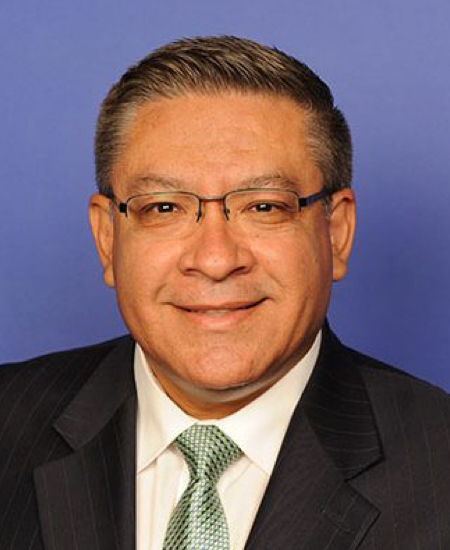
Rep. Salud O. Carbajal
Sponsored bills
Maddy summaryHR 3538, the Wildlife Confiscations Network Act of 2025, establishes a national network to handle the care of live wildlife seized at U.S. borders due to illegal trafficking. It creates a coordinated system where Federal wildlife law enforcement (like the U.S. Fish and Wildlife Service) can partner with qualified facilities - including zoos, sanctuaries, and rehabilitation centers - to provide immediate care, maintain evidence integrity, and manage long-term placement for confiscated animals. The bill expands a successful Southern California pilot that already placed over 4,100 animals by creating a centralized database and single point of contact for law enforcement. It authorizes $5 million annually (2026-2030) to support this network, directly affecting border agencies and participating care facilities while addressing capacity gaps at ports of entry.
Maddy summaryThe Caring for Survivors Act of 2025 increases monthly dependency and indemnity compensation for surviving spouses of veterans. It changes the calculation method from a fixed $1,154 to 55% of a specific veteran compensation rate, effective six months after enactment. The bill also reduces the required continuous disability rating period for survivors from 10 years to 5 years, and provides a proportional payment for cases where the rating period is shorter than 10 years. Surviving spouses of veterans who died before January 1, 1993, receive the greater of their current benefit or the new calculation. This directly affects surviving spouses eligible for benefits under Title 38, U.S. Code, particularly those with veterans who died prior to 1993.
Maddy summaryThe Downpayment Toward Equity Act of 2025 creates a federal program to provide financial assistance to first-generation homebuyers for down payments, closing costs, and other home purchase expenses. It authorizes $100 billion in funding to be distributed through states and eligible entities, with grants that can cover up to $20,000 or 10% of a home's purchase price (whichever is greater). To qualify, homebuyers must meet income limits (up to 120-140% of median area income), be first-time homebuyers with no prior home ownership by their parents, and complete homebuyer counseling. The program requires recipients to occupy homes as primary residences for at least five years, with repayment required if they sell sooner, and states must report on program demographics to ensure equitable outcomes.
Maddy summaryThe MONARCH Act of 2025 establishes the Western Monarch Butterfly Rescue Fund to address the critical decline of western monarch butterflies, which have dropped 99% over 30 years and reached a low of 1,914 in 2020. It authorizes $12.5 million annually for fiscal years 2026-2030 to fund grants for conservation projects led by eligible entities like local governments, tribal agencies, nonprofits, and research institutions within the butterflies' range (California, Arizona, Nevada, Washington, Oregon, Idaho, and Utah). Projects must focus on restoring milkweed, nectar plants, and habitat while coordinating with wildlife authorities and avoiding conflicts with food safety practices. Recipients must report project progress to the Secretary of the Interior and make reports publicly available, with annual updates to Congress on conservation efforts and outcomes.
Maddy summaryHR 4047, the Coastal Communities Ocean Acidification Act of 2025, amends the 2009 Federal Ocean Acidification Research and Monitoring Act to improve collaboration on ocean acidification issues. The bill requires the National Oceanic and Atmospheric Administration (NOAA) to establish ongoing input mechanisms for affected industries, coastal stakeholders, fishery councils, Indigenous groups (including Indian Tribes and Native Hawaiian organizations), and non-Federal scientists. It mandates specific tribal representation on the Advisory Board, directs NOAA to coordinate with tribes on vulnerability assessments and research planning, and prioritizes underserved coastal communities in resource allocation. These changes aim to integrate community and tribal knowledge into federal research and management efforts related to ocean acidification impacts on coastal economies and ecosystems.
Maddy summaryHR 4024, the Filling Public Safety Vacancies Act, allocates $162 million in federal funds for law enforcement agencies to hire or rehire additional officers under the Safe Streets Act. This funding directly affects state and local law enforcement agencies that receive grants under the program. Key provisions require agencies using these funds to conduct mandatory background checks and psychological evaluations for new officers, with the grant money covering these costs. The bill focuses on providing resources for officer recruitment while establishing specific hiring requirements for agencies utilizing the funds.
Maddy summaryThe Increasing Behavioral Health Treatment Act removes a Medicaid exclusion that previously blocked coverage for behavioral health services for individuals under 65 in psychiatric hospitals (also called "institutions for mental diseases"). It requires states to submit detailed plans to the federal government outlining how they will expand outpatient and community-based care for people transitioning from these facilities, including improved crisis services like mobile units and observation centers. States must also report annually on costs, patient outcomes, and the types of outpatient treatment provided after discharge, with specific requirements for coordinating care between health providers and first responders. This policy change directly affects Medicaid beneficiaries under 65 in psychiatric hospitals and state Medicaid programs, aiming to shift care toward less restrictive community settings.
Maddy summaryHR 4023, the American Dream for All Act, establishes a federal pilot program providing down payment assistance loans to help qualifying first-time and first-generation homebuyers. The program, administered by HUD, allocates funds to state or tribal housing agencies to offer loans covering 3% to 20% of a home’s purchase price (up to $150,000 in high-cost areas), with repayment tied to the home’s appreciation or depreciation. Eligible borrowers must be U.S. citizens/permanent residents, meet income limits (≤150% of area median income), complete homebuyer education, and self-attest to limited ability to pay more than 5% of the home’s value upfront. Repaid funds return to the state loan pool for reuse, with annual reports required on program implementation. This pilot runs through fiscal year 2030.
Maddy summaryHRES 508 is a symbolic House resolution supporting the designation of September 14-20, 2025, as "National Truck Driver Appreciation Week." It does not create new laws or funding but expresses congressional recognition of truck drivers' contributions to the U.S. economy and daily life. The resolution cites statistics about truck drivers' role in transporting freight (70% of U.S. freight), delivering essential goods to 80% of communities, and their annual safety record. It directly affects no individuals or entities, as it serves only as a ceremonial acknowledgment with no binding requirements.