

Maddy summaryThis bill creates new retirement savings credits for small tax-exempt nonprofits (like community centers or charities) that start or maintain retirement plans. It allows these organizations to claim a credit equal to either their calculated credit amount or their payroll taxes paid during the year, whichever is smaller. The credit applies to both startup costs for new plans and auto-enrollment features, capping the credit at the employer's payroll tax liability. The bill takes effect for taxable years after December 2024, with offsetting funds transferred to Social Security Trust Funds to maintain existing revenue streams.
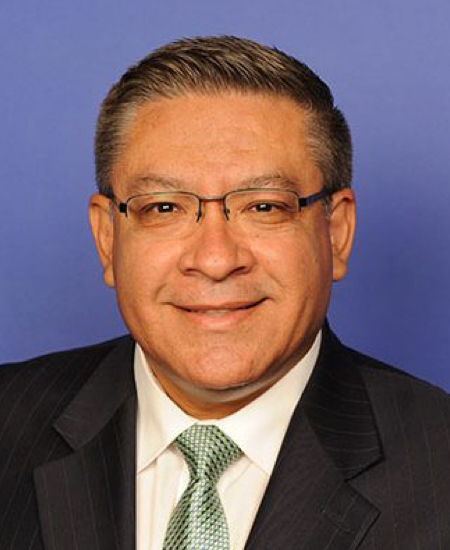
Rep. Salud O. Carbajal
Sponsored bills
Maddy summaryThis bill authorizes the President to award the Medal of Honor to retired Air Force Colonel Philip J. Conran for his heroic actions during a 1969 rescue mission in Laos while serving in the Vietnam War era. It specifically recognizes Conran's repeated exposure to enemy fire to save downed crew members, despite being wounded, and his role in defending the crash site for six hours under heavy attack. The bill overrides standard time limits for awarding military honors (per 10 U.S.C. § 9274) to allow this specific recognition, as Conran had previously received the Air Force Cross for the same acts. The bill directly affects only Colonel Conran and does not alter broader military award procedures.
Maddy summaryHR 4482, the Stop NOAA Closures Act, imposes a temporary moratorium on closing, suspending, or limiting access to National Oceanic and Atmospheric Administration (NOAA) facilities, effective until a report is submitted to Congress by January 21, 2029. The bill requires NOAA and the General Services Administration to submit detailed reports to specific congressional committees before any future facility closure, suspension, lease termination, or consolidation - outlining cost-benefit analyses, service impacts, and justification. Exceptions apply only for emergencies posing immediate threats to personnel safety. This bill directly affects NOAA's facility management decisions and mandates congressional oversight for future closures.
Maddy summaryThis bill establishes the Office of Climate Change and Health Equity within the Department of Health and Human Services to coordinate federal efforts addressing climate change's health impacts. It requires the creation of a National Strategic Action Plan to identify communities most affected by climate-related health threats - including environmental justice communities, medically underserved communities, and Tribal communities - and develop strategies for preparedness and response. The plan must address specific health impacts like extreme heat, air pollution, infectious diseases, and mental health effects, while prioritizing health equity and environmental justice. The bill also creates a Science Advisory Board to provide expert guidance and authorizes funding for these initiatives over several years. These provisions are designed to strengthen the health sector's ability to respond to climate change impacts across the United States.
Maddy summaryThe INSURE Act establishes a federal reinsurance program to help property insurers cover losses from natural disasters like hurricanes, wildfires, and floods. Participating insurers must offer "all-perils" property insurance policies covering these perils and develop loss prevention partnerships with policyholders to reduce disaster risks. The program will be phased in over several years, starting with wind and hurricane coverage, and will be funded by quarterly premiums from participating insurers based on expected losses. This aims to stabilize property insurance markets and ensure coverage remains available in high-risk areas.
Maddy summaryHCONRES 44 is a symbolic resolution recognizing a health and safety emergency for children linked to the Trump administration's climate policies. It claims these policies - unleashing fossil fuel production, blocking renewable energy, and suppressing climate science - disproportionately harm children through increased air pollution, extreme weather, and denied access to climate data. The resolution calls for reversing these policies, restoring the EPA's mission, and ensuring climate action aligns with protecting children's rights. It does not enact new laws or change policy, but serves as a formal congressional statement of concern.
Maddy summaryThis bill establishes federal worker heat protection standards to prevent heat-related illness and injury. It requires employers to provide a workplace free from heat stress hazards, including access to cool water, scheduled rest breaks, shaded cooling areas, and training on heat illness symptoms. The Secretary of Labor must create these standards within one year, incorporating evidence-based practices like engineering controls (e.g., ventilation), administrative measures (e.g., adjusted schedules), and employer-paid personal protective equipment. The law directly affects all employers in high-heat work environments - such as construction, agriculture, and manufacturing - and strengthens whistleblower protections for workers reporting safety violations.
Maddy summaryHR 4453 would amend federal law to add Parkinson's disease to the list of illnesses automatically considered work-related for firefighters. Specifically, it inserts "Parkinson's disease" into Section 8143b(b) of Title 5, U.S. Code, which determines which conditions qualify for disability benefits under the Federal Employees' Compensation Act. This change directly affects firefighters who develop Parkinson's disease during their fire protection duties, making it easier for them to qualify for federal disability compensation without needing to prove direct causation. The bill modifies existing code language to include this condition among other work-related illnesses already covered for firefighter benefits.
Maddy summary# Summary of "Dignity for Immigrants while Guarding our Nation to Ignite and Deliver the American Dream Act" This comprehensive immigration bill proposes multiple pathways to legal status and permanent residency for undocumented immigrants while creating new employment and workforce development programs. ## Key Provisions: 1. **Dignity Program (Subtitle III)**: - Creates a 7-year program for eligible undocumented immigrants requiring $7,000 in restitution payments to an H-1B fund - Provides deferred action on removal, work authorization, and travel privileges - Requires participants to maintain employment/education, pay taxes, and comply with all laws - Upon completion, participants receive "Dignity Status" valid for 7 years with renewal options 2. **Workforce Development (Division C)**: - Directs restitution payments to fund apprenticeships and work-based learning programs - Establishes industry partnerships to support small- and medium-sized businesses - Focuses on "in-demand industry sectors" with targeted training programs - Requires 12 months of post-employment support services for participants 3. **Family Reunification (Section 3111-3115)**: - Expands discretionary authority for family-based relief - Creates new "family purpose" nonimmigrant visa category (90-day limit) - Modernizes military naturalization for service members - Includes protections for children affected by visa backlogs 4. **Backlog Reduction (Section 3201-3203)**: - Creates premium processing for long-pending cases ($20,000 fee) - Increases per-country caps from 7% to 15% - Protects children from "aging out" of family-based visas 5. **Student and Worker Visas (Section 3301-3305)**: - Modernizes student visa categories with "dual intent" provisions - Recognizes doctoral STEM graduates as "extraordinary ability" - Streamlines visa processing through a new Immigration Agency Coordinator The bill aims to balance immigration reform with workforce development, creating a pathway to legal status while directing funds toward American workers through apprenticeships and training programs in high-demand fields.
Maddy summaryThe Child Care for Working Families Act creates a federal program to provide affordable, high-quality child care for working families with children under age 6. It would provide direct child care assistance through certificates or grants to parents, with no copayment required for families at or below 85% of state median income. The program requires states to implement quality standards for child care providers, including a tiered quality system and minimum wage requirements for staff (at least a living wage equivalent to elementary educators). The bill appropriates $20 billion for the program over five years, with additional funding for quality improvement initiatives and universal preschool services.