

Build America's Libraries Act This bill establishes and provides funds through FY2024 for the Build America's Libraries Fund, from which the Institute of Museum and Library Services (IMLS) must allocate funding to states and, through them, need-based grants to libraries to make long-term improvements to library facilities. The IMLS must also award grants to Indian tribes and organizations that primarily serve and represent Native Hawaiians. Specifically, the bill requires each state that receives an allocation, and each library that receives a grant, to carry out certain activities to improve library facilities. These activities include constructing and renovating library facilities, investing in infrastructure projects to improve internet access and connectivity, improving indoor air quality, and making facilities accessible to individuals with disabilities. The bill also outlines administrative and oversight provisions, including by requiring library projects to use iron and steel products that are produced in the United States.
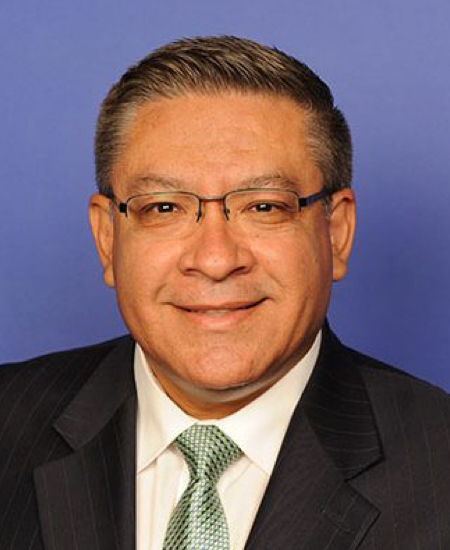
Rep. Salud O. Carbajal
Sponsored bills
Research Investment to Spark the Economy Act of 2021 or the RISE Act of 2021 This bill authorizes the Departments of Agriculture, Commerce, Defense, Education, Energy, the Interior, Health and Human Services, and Transportation, National Aeronautics and Space Administration (NASA), National Science Foundation, and Environmental Protection Agency to provide support for research regarding COVID-19 (i.e., coronavirus disease 2019) or research disrupted by the COVID-19 pandemic. Support may be used to provide supplemental funding to extend the duration of a grant to a research institution, national laboratory, or individual that was awarded prior to the enactment of this bill, or to expand the purposes of such a grant as specified; issue awards to research the effects of the current pandemic and potential future pandemics; and provide flexibility on awards to account for facility closures or other limitations during the COVID-19 public health emergency. Agencies must provide the support as rapidly as possible. Provided funds shall remain available through FY2021.
Alzheimer's Caregiver Support Act This bill authorizes grants to expand training and support services for families and caregivers of individuals living with Alzheimer's disease or a related dementia. The Department of Health and Human Services may award these grants to community organizations and health care and social service providers.
Arctic Refuge Protection Act This bill repeals the Arctic National Wildlife Refuge oil and gas program. The bill designates approximately 1,559,538 acres of land within Alaska in the Arctic National Wildlife Refuge as a component of the National Wilderness Preservation System.
San Gabriel Mountains Foothills and Rivers Protection Act This bill establishes the San Gabriel National Recreation Area in California as a unit of the National Park System, consisting of 49,387 acres of federal lands and interests in land. The Department of the Interior must (1) cooperate with the Department of Defense (DOD) to develop opportunities for the management of the federal lands under DOD jurisdiction that are included within the recreation area, (2) create a comprehensive management plan for the recreation area, and (3) develop an integrated visitor services plan for the recreation area. The bill establishes (1) the San Gabriel National Recreation Area Public Advisory Council to advise Interior on the development and implementation of the management plan and the visitor services plan, and (2) the San Gabriel National Recreation Area Partnership to coordinate activities of governmental and private entities in advancing the purposes of this bill and to improve management and recreational opportunities within the recreation area. The Department of Agriculture must modify the boundaries of the San Gabriel Mountains National Monument in California to include 109,167 acres of additional, identified National Forest System lands and administer those lands as part of the monument. The bill designates (1) specified areas as components of the National Wilderness Preservation System, and (2) specified river and creek segments as components of the National Wild and Scenic Rivers System.
Broadening Online Opportunities through Simple Technologies Act or the BOOST Act This bill allows an individual taxpayer to elect a tax credit for 75% of qualified signal booster expenditures up to $400 in a single taxable year through 2025. The bill defines qualified signal booster expenditures as amounts paid for the purchase of any communications signal booster for use by the taxpayer in a principal residence located in an underserved area. The booster is designed to increase the strength or range of a broadband communications signal.
Telehealth Modernization Act This bill modifies requirements relating to coverage of telehealth services under Medicare. Specifically, the bill extends certain flexibilities that were initially authorized during the public health emergency relating to COVID-19 (i.e., coronavirus disease 2019). Among other things, the bill allows (1) rural health clinics and federally qualified health centers to serve as the distant site (i.e., the location of the health care practitioner); (2) the home of a beneficiary to serve as the originating site (i.e., the location of the beneficiary) for all services (rather than for only certain services); and (3) all types of practitioners to furnish telehealth services, as determined by the Centers for Medicare & Medicaid Services.
This bill provides for the presentation of a Congressional Gold Medal to the Freedom Riders, in recognition of their contribution to civil rights by fighting for equality in interstate travel.
Juneteenth National Independence Day Act This bill establishes Juneteenth Independence Day as a federal holiday.
Protecting LGBTQ Youth Act This bill expands programs that prevent and treat child abuse and neglect to address issues facing lesbian, gay, bisexual, and transgender youth. Specifically, these programs include (1) research and reporting requirements, (2) providing technical assistance, (3) grants to states and local agencies to train child-welfare personnel, and (4) community-based prevention-service grants, among others.