

Veterans' Culturally Competent Care Act This bill requires the Department of Veterans Affairs (VA) to establish standards and requirements for the provision of mental health care by non-VA providers in the Veterans Community Care Program (VCCP). The established standards must be the same as the standards applicable to VA employees who provide mental health care. The VA must require non-VA mental health care providers to complete training courses on military culture, core competencies for health care professionals, suicide evaluation and management, post-traumatic stress disorder, traumatic brain injury, and military sexual trauma after the provider becomes approved under the VCCP. The VA must also (1) identify additional training areas for which to develop courses, and (2) require the non-VA providers to complete such courses.
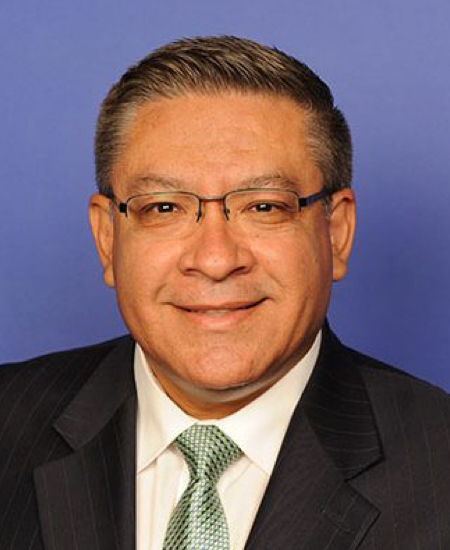
Rep. Salud O. Carbajal
Sponsored bills
Member Business Loan Expansion Act This bill revises requirements related to the terms and lending limits of certain credit union loans. Specifically, the bill (1) allows the National Credit Union Administration Board to lengthen the maturity term of certain loans made by a credit union, and (2) raises the credit limit for credit union member businesses under which such loans are excluded from overall credit union lending limits. Finally, the bill expands the definition of a community financial institution by (1) allowing insured credit unions to qualify, and (2) raising the average asset limit. (Community financial institutions are subject to reduced asset requirements for purposes of Federal Home Loan Bank membership.)
Communities Helping Invest through Property and Improvements Needed for Veterans Act or the CHIP IN for Veterans Act This bill extends from 5 to 10 years the Department of Veterans Affairs (VA) pilot program under which the VA may accept donations of property or facilities from specified entities (e.g., state or local authorities).
Improving Medicare Coverage Act This bill temporarily expands eligibility for Medicare. It also temporarily establishes a premium and cost-sharing assistance program for low-income beneficiaries. Specifically, the bill lowers the age of eligibility for Medicare from 65 to 60. The Centers for Medicare & Medicaid Services must establish procedures to provide for automatic enrollment of qualifying individuals. Enrollment must be completed within 11 months of the bill's enactment. The bill also establishes a program under Medicare to assist low-income Medicare beneficiaries with premiums, coinsurance, deductibles, and other costs. Currently, such assistance is provided through Medicare Savings Programs, which are administered by state Medicaid programs. The bill also establishes a related special enrollment period under Medicare, expands eligibility for assistance to beneficiaries with income up to 200% of the federal poverty line, and provides for joint eligibility determinations with respect to the bill's program and the low-income subsidy program under the Medicare prescription drug benefit. The bill's provisions generally take effect six months after the bill's enactment and terminate five years later.
Prohibition of Medicaid Funding for Conversion Therapy Act This bill prohibits state Medicaid programs from covering conversion therapy. The bill defines conversion therapy as any practice or treatment that seeks to change a person's sexual orientation or gender identity in exchange for monetary compensation.
Pediatric Access to Critical Healthcare Act This bill requires the Health Resources and Services Administration (HRSA) to award grants to children's hospitals and other providers that predominately treat individuals under 21 for improving pediatric health care infrastructure. In awarding the grants, HRSA must prioritize recipients that serve significant numbers of patients receiving medical assistance through Medicaid or the Children's Health Insurance Program or children from other underserved groups.
Harlem Hellfighters Congressional Gold Medal Act This bill provides for the award of a Congressional Gold Medal to the 369th Infantry Regiment, commonly known as the Harlem Hellfighters, in recognition of their bravery and outstanding service during World War I.
Beaches Environmental Assessment and Coastal Health Act of 2021 or the BEACH Act of 2021 This bill reauthorizes through FY2026 and expands a program that awards grants to state and local governments to monitor the water quality at beaches and notify the public when water is not safe for recreational activities. The bill expands the program to allow the Environmental Protection Agency to award grants for researching and identifying specific sources of contamination at certain coastal recreation waters and taking actions to mitigate those sources.
Diversifying Investigations Via Equitable Research Studies for Everyone Trials Act or the DIVERSE Trials Act This bill requires activities to increase diversity in clinical trials. It also expands reporting by laboratories that test for and diagnose COVID-19 and requires a study on data collection and data sharing during public health emergencies. Specifically, the Food and Drug Administration (FDA) must issue guidance on decentralized clinical trials to promote meaningful demographic and geographic diversity in patient engagement, enrollment, and participation. Decentralized clinical trials include those executed through telemedicine or other digital technologies to allow for the remote collection and assessment of clinical trial data. The FDA may also work with foreign regulators to harmonize international regulations governing decentralized clinical trials and the use of digital health technology. In addition, the Department of Health and Human Services (HHS) may support community education, outreach, and recruitment activities for clinical trials of treatments for conditions that disproportionately impact populations underrepresented in clinical trials. The bill also specifies that drug or device manufacturers may provide, subject to some limits, free digital health technologies and other remuneration to patients in approved clinical trials without violating laws that address fraud and abuse in federal programs. Furthermore, laboratories that test for and diagnose COVID-19 must report additional demographic data, including information about social determinants of health. HHS must also contract with the National Academy of Medicine to study and propose a design for an interoperable platform to facilitate data sharing during public health emergencies.
This resolution supports the designation of American Grown Flower and Foliage Month.