

Renewing Immigration Provisions of the Immigration Act of 1929 This bill expands eligibility for a program that authorizes the Department of Homeland Security to, at its discretion, provide lawful permanent resident status to certain long-term residents of the United States, including individuals who are unlawfully present. Currently, this program, sometimes referred to as the Registry program, is only available to eligible non-U.S. nationals ( aliens under federal law) who entered the United States before January 1, 1972. The bill removes this entry cutoff date and opens up the program to eligible individuals who have resided in the United States for at least seven years. Existing requirements (e.g., the individual must not be inadmissible or deportable due to certain grounds related to crime or terrorism) continue to apply.
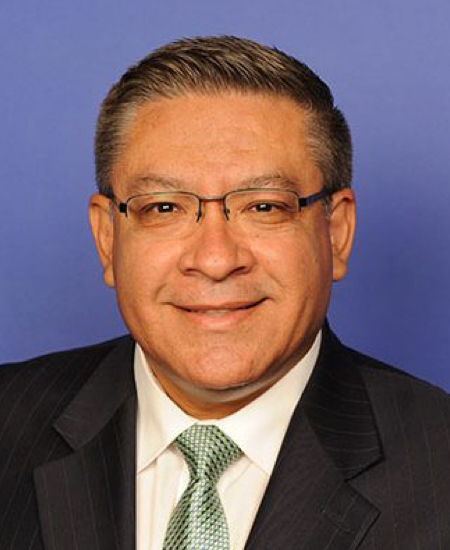
Rep. Salud O. Carbajal
Sponsored bills
Youth Voting Rights Act This bill expands voting access for youth. Specifically, the bill establishes a private right of action to enforce the Twenty-Sixth Amendment, which prohibits denying or abridging the right to vote based on age. Additionally, the bill directs each state to designate as voter registration agencies all offices within public institutions of higher education (IHEs) that provide assistance to students, implement a preregistration process to allow minors who are 16 years or older to register to vote in federal elections that take place when or after the preregistered individual turns age 18, and ensure the availability of polling places on campuses of IHEs (with the availability of waivers). The bill prohibits durational residency requirements for voting in all federal elections. Currently, this prohibition applies only to voting for the offices of President and Vice President. States and local jurisdictions with voter identification requirements must treat IHE-issued student identification cards as voter identification. The Election Assistance Commission (EAC) must make grants to states to increase the involvement of individuals under age 18 in public election activities. The Government Accountability Office must report to Congress on trends related to voter registration, absentee voting, and provisional voting. The EAC must also collect and make publicly available certain data from states.
Housing for All Act of 2022 This bill modifies existing, and creates new, grants and programs concerning affordable housing and homelessness. In particular, the bill authorizes federal funding of the Housing Trust Fund, which supports affordable housing activities. Currently, contributions to the fund come from the earnings of Fannie Mae and Freddie Mac. Additionally, the bill (1) expands eligibility for housing choice vouchers, which provide rental assistance to low-income individuals; and (2) entitles certain individuals to the vouchers. Other matters addressed in the bill include permanently authorizing the U.S. Interagency Council on Homelessness (which terminates on October 1, 2028) and modifying existing programs that support housing for the elderly, individuals with disabilities, and individuals experiencing homelessness or at risk of homelessness. The bill also creates various housing-related grant programs to, for example, support overnight parking for individuals who live in vehicles and no-cost legal assistance with evictions for low-income individuals. The bill also incorporates housing into certain transportation grants and programs.
Latonya Reeves Freedom Act of 2022 This bill prohibits government entities and insurance providers from denying community-based services to individuals with disabilities that require long-term service or support that would enable such individuals to live in the community and lead an independent life. Specifically, these entities may not discriminate against such individuals in the provision of community-based services by such actions as imposing prohibited eligibility criteria, cost caps, or waiting lists or failing to provide a specific community-based service. Additionally, community-based services must be offered to individuals with such disabilities prior to institutionalization. Institutionalized individuals must be notified regularly of community-based alternatives. The bill requires the Department of Justice to issue regulations requiring government entities and insurance providers to offer community-based long-term services to individuals with such disabilities who would otherwise qualify for institutional placement. Government entities must ensure sufficient availability of affordable, accessible, and integrated housing that is not a disability-specific residential setting or a setting where services are tied to tenancy. Regulations shall also (1) require government entities and insurance providers to perform self-evaluation on current services, policies, and practices and concerning compliance with requirements of this bill; and (2) require government entities to submit a transition plan. The bill provides funds for FY2022 for the Department of Health and Human Services to provide technical assistance with respect to transition plans. The bill allows civil actions by individuals subjected to, or about to be subjected to, a violation of its requirements.
Porch Pirates Act of 2022 This bill extends federal criminal penalties for obstruction of correspondence and theft of stolen mail matter (which apply to U.S. Postal Service mail) to matter (e.g., packages) sent or delivered by private or commercial interstate carriers.
Preventing Auto Recycling Theft Act or the PART Act This bill establishes requirements for motor vehicles related to catalytic converters and other motor vehicle parts that contain precious metals. The National Highway Traffic Safety Administration must revise the motor vehicle theft prevention standard for new motor vehicles to include catalytic converters among the parts that require an inscribed or affixed identifying number. Additionally, the Department of Transportation must establish a grant program through which law enforcement agencies and other entities can stamp vehicle identification numbers onto catalytic converters of existing vehicles. The bill establishes retention requirements for the purchase of motor vehicle parts that contain precious metals. It also sets forth criminal penalties for the theft of catalytic converters or any precious metals removed from a vehicle.
Bringing an End to Harassment by Enhancing Accountability and Rejecting Discrimination in the Workplace Act or the BE HEARD in the Workplace Act This bill expands protections against discrimination and harassment in the workplace and raises the minimum wage for tipped employees. Specifically, the bill (1) makes it an unlawful employment practice to discriminate against an individual in the workplace based on sexual orientation, gender identity, pregnancy, childbirth, a medical condition related to pregnancy or childbirth, or a sex stereotype; and (2) provides a statutory definition for what constitutes workplace harassment. Further, these protections apply to all workplaces, regardless of size, and to all workers, including independent contractors, interns, volunteers, and trainees. The bill prohibits employers from entering into contracts or agreements with workers that contain certain nondisparagement or nondisclosure clauses and prohibits certain predispute arbitration agreements and postdispute agreements. It also establishes grant programs to (1) prevent and respond to workplace discrimination and harassment, (2) provide legal assistance for low-income workers, and (3) establish a system of legal advocacy in states to protect the rights of workers. The bill further provides employees the right to retain their tips and it increases, in specified annual increments, the minimum wage for tipped employees to match the federal minimum wage for nontipped employees. Additionally, the bill requires the Equal Employment Opportunity Commission to provide specified training and resource materials, establish and convene a harassment prevention task force, and establish an Office of Education and Outreach with regard to prohibited discrimination and harassment in employment. The bill also requires specified studies, reports, and research on prohibited workplace harassment.
Kerrie Orozco First Responders Family Support Act This bill establishes that a surviving spouse, child, or parent of a U.S. citizen public safety officer may be naturalized at the time of the officer's death if the death was caused by an injury incurred or aggravated by the officer's employment. The individual may be naturalized upon meeting the relevant immigration law requirements, except that no prior residence or specified U.S. physical presence shall be required. A surviving spouse seeking naturalization must have been living in marital union with the officer at the time of death. Public safety officers include law enforcement officers, firefighters, or chaplains, and certain Federal Emergency Management Agency (FEMA) employees engaged in hazardous duties.
Small Passenger Vessel Liability Fairness Act of 2021 This bill revises maritime law regarding the liability of owners of certain small passenger vessels for violations of safety rules resulting in accidents on such vessels. Under current law, owners may avoid liability in some cases depending on the value of their vessels after accidents. The bill requires the Coast Guard to promulgate rules that require owners or operators of small passenger vessels to provide just compensation in any claim for which they are found liable. The bill makes the revised liability provisions retroactive to September 2, 2019, the date of what is known as the Conception boat fire in which 34 lives were lost.
Lifting Immigrant Families Through Benefits Access Restoration Act of 2021 or the LIFT the BAR Act of 2021 This bill repeals certain limits on the eligibility of noncitizens who lawfully reside in the United States for federal means-tested programs, including Medicaid, the Children's Health Insurance Program (CHIP), programs funded through Temporary Assistance for Needy Families (TANF) grants, Supplemental Security Income (SSI), and certain nutrition and housing programs.