

Maddy summaryThis bill establishes an independent, nonpartisan Commission on Natural Disaster Risk Management and Insurance to study how the United States can better manage risks and financial costs from natural disasters. The Commission would consist of 26 members appointed by congressional leaders and committee chairs, including two state insurance commissioners, who would serve without pay and meet to conduct assessments. Its main duties include examining current disaster risks, insurance availability and affordability, building codes, and various risk-sharing mechanisms like catastrophe bonds and alternative insurance products. After two years, the Commission must submit a detailed report with findings and recommendations to relevant congressional committees before it is dissolved.
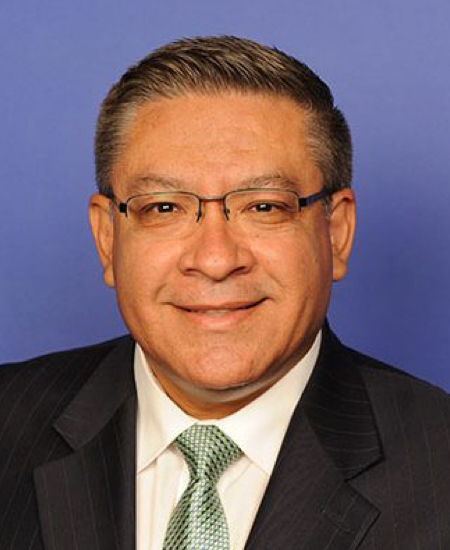
Rep. Salud O. Carbajal
Sponsored bills
Maddy summaryHR 5543, the Baltic Security Assessment Act of 2025, requires the U.S. State and Defense Departments to submit a report within 180 days of enactment. The report will assess emerging military, cyber, hybrid, and political threats to Estonia, Latvia, and Lithuania, including the roles of Russia, Belarus, China, Iran, and other actors. It will also evaluate U.S. and NATO military presence in the region, opportunities for defense cooperation, and recommendations to strengthen deterrence, cybersecurity, and democratic resilience in the Baltic countries. This bill directly affects U.S. foreign policy and defense planning regarding the Baltics, but does not create new programs or funding.
Maddy summaryThis bill establishes a grant program to help vulnerable mothers and babies in areas with high climate-related health risks, such as extreme heat and air pollution. It directs the Department of Health and Human Services to award up to $105 million over four years to community groups, healthcare providers, and local organizations for initiatives that provide cooling resources, health education, and support services. The program prioritizes areas with high rates of maternal and infant health disparities and requires grantees to address racial and ethnic inequities. Additionally, the bill creates a research consortium at the National Institutes of Health to study climate impacts on birth outcomes and funds training programs for health profession schools to better prepare providers for these risks.
Maddy summaryThis House Resolution recognizes the efforts and public safety contributions of linemen and the important role they play in maintaining the nation's energy infrastructure. It expresses support for designating April 18, 2026, as "National Lineman Appreciation Day" and acknowledges linemen as first responders.
Maddy summaryThis resolution expresses the sense of the House of Representatives that stable housing is a fundamental human right that keeps families together, regardless of immigration status. It condemns a past administration's proposal to ban mixed-immigration status families from receiving prorated federal housing assistance and calls on the Secretary of Housing and Urban Development to withdraw any such rule. The resolution also urges Congress to increase funding for federal housing programs and calls for a Government Accountability Office report on the impact of such proposals on family separation and homelessness.
Maddy summaryThe Momnibus Act is a comprehensive legislative bill designed to improve maternal health outcomes across the United States by addressing social determinants of health, expanding access to care, and reducing disparities among pregnant and postpartum individuals. The bill establishes a federal task force to coordinate efforts between agencies and stakeholders to eliminate preventable maternal mortality and severe morbidity, while providing sustained funding to community-based organizations to address nonclinical factors like housing, nutrition, and transportation. Key provisions include extending WIC eligibility to 24 months postpartum, creating grants to grow and diversify the perinatal workforce, implementing respectful maternity care training for all healthcare employees, and establishing compliance programs to track and address bias in maternity care settings. The legislation also includes specific measures for incarcerated mothers, veterans, and vulnerable populations affected by climate change, alongside funding for maternal mental health services and technology-enabled care models to expand access in underserved areas.
Maddy summaryThis concurrent resolution (HCONRES 40) directs the President to remove U.S. military forces from hostilities with Iran, as required by the War Powers Resolution. It applies directly to U.S. Armed Forces deployed in conflict with Iran, except for forces needed to defend the U.S. or allies from imminent attack. The bill mandates removal unless the President complies with War Powers Resolution reporting requirements for self-defense actions, without needing new congressional authorization. As a procedural resolution, it does not create new law but compels executive action under existing legal framework.
Maddy summaryThis resolution formally recognizes April 10 as Dolores Huerta Day to honor the civil rights and labor leader's legacy. It does not create a federal holiday or change laws but expresses the House of Representatives' support for the designation. The text highlights Huerta's contributions to farm workers' rights, women's equality, and Latino political representation through a series of "whereas" clauses detailing her achievements. The resolution serves as a commemorative statement rather than a policy change, directing no new actions or funding.
Maddy summaryThis bill establishes a 17-member Commission on Presidential Capacity to Discharge the Powers and Duties of the Office. This commission, composed primarily of medical professionals and former high-ranking executive officials, would be activated by a concurrent resolution of Congress. Its duty would be to conduct a medical examination of the President to determine if they are mentally or physically unable to discharge the powers and duties of the office due to conditions such as illness, disability, or substance use. Following the examination, the commission would report its findings and a declaration on the President's capacity to Congress and the Vice President, with any refusal by the President to undergo examination taken into consideration.
Maddy summaryThis bill, known as the OHH SNAP Act of 2026, would expand eligibility for the Supplemental Nutrition Assistance Program to include more college students. It directly affects students who are working while attending college or have no financial aid available. The key changes allow students with zero financial aid and those classified as independent to qualify for SNAP benefits, while also broadening the definition of eligible work activities to include attending school. These provisions would take effect 180 days after the bill is signed into law, but would not apply to certification periods that began before that date.