

National Center for the Advancement of Aviation Act of 202 2 This bill establishes the National Center for the Advancement of Aviation to (1) develop a skilled and robust U.S. aviation and aerospace workforce; (2) serve as a national independent forum to support collaboration and cooperation between aviation and aerospace stakeholders regarding the advancement of the U.S. aviation and aerospace workforce; and (3) serve as a repository for research conducted by institutions of higher education, research institutions, or other stakeholders regarding the aviation and aerospace workforce, or related technical and skill development. The center must perform the following duties improve access to aviation and aerospace education and related skills training to help grow the U.S. aviation and aerospace workforce; support Armed Forces personnel and veterans seeking to transition to a career in civil aviation or an aerospace-related field through outreach, training, apprenticeships, or other means; and amplify and support the research and development efforts conducted as part of the National Aviation Research Plan and work done at the Federal Aviation Administration Technical Centers regarding the aviation and aerospace workforce. Additionally, the center may issue grants to certain entities to create, develop, deliver, or update middle and high school aviation curricula and aviation curricula used at institutions of higher education, secondary educations institutions, or by technical training and vocational schools; support the professional development of educators using the curricula; establish new education programs that teach technical skills used in aviation maintenance; establish scholarships, internships or apprenticeships for individuals pursuing employment in the aviation maintenance industry; support outreach about educational opportunities and careers in the aviation maintenance industry; and support the transition to career in aviation maintenance, including for members of the Armed Forces.
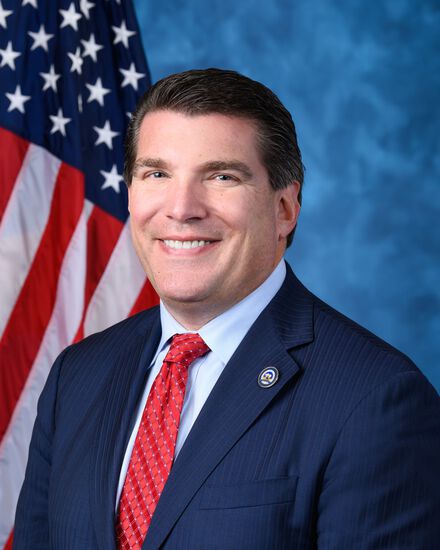
Rep. Jay Obernolte
Sponsored bills
Diverting IRS Resources to the Exigent Crisis Through Funds for Border Security Act or the DIRECT Funds for Border Security Act This bill rescinds unobligated amounts for Internal Revenue Service enforcement activities enacted by the Inflation Reduction Act of 2022 and redirects such amounts to the U.S. Customs and Border Protection for the hiring of new agents and officers for the security of the southern border of the United States.
Japanese American World War II History Network Act This bill directs the Department of the Interior to establish the Japanese American World War II History Network within the National Park Service. In carrying out the network, Interior shall review studies and reports to complement and not duplicate studies of Japanese American World War II history and Japanese American experiences during World War II, including studies related to relocation centers and confinement sites; and produce and disseminate appropriate educational materials, such as handbooks, maps, interpretive guides, or electronic information relating to Japanese American World War II history and Japanese American experiences during that war.
Maddy summaryHRES 1386 is a non-binding resolution designating the week of September 26-30, 2022, as "National Clean Energy Week." It expresses the House’s support for this designation and encourages individuals, organizations, and governments to promote clean energy solutions. The resolution highlights clean energy’s economic benefits (like supporting 7.8 million jobs in 2021) and urges investment in affordable, low-emission energy technologies. It does not create new laws, funding, or obligations - it is purely symbolic recognition of the clean energy sector’s role in the U.S. economy.
Social Security Fairness Act of 2021 This bill repeals provisions that reduce Social Security benefits for individuals who receive other benefits, such as a pension from a state or local government. The bill eliminates the government pension offset , which in various instances reduces Social Security benefits for spouses, widows, and widowers who also receive government pensions of their own. The bill also eliminates the windfall elimination provision , which in some instances reduces Social Security benefits for individuals who also receive a pension or disability benefit from an employer that did not withhold Social Security taxes. These changes are effective for benefits payable after December 2021.
Patient Advocate Tracker Act This act requires the Office of Patient Advocacy within the Veterans Health Administration to establish an information technology system that allows veterans or their representatives to electronically file a complaint with a patient advocate and review the status of a filed complaint.
Improving Seniors' Timely Access to Care Act of 2022 This bill establishes several requirements and standards relating to prior authorization processes under Medicare Advantage (MA) plans. Specifically, MA plans must (1) establish an electronic prior authorization program that meets specified standards, including the ability to provide real-time decisions in response to requests for items and services that are routinely approved; (2) annually publish specified prior authorization information, including the percentage of requests approved and the average response time; and (3) meet other standards, as set by the Centers for Medicare & Medicaid Services, relating to the quality and timeliness of prior authorization determinations.
Supporting Medicare Providers Act of 2022 This bill extends a payment increase under Medicare's physician fee schedule through the end of 2023 (currently set to expire at the end of 2022).
Streamlining Aviation for Eligible Veterans Act This bill provides that a rehabilitation program under the Department of Veterans Affairs Veteran Readiness and Employment Program may include a program that includes flight training and does not lead to a degree.
Save Our Sequoias Act This bill provides for the conservation of giant sequoia trees ( Sequoiadendron giganteum ) in California, including by providing statutory authority for the Giant Sequoia Lands Coalition; directing the coalition to submit a Giant Sequoia Health and Resiliency Assessment; declaring an emergency on certain public lands and allowing officials to carry out protection plans during the emergency to respond to the threat of wildfires, insects, and drought; directing the Department of the Interior to develop and implement a Giant Sequoia Reforestation and Rehabilitation Strategy; and establishing a variety of programs and funds to support the conservation of giant sequoias.