Prison Staffing Reform Act of 2022 This bill requires the Bureau of Prisons (BOP) to (1) complete (through an external entity) a comprehensive review of staffing across the BOP, and (2) implement a plan for filling vacancies.
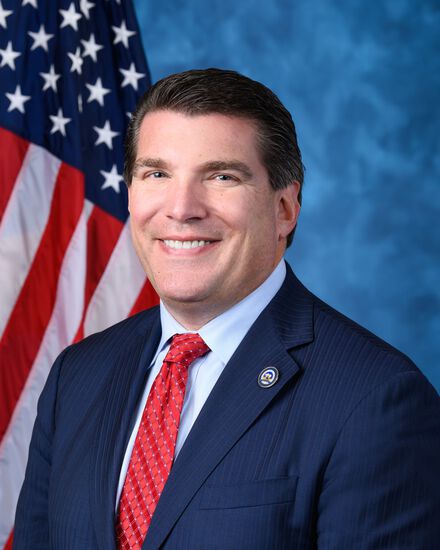
Rep. Jay Obernolte
Sponsored bills
Maddy summaryHRES 1114 is a non-binding House resolution expressing support for recognizing "National Police Week" as a way to honor law enforcement officers across the United States. The resolution acknowledges the service and sacrifices of law enforcement officers, particularly those who have died in the line of duty, and specifically references 619 officers who died in 2021 as listed in the resolution. This resolution does not create new laws or allocate funds but serves as a symbolic gesture to encourage public recognition of law enforcement personnel. It calls for Americans to observe National Police Week by honoring officers and raising awareness about their essential role in community safety. The resolution was introduced by multiple members of Congress and referred to the Committee on the Judiciary.
Felony Murder for Deadly Fentanyl Distribution Act This bill makes the distribution of fentanyl resulting in death a first degree murder. An individual who is guilty of first degree murder by distributing fentanyl is subject to death or life in prison.
Governing Unaccredited Representatives Defrauding VA Benefits Act or the GUARD VA Benefits Act This bill imposes criminal penalties and/or fines on individuals for directly or indirectly soliciting, contracting for, charging, or receiving any unauthorized fee or compensation with respect to the preparation, presentation, or prosecution of any claim for Department of Veterans Affairs benefits. The attempted commission of such offenses is also punishable by fine or imprisonment.
Afghan Adjustment Act This bill expands eligibility for special immigrant visas to certain Afghan nationals (and accompanying spouse and children) and addresses related issues. The Department of Homeland Security may provide such visas to Afghan nationals who provided qualifying service as a member of the Afghan Air Force or other specified entities and meet eligibility requirements, such as passing a background check. Currently, special immigrant visas for Afghan nationals are generally only available to those who were employed by or on behalf of the U.S. government in Afghanistan. Such visas shall also be available to an Afghan national who is a qualifying relative of a veteran or member of the U.S. Armed Forces. The bill also modifies procedures for providing lawful permanent resident status to certain classes of Afghan nationals, such as by (1) providing a streamlined process with specified vetting requirements for certain individuals, including those who provided support to the U.S. government in Afghanistan; and (2) preserving the eligibility of certain battered spouses whose eligibility for such status stemmed from a marriage that has terminated. Furthermore, the Department of State (1) must respond to inquiries from Members of Congress about specific applications from Afghan nationals seeking special immigrant or refugee status; and (2) establish an office in Afghanistan to perform certain tasks, such as issuing visas, if no U.S. embassies are operational in Afghanistan. The President must establish a task force to develop and implement a strategy to assist Afghan nationals who qualify for admission to the United States.
Animal Violence Exposes Real Threat of Future Violence Act of 2022 or the AVERT Future Violence Act of 2022 This bill directs the National Institute of Justice within the Department of Justice (DOJ) to study the factors that contribute to acts of animal cruelty. The report must also analyze acts of animal cruelty as a predictor of future violence against humans. Additionally, the bill authorizes DOJ to establish a grant program to support the development and strengthening of detection strategies and early intervention or diversion resources to stop acts of animal cruelty and rehabilitate offenders.
Securing America's Borders Against Fentanyl Act This bill requires research and reports on technology to address illicit drug trafficking. For example, the Department of Homeland Security (DHS) must develop a program to measure how technologies and strategies have helped federal agencies address the illicit trafficking of fentanyl and its precursors into the United States. Under the program, DHS must periodically report to Congress an analysis of technologies used in drug interdiction. The Government Accountability Office must periodically report to Congress on recommendations for improving the data collected and metrics used under the program.
Employee Rights Act This bill makes various changes with respect to the collective bargaining process and labor relations. For example, the bill permits an employer to refuse to collectively bargain with a union within 90 days prior to the expiration of a collective bargaining agreement if the employer receives evidence that the majority of the employees in the bargaining unit do not support the union. The bill requires support from a majority of the employees in the bargaining unit (not just a majority of the employees voting) when electing union representation. The bill also requires unions to provide bargaining unit employees with the right to vote by secret ballot, including when voting whether to engage in a strike or refusal to work. Further, union dues, fees, assessments, and other contributions may be used for only collective bargaining or contract administrative functions. Additionally, the bill establishes a process for nullifying executive orders that the Office of Management and Budget determines are likely to result in an employer ordering a plant closure or mass layoff.
Federal Prisons Accountability Act of 2022 This bill modifies the appointment procedures and term of service for the Director of the Bureau of Prisons. Currently, the director is appointed by the Attorney General. This bill requires the director to be appointed by the President and confirmed by the Senate. The bill also limits the director to a single term of 10 years.
Halt All Lethal Trafficking of Fentanyl Act or the HALT Fentanyl Act This bill places fentanyl-related substances as a class into schedule I of the Controlled Substances Act. A schedule I controlled substance is a drug, substance, or chemical that has a high potential for abuse; has no currently accepted medical value; and is subject to regulatory controls and administrative, civil, and criminal penalties under the Controlled Substances Act. Additionally, the bill establishes a new, alternative registration process for schedule I research that is funded by the Department of Health and Human Services or the Department of Veterans Affairs or that is conducted under an investigative new drug exemption from the Food and Drug Administration. The bill also makes several other changes to registration requirements for conducting research with controlled substances, including permitting a single registration for related research sites in certain circumstances, waiving the requirement for a new inspection in certain situations, and allowing a registered researcher to perform certain manufacturing activities with small quantities of a substance without obtaining a manufacturing registration.