

Maddy summaryHR 4070, the Disaster Mitigation and Tax Parity Act of 2023, excludes certain payments received from state disaster mitigation programs from taxable income. It directly affects homeowners who get funds from state or state-regulated programs to make property improvements specifically designed to reduce damage from windstorms, earthquakes, or wildfires (like installing fire-resistant roofing or seismic upgrades). The bill adds a new tax exclusion in the Internal Revenue Code, meaning these qualified mitigation payments won't be counted as gross income for tax purposes. This change applies to payments made after December 31, 2020, with options for retroactive tax filings.
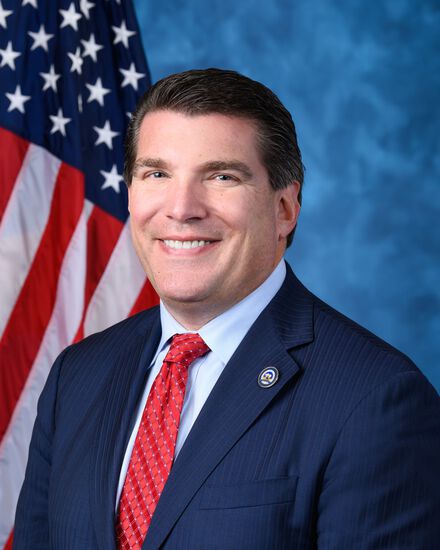
Rep. Jay Obernolte
Sponsored bills
Maddy summaryThe Telehealth Expansion Act of 2023 modifies the Internal Revenue Code to require health insurance plans to cover telehealth services without applying deductibles. It directly affects high deductible health plans (HDHPs) and their enrollees, ensuring telehealth visits aren’t counted toward annual deductibles. The key provision creates a "safe harbor" (Section 223(c)(2)(E)) so plans won’t lose HDHP status for excluding telehealth deductibles. This change applies immediately upon enactment and affects all plans offering telehealth services. It does not create new funding or services but adjusts tax code requirements for existing coverage.
Maddy summaryThis bill requires the Department of Veterans Affairs (VA) to improve how it processes PTSD disability claims. It mandates annual training for VA claims processors on PTSD stressor development and verification, standardizes training across regional offices, and establishes annual processes to analyze processing errors and study PTSD claim trends. The VA must also update procedural guidance yearly to provide better resources for processing claims involving service-connected PTSD. These changes directly affect VA claims processors and aim to make the claims process more accurate and efficient for veterans seeking PTSD disability benefits.
Maddy summaryThe Improving Atmospheric River Forecasts Act directs NOAA to establish a program focused on enhancing forecasts of atmospheric rivers - narrow corridors of moisture that cause heavy precipitation and flooding in the western U.S. - particularly in mountainous regions. It authorizes $15 million annually (2024-2028) for pilot projects to improve subseasonal-to-seasonal forecasting, addressing challenges like mountain terrain modeling and atmospheric river prediction. The program requires developing measurable forecast skill metrics, categorizing atmospheric river intensity, and evaluating new technologies (e.g., aircraft, satellite data) to boost accuracy. Its goal is to reduce loss of life and economic damage through more reliable forecasts and warnings for water managers and communities in the western U.S.
Maddy summaryHR 3980 establishes the National Oceanic and Atmospheric Administration (NOAA) as an independent agency within the executive branch, headed by an Administrator appointed by the President with Senate confirmation. The bill defines NOAA's core functions, including conducting scientific research across atmospheric, oceanic, climate, and space weather domains, maintaining the National Weather Service, and managing oceanic and coastal resources. It requires the Administrator to develop a reorganization plan within 18 months to improve efficiency and coordination across NOAA's operations, and mandates a study on consolidating Endangered Species Act and Marine Mammal Protection Act management functions. The bill also creates a Science Advisory Board to provide scientific advice to NOAA and Congress, while ensuring existing NOAA functions and authorities continue without disruption.
Maddy summaryHR 3792 extends U.S. security funding for Israel through 2028 (Section 3) and expands energy cooperation to include advanced nuclear technologies and carbon capture (Section 5). It requires annual reports on regional security partnerships involving Israel (Section 6) and ensures countries in the Abraham Accords can access U.S. development programs (Section 8). The bill also mandates reports on diplomatic efforts against ICC investigations targeting the U.S. and Israel (Section 10) and encourages people-to-people programs to strengthen the Abraham Accords (Sections 7, 9). These provisions directly affect Israel’s diplomatic engagement, security partnerships, and economic cooperation in the Middle East.
Maddy summaryThe HALT Fentanyl Act expands the definition of fentanyl-related substances in the Controlled Substances Act to include many structurally similar compounds, making it easier to regulate new fentanyl analogs without individual listing. It defines these substances based on specific chemical modifications to fentanyl, with limited exceptions for substances already controlled or listed elsewhere. The bill also streamlines research procedures for schedule I substances by creating expedited registration processes and allowing multiple studies under one registration, while requiring the Attorney General to publish a list of substances meeting the new definition.
Maddy summaryHR 3736, the "Extending Access to Addiction Treatment Act," extends the deadline for states to include medication-assisted treatment (MAT) in Medicaid plans. It amends the Social Security Act to change the requirement from ending in 2025 to 2035, giving states an additional decade to implement this coverage. This directly affects Medicaid programs nationwide and the millions of people with substance use disorders who rely on MAT for treatment. The bill makes no new coverage requirements but simply delays the existing deadline for states to provide this specific benefit.
Maddy summaryHR 3723, the Medical Device Electronic Labeling Act, allows medical device manufacturers to provide required labeling exclusively through electronic means instead of physical labels. This change directly affects manufacturers of prescription devices and in vitro diagnostic devices, removing the prior requirement for physical labeling at the point of use in healthcare facilities or blood establishments. The bill amends the Federal Food, Drug, and Cosmetic Act to replace outdated language about physical labeling with a general requirement for "devices (including in vitro diagnostic devices)." This simplifies compliance by enabling digital solutions like QR codes or online portals for labeling information. The policy change is a direct regulatory update with no new funding or enforcement mechanisms.
Maddy summaryThis bill renames a U.S. Postal Service facility at 300 Long Beach Boulevard in Long Beach, California, as the "Alan S. Lowenthal Post Office Building." It directly affects the postal facility and all federal documents, maps, or records referencing it. The key provision updates every official reference to the building to use the new name, ensuring consistency in government records. The bill does not change postal services, funding, or policy - only the building's official designation.