

Maddy summaryThe Combatting Fentanyl Poisonings Act of 2023 authorizes federal grants to state/local law enforcement and nonprofit organizations to address fentanyl-related harms. It provides funding for law enforcement to target social media platforms used for selling controlled substances (including education on counterfeit fentanyl risks) and for nonprofits to run public awareness campaigns about fentanyl dangers, including naloxone training and support for families affected by fentanyl deaths. Grants under section 509(a) are capped at $50,000 per nonprofit, with strict limits prohibiting funds for harm reduction supplies (except naloxone). The bill reserves $10 million for law enforcement grants and $2 million for public awareness grants under this act.
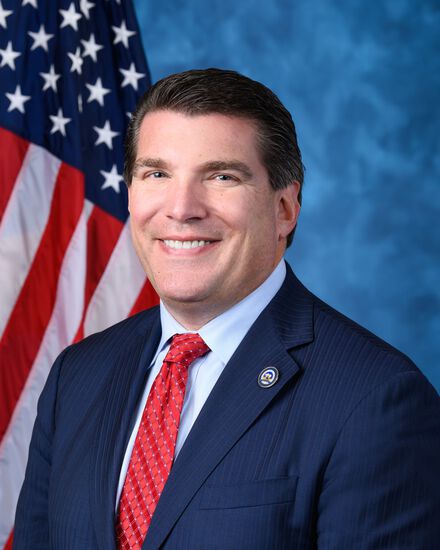
Rep. Jay Obernolte
Sponsored bills
Maddy summaryHRES 771 is a non-binding resolution expressing the U.S. House of Representatives' support for Israel following Hamas' October 7, 2023, attack. It condemns Hamas' actions, affirms Israel's right to self-defense, and calls for the immediate release of hostages. The resolution also urges enforcement of existing laws restricting aid to terrorists and sanctions against Iran for supporting Hamas. It does not create new policies or allocate funds, as it is a symbolic statement of congressional support.
Maddy summaryHRES 768 is a symbolic House Resolution expressing congressional support for Israel following Hamas' October 7, 2023 attacks. It condemns Hamas' actions, reaffirms Israel's right to self-defense, and calls for the immediate release of hostages. The resolution references the U.S. commitment to Israel's security through existing military aid programs, including the 2016 U.S.-Israel Memorandum of Understanding, and emphasizes enforcement of laws like the Taylor Force Act to prevent U.S. aid from reaching terrorist groups. As a symbolic resolution, it does not create new policy but serves as a statement of congressional support for Israel.
Maddy summaryHR 6016 creates a new DOE-NSF liaison to improve coordination between the Department of Energy and National Science Foundation on quantum research under the National Quantum Initiative Program, aiming to prevent duplication. It establishes a Manufacturing USA institute focused on scaling quantum computing, sensing, and communication technologies through end-to-end manufacturing ecosystems and workforce development. The bill also mandates two studies: one by the National Academies to assess program progress, and another to identify collaboration barriers among research centers, industry, and academia. These provisions directly affect federal agencies, quantum researchers, and manufacturers working on quantum technologies.
Maddy summaryHR 3369, the Artificial Intelligence Accountability Act, directs the Commerce Department to study accountability measures for AI systems used in communications networks and social media. The bill requires the Assistant Secretary of Commerce to analyze how these measures can address cybersecurity risks, promote digital inclusion, and close the digital divide, while consulting industry, academia, and consumers. Within 18 months, the department must submit a report to Congress with findings and recommendations for improving AI accountability. This bill does not impose new regulations but aims to inform future policy through research and stakeholder input.
Maddy summaryHRES 758 is a symbolic resolution designating the first Wednesday in October as National Energy Appreciation Day. It expresses the House's support for recognizing energy workers - across oil, gas, coal, nuclear, hydro, and renewable sectors - who power the U.S. economy and improve quality of life. The resolution cites statistics on energy's role in job creation (7.8 million U.S. jobs), poverty reduction, and national security, but does not create new laws or funding. As a non-binding resolution, it solely aims to raise awareness of the energy industry's contributions. (HRES 758, introduced October 3, 2023)
Maddy summaryThis resolution designates the week of September 25-29, 2023, as "National Clean Energy Week" to recognize the growing role of clean energy in the U.S. economy. It expresses support for clean energy jobs and innovation, noting the sector employed about 8.1 million people in 2022. The resolution encourages federal, state, and local investment in affordable clean energy technologies and promotes "commonsense solutions" for energy needs. As a symbolic gesture, it has no legal force or funding implications - it simply urges recognition of clean energy's economic and environmental contributions.
Maddy summaryHR 5641, the Pay Our Troops Act, ensures military personnel and their support staff continue receiving pay during fiscal year 2024 if Congress fails to pass regular budget appropriations. It appropriates existing Treasury funds to cover pay and allowances for active-duty troops, reserve components, and civilian employees or contractors supporting military operations. The bill automatically terminates on January 1, 2025, or earlier if Congress enacts a regular budget or continuing resolution. This provision directly affects service members, Department of Defense staff, and Coast Guard personnel (when not under the Navy) during budget implementation gaps.
Maddy summaryThis bill exempts Purple Heart medal recipients from paying standard passport application fees. It directly affects military veterans who have been awarded the Purple Heart for combat wounds. The key mechanism amends the 1920 Passport Act to add a specific fee waiver for these veterans when applying for passports. This change would reduce costs for eligible veterans seeking to travel internationally using official U.S. passports.
Maddy summaryHR 1435, the Preserving Choice in Vehicle Purchases Act, amends the Clean Air Act to restrict states from implementing vehicle emissions rules that limit the sale or use of new gasoline-powered cars. It directly affects states with stricter emissions standards (like California) by adding a new definition that blocks state rules "directly or indirectly" limiting internal combustion engine vehicles as defined in federal regulations as of January 1, 2023. The bill requires the EPA to revoke existing state emissions waivers granted between January 2022 and the bill’s enactment if they don’t comply with this new definition. This creates a concrete federal standard preventing states from advancing policies that could reduce demand for conventional vehicles.