

Maddy summaryThis bill creates a federal grant program to fund state wildfire agencies' use of advanced satellite technology for wildfire monitoring. It authorizes $20 million annually (2026-2028) for up to three competitive grants to eligible entities like state foresters or emergency managers. Grantees must use funds to purchase high-resolution satellite imaging capabilities and analyze data to monitor active fires, assess burn severity, guide prescribed burns, and support post-fire recovery. The program requires grantees to report on applications, outcomes, and recommendations for long-term implementation. The bill directly affects state wildfire management agencies through new funding for specific satellite-based monitoring tools.
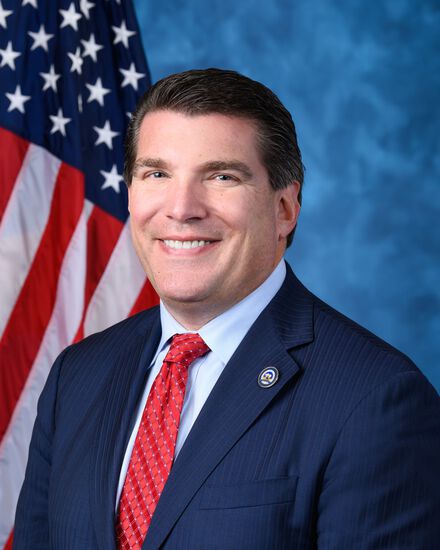
Rep. Jay Obernolte
Sponsored bills
Maddy summaryHR 477 (MACH Act) establishes a NASA program to facilitate commercial testing of hypersonic aircraft technology. It prohibits NASA from funding technology development (only enabling testing) and restricts partnerships with foreign entities or "entities of concern" per security definitions. NASA must coordinate with the Defense Department and FAA, develop a strategic plan within 60 days, and submit annual reports to Congress on testing activities. This directly affects commercial companies seeking to test hypersonic systems through NASA's framework.
Maddy summaryThis bill codifies qualified immunity standards for law enforcement officers under federal law. It specifies that individual officers cannot be held liable in civil suits if they demonstrate either that the constitutional right at issue was not clearly established at the time of the incident, or that a prior court ruling already confirmed the conduct was lawful. Local government agencies also cannot be held liable if the officer is found not liable under these standards and was acting within their job duties. The law applies to all federal, state, tribal, and local officers with arrest powers, including police officers. The changes would take effect 180 days after enactment.
Maddy summaryHR 429, the Rosie the Riveter Commemorative Coin Act, authorizes the U.S. Treasury to mint and sell three types of commemorative coins ($5 gold, $1 silver, and half-dollar) to honor women who worked on the U.S. home front during World War II. The coins will be sold at face value plus surcharges ($35 for gold, $10 for silver, $5 for half-dollar), with all surcharge revenue directed to the Rosie the Riveter Trust to support the Rosie the Riveter WWII Home Front National Historical Park and related educational programs. The coins must be issued between January 1, 2028, and December 31, 2028, in specified quantities (50,000 gold, 400,000 silver, 750,000 half-dollar), with all costs covered by the sales revenue to avoid net government expense.
Maddy summaryHR 404, the "Hearing Protection Act," reclassifies firearm silencers (devices that reduce gunfire noise) as firearms for federal tax and regulatory purposes. It imposes a 10% federal tax on silencers, requires the destruction of all existing federal silencer registration records within one year, and preempts state laws that tax or regulate silencers. The bill clarifies that silencers are treated as firearms under federal law, including for licensing and marking requirements, and defines "firearm silencer" to include specific components. Note: The bill’s title is misleading - it addresses firearm silencer regulation, not hearing protection for people.
Maddy summaryHR 378, the Thin Blue Line Act, adds a new aggravating factor for the death penalty in federal cases where a defendant kills or targets a law enforcement officer, firefighter, or other first responder. It specifically applies when the victim was killed or targeted while performing official duties, because of those duties, or due to their status as a public official. This amendment to federal death penalty law would make the death penalty a potential sentencing option for such crimes, as the killing would be considered an aggravating factor. The bill directly affects defendants convicted of homicides meeting these specific circumstances involving public safety personnel.
This joint resolution proposes a constitutional amendment prohibiting total outlays for a fiscal year from exceeding total receipts for that fiscal year unless Congress authorizes the excess by a two-thirds roll call vote of each chamber. The prohibition excludes outlays for repayment of debt principal and receipts derived from borrowing. The amendment also requires the President to submit an annual budget in which total outlays do not exceed total receipts.
Maddy summaryHRES 36 creates a new House committee, the Committee on the Elimination of Nonessential Federal Programs, to review and recommend cutting underperforming or unnecessary federal programs. The committee, composed of 14 members (including four from key committees and a bipartisan chair/vice chair), must annually report findings and propose specific legislation to eliminate targeted programs. It establishes expedited rules for such legislation, including a 10-hour debate limit and no amendments, while dissolving after the 120th Congress. This resolution directly affects House procedures and future budget decisions by streamlining program-cutting efforts.
Maddy summaryThis bill directs the Department of Homeland Security to implement the Migrant Protection Protocols (MPP) as outlined in a 2019 policy memo. It requires migrants seeking asylum at the U.S. border to remain in Mexico while their cases are processed, rather than being allowed to stay in the U.S. pending a hearing. The bill does not create new rules but mandates the reinstatement of a policy that was previously in effect from 2019 to 2021. This would directly affect asylum seekers arriving at the U.S.-Mexico border. The policy change would apply to all migrants covered by the existing MPP framework.
Preserving Safe Communities by Ending Swatting Act of 2025 This bill makes it a crime to intentionally convey false or misleading information in circumstances where the information may reasonably be expected to cause an emergency response and the information indicates the occurrence of criminal conduct or a threat to health or safety (commonly referred to as swatting ).