

Maddy summaryHJRES 78 is a joint resolution seeking congressional disapproval of a U.S. Fish and Wildlife Service rule that granted endangered species status to the San Francisco Bay-Delta population of the longfin smelt, a fish native to California's Bay-Delta region. If passed, this resolution would block the rule from taking effect, preventing the smelt from receiving federal protections under the Endangered Species Act. The rule, published in the Federal Register in July 2024, aimed to protect this specific fish population from threats like habitat loss and water management practices. This resolution does not create new policy but directly reverses an existing regulatory action affecting the smelt and its ecosystem.
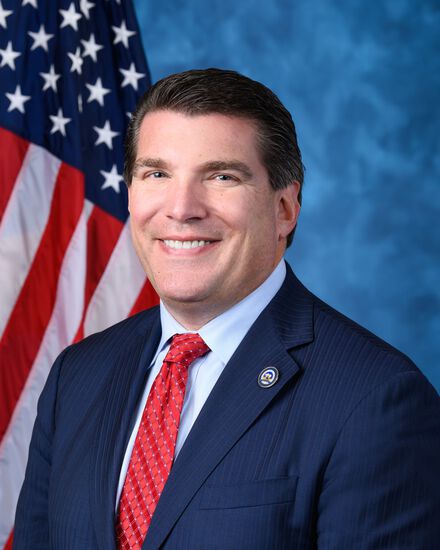
Rep. Jay Obernolte
Sponsored bills
Maddy summaryHR 3198 establishes a new intergovernmental task force to address U.S. reliance on foreign supply chains for critical minerals, which Congress identifies as a national security risk. The task force, composed of federal agency representatives, tribal and state governments, and private sector stakeholders, will assess vulnerabilities in mineral supply chains (especially dependence on China and other "covered countries"), recommend strategies for domestic production and recycling, and develop international partnerships with allies like NATO members. Key duties include evaluating how to boost environmentally responsible domestic mining and processing, identify alternative sources, and strengthen supply chain security without duplicating existing efforts. The task force must submit a final report to Congress within two years and terminates 90 days after completing its work, with no new funding authorized for its operations.
Maddy summaryThe TAKE IT DOWN Act makes it a crime to intentionally share intimate images or digital forgeries of people without their consent, with penalties of up to 2 years in prison for adults and 3 years for minors. It requires major online platforms to establish a 48-hour process for victims to request removal of such content, with platforms protected from liability when acting in good faith. The bill defines "digital forgery" as AI-generated content that appears authentic and applies to websites and apps primarily hosting user-generated content, excluding email services and broadband providers. The Federal Trade Commission will enforce these notice and takedown requirements. This legislation directly affects victims of nonconsensual intimate content, the platforms hosting such material, and individuals who distribute it.
Maddy summaryHR 2932, the CLEAR Skies Act, creates a tax credit for producing unleaded aviation gasoline in the U.S. The credit provides $1.25 per gallon in 2026, phasing down to $1.05 per gallon by 2030, for fuel that is lead-free, meets aviation standards, and is produced domestically. Producers must register with the IRS and certify compliance with these requirements to claim the credit. The bill also mandates a GAO study to analyze price differences between leaded and unleaded aviation fuel and whether the tax credit benefits end-users. This policy directly affects U.S. aviation fuel producers and aims to accelerate the transition from leaded to unleaded aviation fuel.
Maddy summaryThis bill requires the Office of Management and Budget (OMB) to annually report all federal disaster spending to Congress, covering response, recovery, and mitigation efforts across all relevant agencies. The report must detail total spending, break it down by agency and disaster type, and distinguish between loans and grants, including costs from agencies like FEMA, USDA, and the Department of Housing and Urban Development. It aims to improve budget transparency and help Congress identify cost-saving opportunities by providing a single, public source of disaster spending data. The first report is due for fiscal year 2027, with data for the prior calendar year. This is a transparency measure, not a change to how disaster aid is delivered.
Maddy summaryThe STATES 2.0 Act would allow states to regulate cannabis markets within their borders without federal interference, while establishing a low federal excise tax that doesn't compound with state taxes. It would amend the Controlled Substances Act to exempt state-legal marijuana activities from federal prosecution, remove marijuana from the federal controlled substances schedule for state-compliant activities, and allow the FDA to regulate marijuana products as food, drugs, or cosmetics. The bill would require a study on marijuana legalization's effects on traffic safety and address regulatory barriers contributing to the illicit market, which currently accounts for 75% of the marijuana market. This legislation directly affects states that have legalized cannabis, marijuana businesses, and consumers by creating a regulatory framework that supports state autonomy and reduces illegal market activity.
Maddy summaryThis bill, HR 2936 (the ABC-ED Act), aims to reduce emergency department crowding by requiring real-time tracking of hospital bed capacity and related metrics like patient wait times. It allows federal grants to modernize public health data systems that monitor emergency department boarding rates, bed availability, and ambulance offload times, with results displayed on a public dashboard (while protecting privacy). The bill also adds two new Medicare Innovation Center pilot programs: one focused on improving care for older adults (through staffing, infrastructure, and senior care coordination) and another for psychiatric crisis care (including dedicated units and faster facility transfers). Finally, it mandates a one-year study by the Government Accountability Office to evaluate best practices for these data systems and their impact on emergency department efficiency.
Maddy summaryThe DRIVE Act of 2025 requires the Department of Veterans Affairs (VA) to set mileage reimbursement rates for veterans at the federal government's current standard rate for employees using personal vehicles on official business, replacing the previous fixed rate of 41.5 cents per mile. It also mandates that the VA process and pay these reimbursements within 90 days of a veteran's valid request. This directly affects veterans who travel for VA medical appointments or services using their personal vehicles. The bill aligns veteran travel reimbursements with federal employee standards and ensures timely payments.
Maddy summaryHR 2879, the Prison Staffing Reform Act of 2025, requires the Bureau of Prisons to conduct a comprehensive external review of understaffing within 180 days of enactment. The review, to be done with input from prison unions, civil rights groups, and recidivism reduction organizations, must identify staffing impacts on inmate access to medical care, programming, safety, and staff working conditions. It mandates the Bureau to develop specific staffing guidelines (including officer-to-inmate ratios per unit and non-correctional staff needs) and a 3-year implementation plan to fill vacancies and reduce mandated overtime. The plan must address issues like medical care wait times, security risks, and staff health, with annual progress reports to Congress and the prison union. This bill directly affects over 35,000 Bureau of Prisons employees and the nearly 121,000 individuals in federal custody nationwide.
Maddy summaryHR 2831, the Small Business Energy Loan Enhancement Act, doubles the maximum loan amounts for certain small business energy projects under the Small Business Investment Act of 1958, raising the cap from $5.5 million to $10 million for two specific loan categories. This directly affects small businesses seeking financing for energy-related investments, such as efficiency upgrades or renewable energy installations. The bill requires the Small Business Administration (SBA) to annually report to Congress on which industries and geographic areas receive these loans. These changes aim to increase access to capital for qualifying energy projects without altering eligibility criteria.