

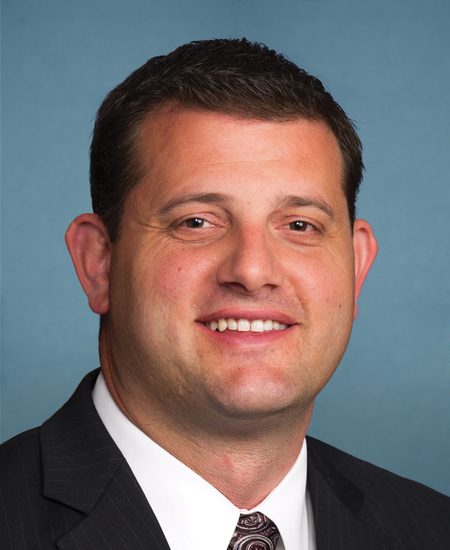
Photo of David G. Valadao
R United States House · District 22 · California On the 2026 ballot

Rep. David G. Valadao

Compare
Total votes
2,831
all sessions
Attendance
98%
53 missed
Near the chamber average
With party
90%
of cast votes
Near the chamber average
Bipartisan score
5%
crosses aisle rarely
Near the chamber average
Sponsored
1,229
bills & resolutions
Near the chamber average
Committees
8
assignments
1,229 bills and resolutions

Sponsored bills

Total
1,229
Primary
69
Co-sponsor
1,160
This page
1,229
matching current filters
Co-sponsor HRES 1219
In committee · Indiana House · Co-sponsor
Expressing support for the month of April as "Sikh History Month".

Maddy summaryThis resolution expresses support for designating April as Sikh History Month to honor the history, culture, and contributions of the Sikh community. The measure highlights key Sikh principles such as equality, honest labor, and community service, noting that April often coincides with the significant festival of Vaisakhi. By encouraging schools and public institutions to host educational events, the bill aims to increase awareness of Sikh heritage and reduce misunderstandings about the faith. Ultimately, this non-binding resolution serves as a formal recognition of the Sikh community's role in American society rather than creating new legal requirements.

In committee Apr 28, 2026 1 co-sponsor
Primary HR 3419
Passed · Indiana House · Lead sponsor
To amend the Public Health Service Act to reauthorize the telehealth network and telehealth resource centers grant programs.

Maddy summaryThis bill reauthorizes federal grant programs supporting telehealth networks and resource centers through the Public Health Service Act. It provides $42.05 million annually for fiscal years 2026 through 2030 to fund these programs. The key provision is the specific, multi-year funding amount for existing telehealth infrastructure and support services. These grants directly support healthcare providers and community organizations that expand remote medical services. The bill makes no changes to program eligibility or structure, only extending funding authorization.

Passed Apr 22, 2026 0 co-sponsors
Co-sponsor HR 8424
In committee · Indiana House · Co-sponsor
Promoting Access to Local Agriculture Act of 2026

Promoting Access to Local Agriculture Act of 2026 This bill directs the Department of Agriculture (USDA) to establish a streamlined process for farmers and ranchers to provide benefits under certain federal nutrition programs. These programs include the Supplemental Nutrition Assistance Program (SNAP); the Senior Farmers Market Nutrition Program (SFMNP); the Special Supplemental Nutrition Program for Women, Infants, and Children (WIC); and the Gus Schumacher Nutrition Incentive Program (GusNIP). Specifically, USDA must establish a streamlined application process for farmers and ranchers to apply to be vendors under the nutrition programs, including by developing a single application for the programs or an information sharing system. USDA must also develop a streamlined process for these vendors to use standardized technology to process program benefits (such as a single piece of equipment or a mobile application). Further, USDA must ensure that the program benefit processing equipment and systems made available by a state agency are appropriate for the entity. For example, this includes ensuring wireless or mobile processing equipment and technology systems are appropriate for farmers markets and other direct-to-consumer markets.

In committee Apr 21, 2026 1 co-sponsor
Co-sponsor HR 8245
In committee · Indiana House · Co-sponsor
GRACIE Act of 2026

Maddy summaryThe GRACIE Act of 2026 provides federal grants to state child welfare agencies to help them record and keep all interviews related to child abuse and neglect investigations. Under this bill, states receiving funding must create or update rules requiring electronic recording of these interviews and store the recordings securely for at least five years. The funds can only be used for costs directly tied to conducting and retaining these recordings, including audio or video capture. States must also establish access controls that limit who can view the recordings while allowing caregivers to request copies in certain legal situations. The program is authorized for six years, with up to $30 million available annually from 2026 through 2031.

In committee Apr 9, 2026 1 co-sponsor
Primary HR 7951
In committee · Indiana House · Lead sponsor
Long-Term Good Neighbor Authority Act

Maddy summaryThis bill amends existing laws to allow federal agencies to enter into long-term agreements with state governors, Indian tribes, and counties for natural resource management. The key change extends the maximum duration of these Good Neighbor Authority agreements from the current limit to up to 20 years, providing more stability for restoration and recreation projects. By updating definitions in the Agricultural Act of 2014 and the EXPLORE Act, the legislation formally includes Indian tribes alongside state and local governments as eligible partners in these collaborative efforts. The bill focuses on administrative updates to existing frameworks rather than creating new programs or funding mechanisms.

In committee Apr 3, 2026 0 co-sponsors
Co-sponsor HR 7670
In committee · Indiana House · Co-sponsor
Specialty CROP Act of 2026

Maddy summaryThis bill requires the U.S. Department of Agriculture and Trade Representative to annually submit a detailed report to Congress on the competitiveness of American specialty crop exports (like fruits, vegetables, and nuts). The report must analyze foreign trade barriers - including tariffs, quotas, and technical rules - and estimate their economic impact on U.S. exports. It also tracks U.S. actions taken to address these barriers, such as World Trade Organization disputes or trade negotiations. The report must include public input and be published in a machine-readable format. This is a procedural requirement for oversight, not a policy change affecting farmers or markets directly.

In committee Apr 3, 2026 1 co-sponsor
Co-sponsor HR 3410
Passed · Indiana House · Co-sponsor
Supersonic Aviation Modernization Act

Maddy summaryThe Supersonic Aviation Modernization Act requires the Federal Aviation Administration (FAA) to issue new regulations within one year of enactment, enabling commercial supersonic flights (faster than the speed of sound) over U.S. airspace without special permission. These regulations would only permit such flights if the aircraft is operated to prevent sonic booms from reaching the ground. The bill directly affects companies developing and operating supersonic aircraft, as well as the FAA, which must revise existing rules to accommodate this change. This policy shift removes current barriers to routine supersonic travel in U.S. airspace under specific noise-reduction conditions.

Passed Mar 25, 2026 1 co-sponsor
Co-sponsor HR 2766
In committee · Indiana House · Co-sponsor
Special District Fairness and Accessibility Act

Maddy summaryThis bill requires federal agencies to clarify how they recognize special districts (like water, fire, or school districts operating separately from cities or counties) as eligible for federal grants. It mandates the OMB Director to issue guidance within 180 days, directing agencies to adopt this standard within one year for all federal financial assistance programs. The bill ensures special districts - defined as state-created entities with budgetary autonomy for specific services - can consistently access existing federal funding they currently face barriers to. A report on agency implementation must be submitted to Congress two years after enactment.

In committee Mar 18, 2026 1 co-sponsor
Co-sponsor HR 1422
Passed · Indiana House · Co-sponsor
Enhanced Iran Sanctions Act of 2025

Enhanced Iran Sanctions Act of 2025 This bill imposes sanctions on certain foreign persons (individuals and entities) that are involved in Iran's petroleum sector as well as certain associated persons. The bill also requires or authorizes actions to facilitate the enforcement of sanctions on Iran. Specifically, the bill requires the President to impose visa- and property-blocking sanctions on any foreign person that, after the bill's enactment, knowingly engages in any transaction related to the processing, export, or sale of oil, condensates, gas, liquefied natural gas, or other petrochemical products in whole or in part from Iran. The President must also impose sanctions on certain foreign persons associated with a sanctioned individual or entity. For example, the President must sanction the subsidiaries and corporate officers of a sanctioned business. The bill provides certain exceptions to these sanctions, including specifying that sanctions do not apply to the importation of goods or to conducting or facilitating transactions for humanitarian assistance. The Department of State must establish an interagency working group that shall seek to establish a multilateral contact group to coordinate international efforts to enforce sanctions on Iran. The bill expands the State Department rewards program to authorize a reward payment to any individual who furnishes information leading to the identification of a person (1) subject to sanctions under this bill, or (2) that has attempted or is attempting to evade sanctions under this bill.

Passed Mar 17, 2026 1 co-sponsor
Co-sponsor HRES 1110
In committee · Indiana House · Co-sponsor
Expressing the disapproval of the House of Representatives regarding the slaughter of dogs and cats for human consumption and encouraging Japan to enact a nationwide ban on such practices.

Maddy summaryHRES 1110 is a non-binding House resolution expressing the U.S. House of Representatives' disapproval of the slaughter of dogs and cats for human consumption and urging Japan to enact a nationwide ban. It references the U.S. 2018 ban on this practice (under the Agriculture Improvement Act) and notes similar bans in South Korea, Taiwan, and cities like Shenzhen and Jakarta. The resolution affirms shared U.S.-Japan values on animal welfare, encourages bilateral cooperation on animal rights, and clarifies it does not interfere with protected cultural or religious practices. As a symbolic diplomatic statement, it has no legal force but aims to influence Japan’s policies on animal welfare.

In committee Mar 9, 2026 1 co-sponsor
Showing 71 to 80 of 1,229 bills
Previous 1 … 7 8 9 … 123 Next