

Maddy summaryHR 2965, the Autism Family Caregivers Act of 2023, establishes a federal pilot program to provide free or low-cost evidence-based skills training for family caregivers of children (ages 0-9) with autism spectrum disorder or other developmental delays. It authorizes $10 million annually to fund grants for eligible organizations (like nonprofits, health centers, and community groups) to teach caregivers practical strategies for communication, social engagement, daily living skills, and managing challenging behaviors. The program requires local stakeholder committees - including caregivers, healthcare providers, and community representatives - to ensure cultural relevance, and mandates annual evaluations to assess impacts on children's well-being and caregiver support.
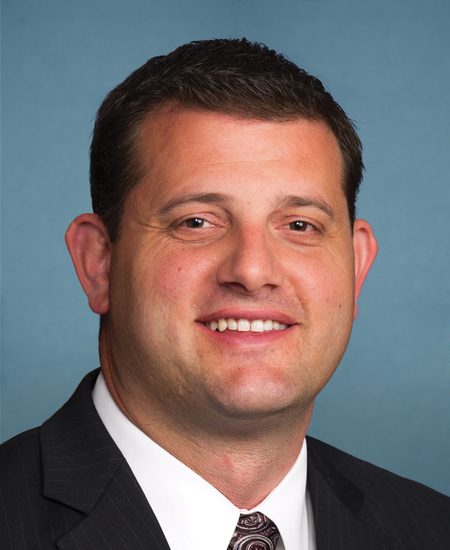
Rep. David G. Valadao
Sponsored bills
Maddy summaryHR 3039, the DRIVE Act, prohibits the Federal Motor Carrier Safety Administration (FMCSA) from requiring speed limiting devices on trucks weighing over 26,000 pounds operating in interstate commerce. This directly affects commercial trucking companies and drivers transporting goods across state lines. The bill's key provision explicitly bans the FMCSA from issuing any rule mandating such devices, which are typically set to limit vehicle speed. The law applies specifically to interstate trucking operations and does not affect state-level regulations.
Maddy summaryHRES 358 is a symbolic resolution commemorating the 50th anniversary of the National Wild Turkey Federation (NWTF). It recognizes the NWTF's 50 years of work, including conserving over 22 million acres of habitat, investing $500 million in conservation, and recruiting over 1.5 million hunters since 2012. The resolution celebrates the NWTF's role as a key partner in wildlife conservation and hunting heritage efforts. As a non-binding resolution, it does not create new laws or funding but formally honors the organization's contributions to habitat conservation and outdoor traditions.
Maddy summaryThe Postal Police Reform Act of 2023 updates federal law to explicitly include "Postal Service police officers" alongside Postal Inspectors as authorized personnel for enforcing regulations on U.S. Postal Service property. It clarifies that the Postmaster General can establish and post rules for protecting postal property, with violations punishable by fines or up to 30 days in jail. This change directly affects USPS police officers (by formalizing their role), the Postmaster General (by expanding regulatory authority), and anyone on postal property who must follow posted rules. The bill makes existing enforcement procedures more explicit without altering penalties or creating new requirements.
Maddy summaryThis bill protects living organ donors from insurance discrimination by prohibiting life, disability, and long-term care insurers from denying coverage, raising premiums, or altering policy terms solely because someone donated an organ while alive. It also updates the Family and Medical Leave Act to include recovery from organ donation surgery as a qualifying health condition, allowing donors to take protected leave for this purpose. Additionally, the bill requires the Health and Human Services Secretary to update public educational materials about living donation benefits, risks, and insurance protections within six months of enactment. These changes directly affect living organ donors, insurers, employers, and healthcare systems by ensuring fair access to insurance and workplace leave.
Maddy summaryHR 2955, the Stop Institutional Child Abuse Act, establishes a Federal Work Group to improve data collection and best practices for youth in residential programs (like therapeutic schools, treatment centers, and group homes). The Work Group, composed of federal agency representatives and diverse stakeholders, must develop national data standards, create risk assessment tools, and issue biennial reports with recommendations to enhance safety, reduce restraints, and expand community-based alternatives. It directly affects youth with mental health, substance use, or disability needs placed in these facilities, as well as agencies overseeing them. The bill also mandates a National Academies study to examine funding, oversight, and barriers to community care. These mechanisms aim to standardize data tracking and promote less restrictive, trauma-informed care for youth in residential programs.
Fleet Reserve Association 100th Anniversary Act This bill directs the Department of the Treasury to mint and issue 50,000 $5 gold coins, 400,000 $1 silver coins, and 750,000 half-dollar clad coins in recognition and celebration of the 100th anniversary of the Fleet Reserve Association. All sales of coins issued under this bill shall include a surcharge which shall be paid to the Fleet Reserve Association.
This joint resolution nullifies a Department of Labor final rule entitled Adverse Effect Wage Rate Methodology for the Temporary Employment of H-2A Nonimmigrants in Non-Range Occupations in the United States and published on February 28, 2023. This rule makes changes to the methodology used to set adverse effect wage rates for H-2A workers (temporary agricultural workers), including by using Bureau of Labor Statistics wage surveys in certain instances. (Generally, the minimum wage for an H-2A worker is the highest of the adverse effect wage rate, the applicable minimum wage, the prevailing wage for that occupation in that area, or any agreed-upon collective bargaining wage.)
Maddy summaryHRES 311 is a non-binding House resolution encouraging the expansion of the Abraham Accords to promote normalization of relations between Israel and additional countries. It urges the U.S. government to support these agreements while ensuring tangible security and economic benefits for citizens in participating nations. The resolution expresses support for U.S.-Israel security cooperation and existing financial commitments under the U.S.-Israel Memorandum of Understanding. As a symbolic measure, it does not create new legal requirements but formally advocates for deeper regional diplomatic engagement.
Maddy summaryHR 2849 creates a tax credit for U.S. manufacturers producing rare earth magnets. The credit offers $20 per kilogram for magnets made with domestically sourced materials, or $30 per kilogram if at least 90% of the rare earth components are produced in the U.S. The credit phases out over time, reducing to 70% in 2033, 35% in 2034-2035, and ending after 2035. To qualify, manufacturers must not use materials from non-allied foreign nations and must produce magnets as part of their regular business operations.