

Maddy summaryHR 4795, the Fentanyl Kills Act, reclassifies illegal fentanyl trafficking as attempted murder under federal law. If convicted of trafficking fentanyl (including manufacturing, distributing, or selling related chemicals), individuals would face the same penalties as those for attempted murder. The bill broadly defines trafficking to cover activities like producing fentanyl precursors intended for U.S. distribution. This policy change directly affects drug traffickers by imposing stricter criminal penalties for fentanyl-related offenses.
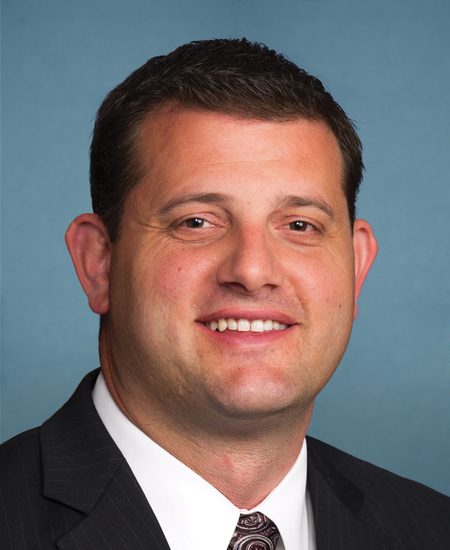
Rep. David G. Valadao
Sponsored bills
Maddy summaryThis bill modifies federal sentencing for youth under 18 who were trafficked, abused, or assaulted before committing a violent offense. It allows courts to sentence below statutory minimums and suspend portions of sentences to account for trauma, applying only to cases with clear evidence of prior victimization under specific laws (like sex trafficking). The law directs the U.S. Sentencing Commission to update guidelines to align with these changes, effective only for convictions after the bill’s enactment. It directly affects juvenile offenders with documented prior victimization, focusing on trauma-informed sentencing rather than standard penalties.
Maddy summaryHR 4708, the H-2 Improvements to Relieve Employers Act, streamlines U.S. visa processes for agricultural (H-2A) and non-agricultural (H-2B) workers. It extends the validity of employer certifications and petitions for these visas from one year to three years, reducing administrative burdens. The bill also allows interview waivers for workers renewing status within four years of their previous visa expiration. Additionally, it requires the Department of Labor to publish seasonal employment data on its website at an employer's request, enhancing transparency for seasonal hiring. These changes directly affect U.S. employers seeking temporary foreign workers and the workers themselves.
Maddy summaryHR 4709, the U.S.-Israel Anti-Killer Drone Act of 2023, amends a reporting requirement in the National Defense Authorization Act to enhance U.S.-Israel cooperation on countering Iranian drone threats. The bill requires the Secretary of Defense to submit a report within 180 days detailing the status of joint efforts to develop and deploy counter-drone technologies, including assessments of current capabilities and proposed policy changes. It also increases funding for this cooperation from $40 million to $55 million annually. The bill directly affects U.S. and Israeli military operations by mandating formal coordination to address Iran’s growing arsenal of armed drones, which have been used against U.S. allies like Israel and Saudi Arabia. This is a procedural bill focused on improving existing coordination, not on new weapons or sanctions.
Maddy summaryHR 4721, the Main Street Tax Certainty Act, makes a permanent the 20% tax deduction for eligible small business owners under Section 199A of the tax code. This provision directly affects pass-through business owners (like S-corps, partnerships, and sole proprietorships) who qualify for the deduction. The bill achieves this by removing the temporary expiration language (subsection (i)) from the existing tax code provision. The key change is ending the need for annual congressional extensions of this deduction, providing long-term tax certainty for small businesses.
Maddy summaryHR 1774, the VA Emergency Transportation Act, expands VA benefits to cover emergency transportation for veterans. It amends existing law to replace "emergency treatment" with "emergency services" throughout, explicitly including ambulance or air ambulance transport as covered services. This means veterans needing emergency transport to or from a medical facility (to receive treatment) can now have those costs reimbursed by the VA. The bill directly affects veterans who require urgent medical transport, clarifying that such transportation is part of their covered VA benefits.
Maddy summaryThis bill, HR 1282 (Major Richard Star Act), expands benefits for certain military retirees by allowing them to receive both veterans' disability compensation and military retirement pay simultaneously. It specifically affects combat-related disabled retirees under Chapter 61 of the military retirement system who have fewer than 20 years of service. The key change removes the automatic reduction of military retirement pay when these retirees also receive disability compensation, as amended in Section 1413a(b)(3) of Title 10. Technical updates to the law’s structure and effective date (starting after enactment) complete the provisions.
Maddy summaryThe American Food for American Schools Act of 2023 requires school meal programs (including lunch, breakfast, summer food, and child care programs) to prioritize purchasing domestic food products, defined as those produced, processed, or harvested in the United States. Schools may request waivers to buy foreign products for up to 5% of annual food costs per category if domestic options are unavailable in sufficient quantity or quality, and must notify parents annually about such purchases. The bill also mandates that suppliers of school food contracts comply with domestic purchasing rules, with penalties for noncompliance requiring reimbursement of federal funds used for foreign products. It increases funding for "Buy American" training programs and adds transparency requirements, including public reporting of waivers and noncompliance instances.
Child Care Investment Act of 2023 This bill increases the employer-provided child care tax credit, the amount excludable from gross income for dependent care flexible spending accounts, and makes the household and dependent care tax credit refundable. Among other provisions, the bill increases the rate of the employer-provided child care tax credit from 25% to 50% and increases the maximum credit amount from $150,000 to $500,000. It also increases (1) the pre-tax deduction for dependent care flexible spending accounts from $5,000 to $10,000, plus an additional $2,000 for each eligible dependent; and (2) the rate of the household and dependent care tax credit and makes such credit refundable.
Maddy summaryHR 4522, the Ensuring Military Recruitment Access Act, requires high schools to allow military recruiters on campus during the same hours as other recruiters. This directly affects public and private secondary schools by mandating access for military recruiters under the Elementary and Secondary Education Act. The bill also requires the Education Secretary, in consultation with the Defense Secretary, to notify school leaders annually about these access requirements and enforcement actions. The key mechanism ensures consistent recruiter access while providing schools with clear communication about the policy.