

Maddy summaryHRES 714 is a formal recognition resolution celebrating Hispanic Restaurant Week (September 22-October 3, 2023) and acknowledging the economic contributions of Hispanic restaurant owners and employees to the U.S. restaurant industry. It highlights statistics showing Hispanic individuals own a significant share of restaurants and workforce participation in the sector, but does not create new policies, funding, or regulations. This resolution is purely ceremonial, expressing congressional appreciation without any legislative impact.
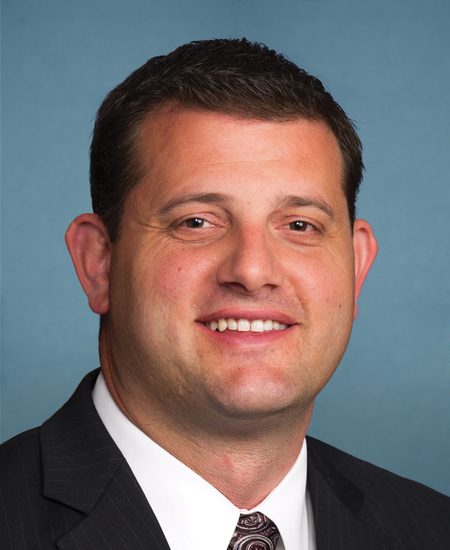
Rep. David G. Valadao
Sponsored bills
Maddy summaryHRES 684 is a symbolic congressional resolution passed by the U.S. House of Representatives on September 14, 2023, condemning New Mexico Governor Michelle Lujan Grisham's emergency order that temporarily suspended open and concealed carry firearm rights for 30 days. The resolution asserts the order violated the Second Amendment, citing Supreme Court precedents (Heller, McDonald, Bruen) and noting a federal judge had already blocked the order's firearm restrictions. It does not change any laws or impose legal consequences - it is solely a formal expression of disapproval from Congress. The resolution directly addresses the Governor's actions but has no effect on New Mexico's laws or citizens' rights.
Maddy summaryThe Earn to Learn Act establishes a federal grant program to help low-income students save for college or career training through matched savings accounts. Students must save $100 initially, then for every additional dollar they save, the program adds $8 to their account, while requiring mandatory financial education and coaching on budgeting, debt management, and savings habits. Administered by states or nonprofits using federal grants, the program directly affects low-income students admitted to eligible colleges or career schools, aiming to reduce reliance on student loans by promoting early savings and financial literacy. The initiative includes evaluation requirements to assess its impact over five years with $100 million in funding.
Maddy summaryHR 5359, the Rural Development Modernization Act, raises population thresholds for rural communities to qualify for USDA programs like broadband, water infrastructure, and housing assistance. It increases limits from 20,000 to 50,000 residents for broadband/telemedicine, from 5,000 to 50,000 for telephone loans, and adjusts water/wastewater thresholds to 30,000-50,000. The bill expands eligibility for rural communities previously excluded due to population size, while clarifying that military bases and incarcerated populations are excluded from rural designations. It also updates program rules to explicitly include U.S. territories and freely associated states like the Marshall Islands and Palau.
Maddy summaryThis bill raises the mandatory minimum prison sentence for trafficking minors under 18 from the previous term to **not less than 25 years or life imprisonment** under federal law (18 U.S.C. § 1591). It directly affects individuals convicted of trafficking children, increasing penalties for this specific offense. The key mechanism is amending the existing sentencing provision to eliminate lower minimums and mandate these severe penalties. The bill focuses solely on strengthening criminal penalties for child trafficking, with no new funding or program requirements.
Maddy summaryThe Better CARE for Animals Act of 2023 amends the Animal Welfare Act to strengthen enforcement of animal welfare standards. It gives the Attorney General authority to bring civil cases for violations, including seeking penalties up to $10,000 per day per violation and injunctions to remove or relocate animals. The bill also requires the Secretary of Agriculture and Attorney General to coordinate through a new Memorandum of Understanding, focusing on repeat violators. These changes directly affect dealers, exhibitors, and enforcement agencies by expanding civil enforcement tools and clarifying jurisdiction over rule violations.
Maddy summaryHR 5062 creates a new grant program under the Agricultural Marketing Act of 1946 to help specialty crop producers (like fruit, vegetable, and nut farmers) adopt automation and mechanization. The program awards grants to cover costs for specific equipment (such as drones, precision irrigation tools, and robotic harvesters) and required training to operate them. Recipients must provide at least 50% matching funds from non-federal sources. The grants aim to increase efficiency and reduce labor needs for targeted farm tasks, directly benefiting commercial specialty crop operations in the U.S.
Maddy summaryThis bill extends existing programs that provide payments to counties and states with federal land, primarily to support local schools and communities. It updates key deadlines, extending secure payments through 2026, special project authorities through 2029, and county fund expenditure authority through 2028. A new pilot program allows regional foresters to appoint resource advisory committee members directly, with this authority ending October 1, 2028. These changes directly affect rural counties and states managing federal lands, maintaining current funding mechanisms without altering eligibility or payment amounts.
Maddy summaryHR 5057, the Agricultural Emergency Relief Act of 2023, establishes a new program to provide financial assistance to farmers who suffer crop losses due to qualifying disasters like droughts, wildfires, or floods. It requires farmers to apply with proof of loss and calculates payments based on either their previous insurance claims or revenue from typical crop years, with income-based limits (capping payments at $125,000-$900,000 depending on farm income). A key provision mandates that recipients purchase crop insurance or enroll in the Noninsured Crop Disaster Assistance Program for the next two crop years. The bill directly affects eligible farmers (excluding joint ventures or general partnerships) who experience qualified losses, using funding authorized through fiscal year 2028.
Maddy summaryHR 4831, the Fair Pay for Federal Firefighters Act, increases pay for wildland firefighters employed by the Forest Service or Department of the Interior during fiscal years 2024-2025. It establishes special pay rates (ranging from 1.5% to 42% above standard General Schedule rates, depending on grade) that replace regular pay for these workers. The bill also creates a new "incident response premium pay" provision, entitling eligible firefighters to 450% of their hourly rate for each day deployed on qualifying wildfires or fire-related incidents, capped at $9,000 annually per employee. This premium pay is excluded from calculations for benefits like leave accruals, overtime, or retirement. The bill directly affects federal wildland firefighters whose duties focus on forest, range, or wildland fires (not structural fires).