

Maddy summaryThe Energy Parity Act requires that any reduction in capacity fees for wind and solar energy projects must be matched by an equivalent reduction in royalty rates for oil and natural gas leases. It lowers the minimum royalty rate for onshore oil and gas leases from 16.67% to 12.5% and adjusts minimum bid and rental rates (e.g., reducing the minimum bid from $10 to $2 per acre for two years). The bill also directs the Bureau of Land Management to reissue a proposed rule on renewable energy leasing within 120 days of enactment. These changes directly affect federal leaseholders for oil, gas, and renewable energy projects.
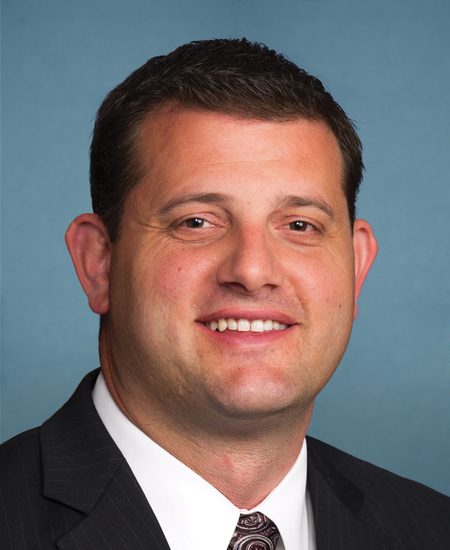
Rep. David G. Valadao
Sponsored bills
Maddy summaryHRES 977 is a symbolic resolution recognizing National Board Certified Teachers (NBCTs), with over 137,000 educators holding this credential nationwide. It supports designating National Board Certified Teacher Week, acknowledges NBCTs' role in improving student achievement (especially in high-need schools), and encourages schools and states to promote NBCT growth and provide support. The resolution highlights that NBCTs are linked to higher student learning gains, greater teacher retention, and increased earnings for students - though it does not create new policies or funding. It is a non-binding statement of appreciation, not a legislative change.
Maddy summaryThe PRESS Act protects journalists' sources and unpublished materials from government subpoenas. It requires courts to approve any request for a journalist's protected information (like source identities or notes) only if the government proves it is necessary to prevent terrorism or imminent violence threatening life or safety. Service providers (like phone companies or social media platforms) must also obtain court approval before handing over journalists' personal accounts or devices. The law explicitly excludes civil defamation cases and does not shield journalists who are suspects in criminal investigations or terrorism-related cases.
Maddy summaryHRES 882 is a non-binding resolution passed by the U.S. House of Representatives on November 21, 2023, declaring support and gratitude to food banks, food pantries, and community-based organizations addressing food insecurity. It recognizes these groups' work in serving over 5 billion meals annually, rescuing wasted food (nearly 118 billion pounds yearly), and supporting vulnerable populations including 44.2 million people in food-insecure households in 2022. The resolution specifically acknowledges their role in providing emergency aid, nutrition education, and disaster response, while highlighting that 55% of food-insecure households did not access federal nutrition programs. It does not create new policies or funding but formally commends these organizations' contributions to reducing food insecurity and improving community health.
Maddy summaryThe Death Tax Repeal Act would eliminate the federal estate tax and generation-skipping transfer tax for estates of people who die on or after the bill's enactment date, and for generation-skipping transfers made after that date. It would also establish a new $10 million lifetime gift tax exemption (adjusted annually for inflation) and replace the existing gift tax rate schedule with a revised structure. These changes would primarily affect high-net-worth individuals and their heirs, as the estate tax and gift tax typically apply to large estates or gifts exceeding the new exemption threshold. The bill's provisions would take effect on the date of enactment, with transitional rules for the year the bill is signed into law.
Maddy summaryThis bill creates a new program to provide financial assistance to struggling rural health care facilities, including hospitals, clinics, and long-term care centers in designated rural areas. Facilities may use existing USDA funds to refinance loans, upgrade telehealth technology or equipment, or cover operating costs and reserves - provided the aid preserves local health services and improves the facility's financial health. It includes a waiver allowing facilities in persistent poverty areas (20%+ poverty for 30+ years) or distressed communities to bypass standard eligibility requirements. The program applies to rural areas defined as having ≤50,000 residents not adjacent to larger cities.
Maddy summaryHR 5973, the Continuous Improvement and Accountability in Organic Standards Act (CIAO Act), requires the USDA to regularly review and update organic standards. It mandates that the Secretary publish a public request for input every 5 years (starting 180 days after enactment) on which regulations should be prioritized for revision. Based on this input and recommendations from the National Organic Standards Board, the USDA must propose specific changes, seek public comment, and finalize updates within 5 years. This process directly affects organic farmers, processors, and the USDA, ensuring organic standards evolve using the latest environmental, market, and scientific data.
Maddy summaryHCONRES 82 is a symbolic resolution recognizing and supporting the New Heights Bid Committee's effort to secure the 2027 FIFA Women's World Cup for a joint U.S.-Mexico bid. It directs Congress to encourage the President and federal agencies to assist the committee in meeting hosting requirements and to consider future legislation if the bid is successful. The resolution does not create new laws or funding but formally expresses congressional backing for the bid committee's work. It directly affects the New Heights Bid Committee by affirming congressional support for their efforts to host the tournament.
Maddy summaryThis bill increases financial support for farmers and ranchers adopting water-saving agricultural practices. It allows the USDA to pay up to 85% of costs for drought-resilient or water-conserving methods, such as reducing irrigation use or improving rainwater absorption on eligible land. It also expands eligibility for payments to include perennial production systems (like agroforestry and perennial crops) and adds requirements to enhance soil health through outreach and soil testing. Payments are capped at $200,000 over any five-year period per farm operation. The changes apply to existing USDA conservation programs under the Food Security Act of 1985.
This resolution supports the designation of National Teach Ag Day and recognizes the important role of agricultural education and the National FFA Organization in developing the next generation of agricultural leaders.