

Maddy summaryThis bill amends the Conservation Reserve Program to specifically support wetland habitat conservation on working agricultural lands within the Pacific Flyway. It allows the Secretary to enroll non-eligible farmland critical for habitat goals, permits seasonally flooded cropland uses with conservation practices, and adjusts rental payments to match regional wetland maintenance costs. The key change directly affects farmers and landowners who manage cropland used by wetland-dependent species, enabling them to maintain habitat while continuing agricultural operations. The bill waives matching payment requirements for these habitat-focused agreements, making participation more accessible under existing conservation programs.
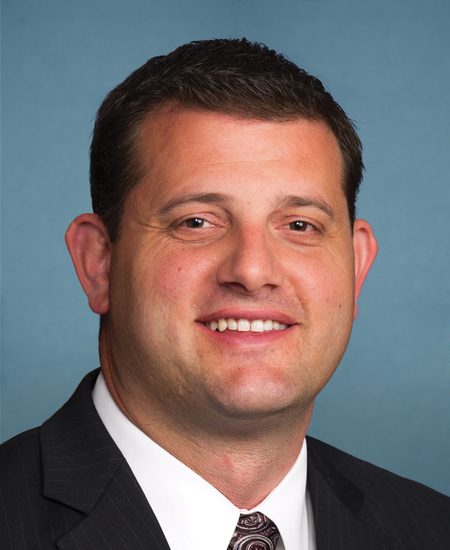
Rep. David G. Valadao
Sponsored bills
Maddy summaryThis bill modifies how disability benefits are treated for homeless disabled veterans seeking housing assistance. It excludes certain disability payments (under Chapter 11 or 15 of Title 38, U.S. Code) from income calculations when determining eligibility for HUD-assisted housing programs, including the supported housing program under Section 8(o)(19) and housing on Department property. Specifically, it ensures these benefits are not counted toward income for housing eligibility, though they still count for "adjusted income" definitions. The bill directly affects disabled veterans applying for HUD housing assistance who receive these specific disability benefits. It makes a concrete change to income calculation rules without altering benefit amounts or creating new funding.
Maddy summaryHRES 1554 is a symbolic House resolution expressing U.S. support for recognizing and commemorating the 1984 Sikh genocide in India. It calls for official remembrance of the violence that killed over 30,000 Sikhs, destroyed communities, and involved state complicity. The resolution specifically urges the U.S. government to commemorate the genocide, demand accountability for perpetrators, and reject any denial of the event. This resolution does not create new laws or affect specific groups directly; it is a formal statement of the House's position on historical recognition.
Maddy summaryThis bill increases the monthly housing stipend for veteran parents using the Post-9/11 GI Bill to pursue education entirely through distance learning. It directly affects veteran parents with dependent children who take classes online full-time (more than half-time) instead of attending campus. The key provision amends the GI Bill to provide these parents the same housing stipend amount they would receive if physically attending most classes on campus in their local area. The change applies to the first academic year starting after the bill becomes law.
Maddy summaryThe WISER Act of 2024 provides automatic discharge status upgrades and a one-time $25,000 compensation payment to eligible female veterans who were involuntarily separated from military service under Executive Order 10240 between April 1951 and February 1976. It directly affects these veterans (and their surviving spouses if the veteran died after the bill's enactment) by treating them as if they completed their assigned duty for benefits purposes and authorizing the $25,000 payment. The bill establishes automatic eligibility for veterans separated under the executive order, with additional eligibility for those who gave birth, gained custody of a child, or experienced a pregnancy loss within 10 months of separation. The Secretary of Veterans Affairs and Secretary of Defense will administer the programs, requiring applications but not further proof of eligibility for the covered groups.
Maddy summaryHRES 1537 is a non-binding House resolution condemning Hamas' October 7, 2023, attacks on Israel, which killed over 1,200 people and took 251 hostages, including 7 Americans still held captive. It calls on Hamas to immediately surrender, cease attacks, and release all hostages unconditionally, while reaffirming Israel's right to self-defense. The resolution also urges international organizations to condemn Hamas' actions and address the global surge in antisemitism following the attacks. As a symbolic statement, it does not create new laws or alter policy but expresses congressional position. The bill specifically references the ongoing captivity of seven U.S. citizens: Edan Alexander, Itay Chen, Sagui Dekel-Chen, Gadi Haggai, Judith Weinstein Haggai, Omer Neutra, and Keith Siegel.
Maddy summaryThis bill establishes a federal coordinator within the Department of Health and Human Services to advance valley fever (coccidioidomycosis) vaccine development, licensing, and manufacturing by 2034. It requires a national strategy detailing scientific progress, funding needs, and regulatory pathways, with grants of $500,000-$2.5 million for vaccine development and $500,000-$5 million for manufacturing. The bill also creates a National Valley Fever Registry to collect non-identifiable case data and improve diagnosis, funded through $26 million in authorized appropriations. It directly affects researchers, vaccine manufacturers, patients in endemic regions (like the Southwest U.S.), and public health agencies coordinating vaccine efforts.
Maddy summaryHR 9950, the "Miracle on Ice Congressional Gold Medal Act," authorizes three gold medals to be awarded to the members of the 1980 U.S. Olympic men's ice hockey team for their historic victory over the Soviet Union during the Winter Olympics. The medals, designed by the Treasury Secretary, will be presented by Congress to honor the team's achievement, which revitalized American morale during the Cold War. One medal will be displayed at the Lake Placid Olympic Center, one at the USA Hockey Hall of Fame in Eveleth, Minnesota, and one at the U.S. Olympic Museum in Colorado Springs. The bill also permits the sale of bronze duplicates to cover production costs. This is a ceremonial honor, not a policy change, directly recognizing the team members and their legacy.
Maddy summaryHR 7032, the Congressional Budget Office Data Sharing Act, amends the 1974 Congressional Budget Act to give the Congressional Budget Office (CBO) clearer authority to quickly obtain data from executive branch agencies. The bill removes barriers to CBO requests by allowing data sharing "with or without written agreement," while requiring the CBO to maintain required confidentiality levels. It also prevents future laws from limiting this authority unless specifically referenced. The law directly affects the CBO and federal agencies that provide budget-related data, aiming to improve the CBO's ability to analyze government spending.
Maddy summaryThis resolution expresses the U.S. House of Representatives' support for designating October 8, 2024, as "National Hydrogen and Fuel Cell Day." It recognizes hydrogen and fuel cell technologies for their role in clean energy, transportation (including vehicles and industrial applications), and grid reliability. The resolution has no legal effect - it is purely symbolic, acknowledging the importance of these technologies without creating new laws or funding. It was introduced by multiple representatives and refers to hydrogen's historical and potential future applications.