

Maddy summaryThis bill (HR 2199) prevents private health insurance plans from discriminating against patients with end-stage kidney disease (ESRD) who require dialysis. It amends the Social Security Act to prohibit plans from treating dialysis coverage differently than other medical services or applying network restrictions that disproportionately harm ESRD patients. The law clarifies that plans cannot deny or limit benefits for dialysis based on a patient’s diagnosis, while preserving a plan’s right to choose which dialysis providers are in their network. It directly affects ESRD patients and their private health insurance coverage, ensuring dialysis is treated equally with other covered medical services. The bill does not require plans to include specific dialysis providers but stops them from unfairly restricting access to necessary care.
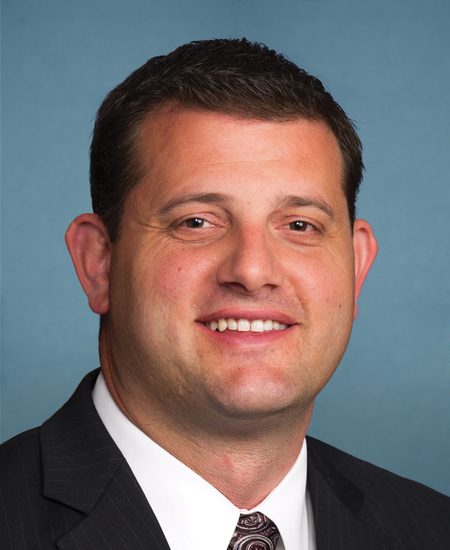
Rep. David G. Valadao
Sponsored bills
Maddy summaryHR 2228, the Survivor Benefits Fairness Act, modifies how the Department of Veterans Affairs calculates when survivor benefits stop for veterans' spouses or dependents. It changes the effective date for benefit reductions or discontinuances due to remarriage, marriage, or death from "the last day of the month before" to "the last day of the month during which" the event occurs. This means benefits will stop immediately in the month the qualifying event happens, rather than at the start of the following month. The bill directly affects veterans' spouses and dependents who receive dependency and indemnity compensation or pensions. It does not change benefit amounts or eligibility criteria, only the timing of when reductions take effect.
Maddy summaryThis bill modifies Medicare's physician self-referral rules to improve access for rural communities. It creates a new exemption for "covered rural hospitals" (defined as facilities in rural areas more than 35 miles from another hospital or critical access hospital) from certain restrictions on physicians owning hospitals. The bill also removes a prohibition on expanding existing physician-owned hospitals, allowing such expansions after the law's enactment. These changes directly affect rural hospitals seeking Medicare participation and physicians who own or operate hospitals in underserved areas.
Maddy summaryThe Air America Act of 2025 authorizes one-time payments of $40,000 to individuals who worked for Air America or its affiliated companies for at least five years during 1950-1976, or to their surviving spouses, children, or dependents. Additional payments of $8,000 per full year beyond five years are allowed. The program is capped at $60 million total funding, with claims required within two years of final regulations. Payments are a single lump sum with no ongoing benefits, and the bill explicitly states it does not create new entitlements beyond this one-time award.
Maddy summaryHR 2092, the SPEAK Act of 2025, requires the Health and Human Services Secretary to create guidance for healthcare entities within one year of enactment. This guidance focuses on improving telehealth access for people with limited English proficiency, directly affecting health IT companies, hospitals, insurers, language service providers, and interpreters. Key provisions include best practices for using interpreters during video appointments, providing multilingual patient materials (like appointment reminders and prescriptions), and making digital health portals accessible. The bill aims to standardize language access in telehealth services without changing existing laws.
Homes for Every Local Protector, Educator, and Responder Act of 2025 or the HELPER Act of 2025 This bill establishes a program administered by the Department of Housing and Urban Development to provide mortgage assistance to law enforcement officers, elementary and secondary school teachers, firefighters, or other first responders. Specifically, these individuals may be eligible for a first-time mortgage on a primary family residence with no down payment. Instead, the mortgage is subject to a one-time, up-front mortgage insurance premium.
Maddy summaryHRES 218 is a resolution recognizing and honoring teachers who have earned or maintained National Board Certification as of March 2025. It specifically honors approximately 141,464 certified teachers nationwide, acknowledges their contributions to student learning (including research showing improved outcomes for students), and encourages school districts and states to support more teachers in pursuing this certification. The resolution has no legal effect or funding provisions - it is purely a symbolic gesture of appreciation for educators meeting rigorous teaching standards.
Maddy summaryThe Credit for Caring Act of 2025 creates a federal tax credit for family caregivers of elderly or disabled relatives. It allows eligible caregivers (with over $7,500 in earned income) to claim a credit equal to 30% of qualified caregiving expenses exceeding $2,000, capped at $5,000 per year. Qualified expenses include human assistance, home modifications, respite care, counseling, lost wages for unpaid time off, and transportation, all requiring certification from a licensed healthcare provider that the care recipient has long-term needs. The credit phases out for higher earners (over $75,000 single/$150,000 joint) and requires documentation of expenses and care recipient certification.
Metastatic Breast Cancer Access to Care Act This bill expedites payment of Social Security Disability Insurance (SSDI) benefits and eligibility for Medicare coverage for those with metastatic breast cancer (i.e., breast cancer that has spread to other sites in the body). Specifically, the bill eliminates the 5-month waiting period for SSDI benefits and the subsequent 24-month waiting period for Medicare coverage for individuals with metastatic breast cancer. Under current law, individuals generally must wait 5 months after the onset of disability to begin receiving SSDI benefits and an additional 24 months to become eligible for Medicare.
Resident Education Deferred Interest Act or the REDI Act This bill allows borrowers in medical or dental internships or residency programs to defer student loan payments until the completion of their programs.