

Maddy summaryThe ACES Act (HR 530) mandates a study by the National Academies to examine cancer rates and deaths among veterans who served as aircrew members (e.g., pilots, navigators) in fixed-wing military aircraft. The study will identify potential exposure risks (like chemicals) linked to 12 specific cancers (including brain, lung, prostate, and melanoma) and use VA, DoD, and CDC data to analyze prevalence and mortality. It does not change benefits or laws but requires a final report to the VA and congressional committees. The study directly affects veterans with the defined aircrew service history.
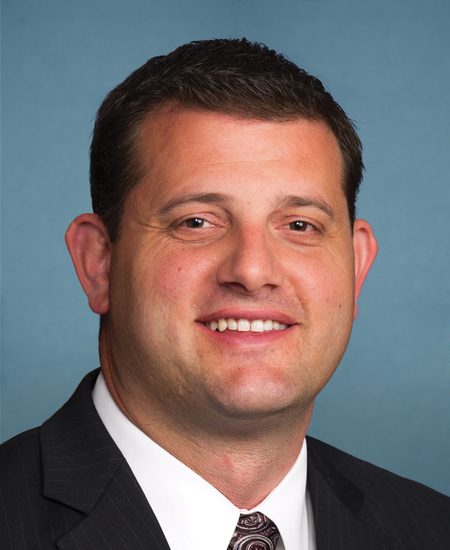
Rep. David G. Valadao
Sponsored bills
Maddy summaryHJRES 78 is a joint resolution seeking congressional disapproval of a U.S. Fish and Wildlife Service rule that granted endangered species status to the San Francisco Bay-Delta population of the longfin smelt, a fish native to California's Bay-Delta region. If passed, this resolution would block the rule from taking effect, preventing the smelt from receiving federal protections under the Endangered Species Act. The rule, published in the Federal Register in July 2024, aimed to protect this specific fish population from threats like habitat loss and water management practices. This resolution does not create new policy but directly reverses an existing regulatory action affecting the smelt and its ecosystem.
Maddy summaryHRES 373 is a symbolic resolution expressing support for designating May as "Fallen Heroes Memorial Month" to honor U.S. military service members who died in service. It urges the President to issue an annual proclamation designating May as this commemorative month, recognizing over 1.3 million fallen service members and calling on Americans to reflect on their sacrifice. The resolution does not create new laws or requirements but formally requests a presidential proclamation to honor these veterans and their families. It directly affects the President (who would issue the proclamation) and the public (who are encouraged to participate in remembrance). This is a non-binding ceremonial gesture, consistent with existing Memorial Day observances.
Maddy summaryThis bill creates a federal grant program to help cover medical costs for retired Federal working dogs (like police or military K9s). It authorizes $1 million annually (2026-2030) for eligible nonprofits with a two-year history of providing such care to dogs that have received official retirement letters and are now with their handlers. The grants allow these organizations to pay for veterinary expenses, directly supporting retired service dogs and their handlers. The program is administered through the Department of Homeland Security under existing grant authority.
Maddy summaryHRES 361 is a symbolic resolution designating April 4, 2025, as the International Day for Mine Awareness and Assistance in Mine Action. It states the U.S. House's support for global efforts to eliminate landmines and unexploded ordnance, highlighting the United States' historical funding of over $4.6 billion since 1993 for demining in 120 countries. The resolution calls on the U.S. government to continue supporting humanitarian demining activities and maintain its leadership in addressing mine contamination. It references ongoing threats in 60+ countries, including recent impacts in Ukraine, and notes the U.S. is not yet a signatory to the 1997 Mine Ban Treaty.
Maddy summaryHR 3099, the STOP Health Threats Act, provides federal grants to local governments to train building code enforcers on recognizing and responding to public health threats linked to violations of building codes in residential structures. The bill requires the Secretary of Health and Human Services to fund programs that develop training curricula, foster collaboration between local governments, and coordinate with public health departments or relevant organizations. Priority is given to communities with identified public health threats and applicants demonstrating strong capacity to deliver the training. This legislation directly affects local building code enforcement staff and the communities they serve by addressing health risks stemming from unsafe housing conditions.
Maddy summaryThis bill requires the U.S. Postal Service to assess and improve its fleet vehicle distribution, focusing on underserved areas like rural communities, regions with outdated vehicles, counties with excessive mail delivery delays, high-poverty neighborhoods, and tribal lands. It mandates a strategic plan to increase vehicle availability nationwide and modernize the fleet with fuel-efficient vehicles as soon as practicable. The Postal Service must submit annual reports to Congress detailing vehicle distribution by state, progress on underserved areas, and improvement recommendations using specific definitions for "underserved areas" established in the bill. These reports will track metrics like vehicle age in postal regions and delivery delay comparisons to national averages.
Maddy summaryThis bill amends the Visit America Act to require the Assistant Secretary of Commerce for Travel and Tourism to specifically identify and promote music tourism destinations both domestically and internationally. It directs the agency to highlight music-related attractions (like venues, studios, and museums) and events (such as festivals and concerts) in travel promotion efforts, including for international visitors. The bill also mandates annual reports to Congress on progress toward these tourism goals. It formally defines "music tourism" as travel to music-related sites or events, aligning with the bill's focus.
Maddy summaryHRES 337 is a symbolic House resolution honoring linemen for their critical role in maintaining power infrastructure and responding to emergencies. It recognizes them as first responders who work in dangerous conditions 24/7 to keep electricity flowing, supporting schools and businesses during storms. The resolution formally supports designating April 18, 2025, as "National Lineman Appreciation Day" to publicly acknowledge their contributions. As a non-binding resolution, it has no direct policy impact or effect on affected individuals.
Maddy summaryThis bill requires the Office of Management and Budget (OMB) to annually report all federal disaster spending to Congress, covering response, recovery, and mitigation efforts across all relevant agencies. The report must detail total spending, break it down by agency and disaster type, and distinguish between loans and grants, including costs from agencies like FEMA, USDA, and the Department of Housing and Urban Development. It aims to improve budget transparency and help Congress identify cost-saving opportunities by providing a single, public source of disaster spending data. The first report is due for fiscal year 2027, with data for the prior calendar year. This is a transparency measure, not a change to how disaster aid is delivered.