

Resilient Federal Forests Act This bill modifies and sets forth provisions regarding forest management activities on National Forest System, public, and tribal lands. The bill provides for, among other things the Departments of Agriculture (USDA) and Interior to conduct fireshed management projects in fireshed management areas, certain categorical exclusions for various purposes, the balancing of the short- and long-term effects of forest management activities while considering injunctive relief, USDA and Interior to establish their own discretionary arbitration pilot programs as an alternative dispute resolution process for forest management activities, increasing the maximum term for a stewardship end result contract to 20 years, demonstration projects to support the development and commercialization of biochar on Indian forest lands or rangelands and in nearby communities by providing reliable supplies of feedstock from federal lands, the decommissioning of certain Forest Service Roads within designated high fire-prone areas, repealing of the Eastside Screens requirements on National Forest System lands, making the Northwest Forest Plan Survey and Manage Mitigation Measure Standards and Guidelines inapplicable to any National Forest System lands or public lands, development of a protection plan for giant sequoia trees on National Forest System lands and public lands, and permanent rights of access to the Oregon and California Railroad grant lands and the Coos Bay Wagon Road grant lands for private landowners issued reciprocal road rights-of-way.
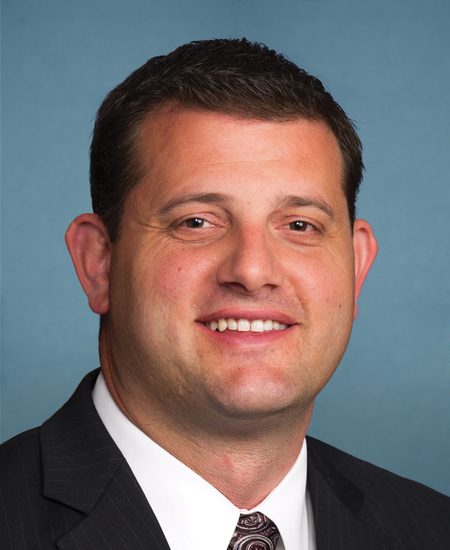
Rep. David G. Valadao
Sponsored bills
Stop Causing Alarming Tree, Air, and Soil Trauma Resulting from Obstructive Progressives' and Hypocritical Environmentalists' Schemes Act or the Stop CATASTROPHES Act This bill categorically excludes certain forest management activities from the requirement to prepare an environmental assessment or an environmental impact statement. The activities are those that are carried out by the Department of Agriculture on National Forest System Lands or the Department of the Interior on public lands where the primary purpose is to improve or restore such lands or reduce the risk of wildfire on such lands. To be excluded, the area of the forest management activity may not exceed 10,000 acres.
Protecting and Restoring Our Trees by Enhancing Conservation and Treatments Act or the PROTECT Act This bill categorically excludes forest management activities carried out on specified public lands from requirements to conduct environmental assessments and environmental impact statements. In order to be excluded from environmental review, the primary purposes of such activities must be to address insect or disease infestations, reduce hazardous fuel loads, protect municipal water sources, protect critical habitats from catastrophic disturbances, increase water yield, remove dead or dying trees or trees at high risk of dying, or facilitate native species restoration. The bill limits the categorical exclusion to activities that manage up to 10,000 acres of land. However, activities that manage up to 30,000 acres of land may be categorically excluded from environmental review if the activities are developed through a collaborative process, proposed by certain resource advisory committees, or covered by community wildfire protection plans.
This resolution honors the veterans of the Philippine Commonwealth Army during World War II for their sacrifice to the United States and for their selfless service.
The Pioneering Antimicrobial Subscriptions To End Up surging Resistance Act of 2021 or the PASTEUR Act of 2021 This bill authorizes the Department of Health and Human Services (HHS) to enter into subscription contracts for critical-need antimicrobial drugs, provides $11 billion in appropriations for activities under the bill, and contains other related provisions. A manufacturer of a Food and Drug Administration-approved antimicrobial drug may apply to HHS to have the drug designated as a critical-need antimicrobial, and HHS may enter into a subscription contract for such a critical-need antimicrobial. The bill imposes certain requirements related to such contracts, including a mechanism to lower payments under the contract in certain instances to limit the manufacturer's revenue from the drug. Furthermore, HHS and the Centers for Disease Control and Prevention (CDC) shall award grants to support efforts to encourage the appropriate use of antimicrobial drugs and efforts to combat antimicrobial resistance. The CDC shall also track and assess data relating to antibacterial resistance and human antibiotic use and make such data publicly available. HHS shall also establish a Committee on Critical Need Antimicrobials. The committee shall develop a list of prioritized infections for which new antimicrobial drug development is needed, among other duties. Within six years of the bill's enactment, the Government Accountability Office shall report to Congress a study on the bill's effectiveness in developing priority antimicrobial drugs.
Bear Protection Act of 2021 This bill prohibits the import, export, and commerce of bear viscera or related products except for limited acts carried out solely to enforce wildlife protection laws.
Onward to Opportunity Act This bill requires the Department of Defense to implement a pilot grant program at five military installations to provide enhanced support and funding to eligible entities to supplement the Transition Assistance Program (TAP) in providing job opportunities for industry-recognized certifications, job placement assistance, and related employment services to service members participating in TAP and their spouses.
Healthy Dog Importation Act This bill imposes requirements on the importation of live dogs. Specifically, the bill prohibits the importation of a live dog into the United States unless the Department of Agriculture (USDA) determines the dog (1) is in good health, (2) has received all necessary vaccinations and demonstrated negative test results as evidenced by a certificate from a licensed veterinarian, and (3) is officially identified by a permanent method approved by USDA. Additionally, dogs entering the United States for transfer must be at least six months of age and accompanied by a USDA permit. Transfer is defined as a change of ownership or control of an imported dog to another person, including by sale, adoption, exchange, or donation. USDA must provide an exception to any requirements under the bill for dogs that are transferred for (1) research purposes; (2) veterinary treatment under certain conditions, including appropriate quarantining; or (3) lawful importation into the state of Hawaii if the dog is not transported out of Hawaii for resale at less than six months of age. USDA also has enforcement authority under the bill.
School Milk Nutrition Act of 20 21 This bill revises requirements for milk provided by the National School Lunch Program of the Department of Agriculture. The bill permits schools participating in the program to offer students low-fat flavored milk.
Rural Energy for America Program (REAP) Improvement Act of 2021 This bill modifies and provides additional funding for the Rural Energy for America Program (REAP), with a particular focus on greenhouse gas reduction. Under the program, the Department of Agriculture (USDA) supports energy efficiency and renewable energy development for agricultural producers and rural small businesses. As part of the selection criteria for a grant or loan from the program, USDA must consider the potential of a project to reduce greenhouse gas emissions and provide other climate benefits. The bill also prohibits USDA from imposing restrictions on the quantity of energy that is generated under a grant or loan. Further, the bill expands the program by making agricultural producer cooperatives, electric cooperatives, and nongovernmental organizations eligible for financial assistance under the program. The bill also (1) increases from 25% to 50% the portion of a project's cost that may be covered by a grant, and (2) establishes a reserve fund to provide grants and other financial assistance related to underutilized renewable energy technologies. In addition, USDA must study dual-use energy systems (i.e., systems where both renewable energy and agricultural production occur on the same piece of land) and ensure that grant and loan recipients receive outreach, technical assistance, and education concerning such systems.