Maddy summaryThis resolution (HRES 1627) is a ceremonial measure honoring the late former President Jimmy Carter, Jr. It expresses the House's appreciation for his public service and deep sympathy to his family following his death on December 29, 2024. The resolution does not create new laws or policies; it simply directs the Clerk to transmit a copy to Carter's family. It commemorates his life, legacy, and work as a diplomat, Nobel Peace Prize winner, and advocate for human rights, without implementing any concrete policy changes.
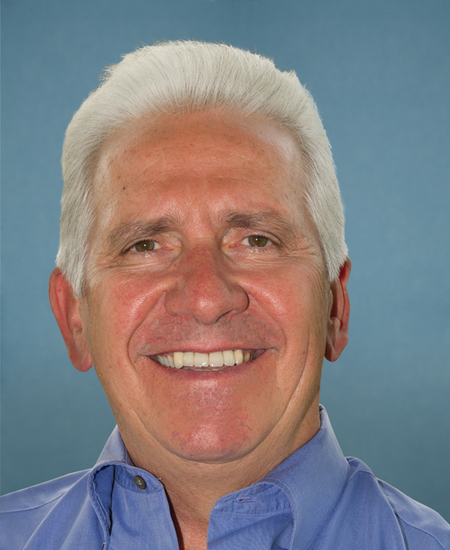
Rep. Jim Costa
Sponsored bills
Maddy summaryThe Treat and Reduce Obesity Act of 2023 expands Medicare coverage for obesity treatment by allowing a wider range of healthcare providers - including nurse practitioners, dietitians, psychologists, and community-based counseling programs - to deliver intensive behavioral therapy for obesity, provided they coordinate with primary care providers. It also adds Medicare Part D coverage for medications used to treat obesity or for weight loss management in overweight individuals with related health conditions like diabetes or high blood pressure. These changes directly affect Medicare beneficiaries, particularly older adults (65+), who face higher obesity rates and associated costs, including $50 billion annually in Medicare spending for obesity-related care. The bill requires annual reports to Congress on implementation to improve coordination of obesity care across federal health programs.
Maddy summary# Summary of National Defense Authorization Act for Fiscal Year 2025 This extensive legislation contains numerous provisions governing U.S. defense programs, with key themes including: 1. **Aircraft Inventory Requirements & Restrictions**: - Extended prohibitions on reducing E-3 aircraft inventory through 2025 - Minimum inventory requirements for A-10 (96 aircraft), C-130 (minimum 205 aircraft), and KC-135 aircraft - Prohibition on retiring F-15E aircraft until September 2027 - Requirements for recapitalizing Air National Guard fighter fleet with a plan to maintain similar capability mix as active components 2. **F-35 Aircraft Procurement Limitations**: - Strict limits on F-35 procurement (30 F-35A, 9 F-35B, 9 F-35C maximum for FY2025) - Requires certification of multiple improvement plans before accepting additional aircraft - Mandates development of digital-twin models, test beds, and mission software integration labs 3. **Artificial Intelligence Initiatives**: - Establishment of a Chief Digital Engineering Recruitment and Management Officer - Development of AI education courses for military personnel - Requirements for identifying and planning the AI workforce - New restrictions on AI models that could pose national security risks 4. **Supply Chain Resilience**: - Comprehensive measures to increase supply chain resilience for small unmanned aerial systems (sUAS) - Disassembly and analysis of foreign drone aircraft (specifically Da Jiang Innovations) - Development of a supply chain risk framework 5. **Technology Restrictions**: - Prohibition on use of foreign-made LiDAR technology from covered foreign countries (China, Iran, North Korea, Russia) - Requires certification for any exceptions to this prohibition 6. **Defense Research & Development**: - Modifications to numerous research programs - Expansion of the Laboratory Quality Enhancement Program - Requirements for a biotechnology roadmap - Modifications to quantum information science programs The legislation contains numerous detailed requirements for military readiness, equipment maintenance, and strategic planning across all branches of the military, with significant focus on modernization, technology security, and maintaining force structure requirements.

Maddy summaryThis bill, HR 1097 (Everett Alvarez, Jr. Congressional Gold Medal Act of 2023), authorizes the award of a Congressional Gold Medal to Everett Alvarez, Jr., in recognition of his service as a U.S. Navy pilot and Vietnam War prisoner of war. It directly honors Alvarez, who was the first U.S. pilot shot down in the Vietnam War, spent over 8.5 years in captivity, and later served in the Peace Corps and Veterans Administration. The bill’s key mechanism is directing the U.S. Mint to strike a gold medal bearing his name and image, with bronze duplicates available for sale to cover costs. It does not create new policies or affect any group beyond the honoree.
Maddy summaryThe Grown in America Act of 2024 creates a new tax credit for businesses that use predominantly domestically produced agricultural inputs in food manufacturing. It reduces tax liability for eligible food processors and manufacturers whose domestic input costs (expenses for U.S.-grown farm products used in food production) meet a minimum threshold, starting at 50% in 2025 and rising to 85% by 2032. The credit is capped at $100 million annually per taxpayer and requires a 3-year average of domestic input costs relative to total input costs. Cooperative businesses may elect to distribute the credit to their patrons based on business volume. The credit applies to taxable years beginning after the bill's enactment date.
Maddy summaryThe MAPWaters Act requires federal agencies managing public waters (like the National Park Service, Bureau of Land Management, and Forest Service) to create standardized, digital maps and databases about water access rules. It mandates publishing online details on seasonal closures, equipment restrictions (e.g., motorized boats), fishing zones, boat ramp locations, and navigation data within 4 years. This directly helps recreational users - such as boaters, anglers, and hikers - by making complex access rules easier to find and understand. The bill does not change existing fishing or waterway regulations but requires agencies to update data regularly and allow public feedback on the information.
Maddy summaryThis bill allows electrical utilities operating on National Forest System land to clear trees and vegetation near power lines without needing a separate timber sale, as long as the work follows existing land management plans and environmental laws. It directly affects utilities managing power infrastructure on federal forest land by streamlining vegetation management to reduce wildfire risks. Utilities must share any money earned from selling cleared vegetation (minus transportation costs) with the Forest Service, though they aren’t required to sell the material. The law focuses on improving safety through routine maintenance while ensuring revenue from vegetation removal benefits federal land management.
Maddy summaryHR 4235 creates a 4-year federal pilot program to test new wildfire prevention and response technologies. It requires federal agencies managing public lands (like the Forest Service and FEMA) to partner with private companies, nonprofits, or universities to test innovations in areas like early detection systems, communication tools, and safety equipment during real wildfire activities. The program prioritizes emerging technologies such as AI, 5G networks, and remote sensing, with agencies reporting annually on tested technologies, costs, and recommendations for wider adoption. The pilot aims to evaluate how these technologies can improve wildfire mitigation efforts across federal land management. The program expires four years after its establishment.
Maddy summaryHR 3396, the Fire Department Repayment Act of 2023, requires the Secretaries of Agriculture, Interior, Homeland Security, and Defense to establish standard procedures for federal fire suppression cost share agreements within one year. It mandates reviewing existing agreements to align them with local cooperative fire protection agreements and conducting second-level reviews after wildfires, involving state and local fire organizations. The bill directly affects fire departments and agencies participating in these cost-sharing arrangements under the Reciprocal Fire Protection Act. Key changes include standardized procedures for agreement management and post-wildfire reviews to ensure cost-sharing compliance.
Maddy summaryThe Save Our Sequoias Act establishes a coordinated approach to protect giant sequoia groves in California from wildfires, insects, and drought. It creates a Giant Sequoia Lands Coalition including federal agencies, state governments, and the Tule River Indian Tribe to assess grove health, develop protection projects, and recommend forest management activities. The bill streamlines implementation of certain projects through categorical exclusion from environmental reviews, authorizes $10-40 million annually for conservation efforts, and establishes a fund for philanthropic support of sequoia protection.