

Maddy summaryThe Headwaters Protection Act of 2025 reauthorizes and updates the Water Source Protection Program under the Healthy Forests Restoration Act. It expands eligible partners to include acequia associations, stormwater/wastewater entities, land-grant mercedes, and water-delivery private groups, while requiring landowner consent for projects on adjacent non-Federal land within the same watershed. The bill prioritizes projects addressing drought, wildfire, and climate resilience, mandates 10% of annual funding ($30 million per year from 2025-2033) for partner capacity-building, and ensures projects protect water supply systems and forest health. It explicitly states the law does not override state water rights or authorize federal land acquisition.
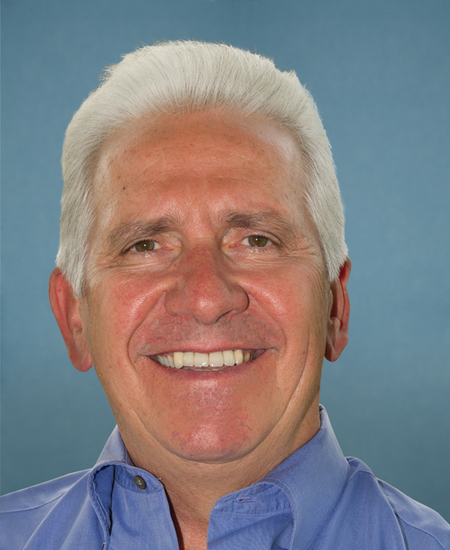
Rep. Jim Costa
Sponsored bills
Maddy summaryHCONRES 16 is a concurrent resolution scheduling a joint session of Congress in Philadelphia, Pennsylvania, on July 2, 2026. The session will commemorate the 250th anniversary (semiquincentennial) of the Declaration of Independence, which was approved in Philadelphia on July 4, 1776. This ceremonial gathering at Independence National Historical Park follows past congressional meetings held outside Washington, D.C., for historical milestones, such as the 1987 Constitution bicentennial event. The bill does not create new laws or alter policies - it solely directs the timing and location of a commemorative event.
Maddy summaryThis bill (HJRES 63) would rename the Robert E. Lee Memorial, a National Park Service site in Arlington, Virginia, to "Arlington House National Historic Site." It directly affects the National Park Service, which manages the site, and all federal government documents, maps, and records referencing the location. The key provision updates all official references to the site to the new name and repeals two prior resolutions that established the memorial. As a procedural renaming bill, it does not create new policies or funding but changes the site's official designation.
Maddy summaryHRES 171 is a non-binding resolution introduced in the U.S. House of Representatives that reaffirms the constitutional limit established by the Twenty-second Amendment, which prohibits any person from being elected president more than twice. The resolution specifically states that this amendment applies to two terms in aggregate and prohibits former President Donald Trump from seeking another presidential term. It cites multiple public statements by Trump from 2018 to 2025 where he expressed interest in serving beyond two terms or questioned the amendment's limits. The resolution serves as a symbolic statement of congressional support for the existing constitutional term limit, with no legal effect on actual eligibility. It does not create new law or alter the Twenty-second Amendment.
Maddy summaryThis resolution urges the European Union to formally designate Iran's Islamic Revolutionary Guard Corps (IRGC) as a terrorist organization under the EU's Common Position 931 framework, which allows for such designations. It cites the U.S. (2019) and Canada (2024) as precedents for designating the IRGC, noting the EU has only sanctioned individual IRGC members, not the entity itself. The resolution emphasizes the IRGC's documented ties to terrorism, human rights abuses in Iran, support for proxy groups like Hamas and Hezbollah, and its role in supplying drones to Russia for its war in Ukraine. The House requests the EU expedite this designation and encourages U.S. diplomatic efforts to prioritize it.
Maddy summaryThe Technology for Energy Security Act (HR 1752) extends a federal tax credit for investments in fuel cell technology. It changes the deadline for claiming this credit from January 1, 2025, to January 1, 2033, for projects starting construction after December 31, 2024. This directly affects businesses and individuals installing fuel cell systems by allowing them to claim the tax incentive for an additional eight years. The bill does not alter the credit amount but expands the timeframe for eligible projects.
Maddy summaryThe MEME Act prohibits federal officials - including the president, vice president, members of Congress, and their immediate family - from issuing, sponsoring, or promoting financial assets (such as cryptocurrencies, meme coins, or securities) for personal financial gain. It applies during their term of service and for 180 days before/after, targeting misuse of public office for private profit. Violations carry civil penalties up to $250,000, require disgorgement of profits, and allow private lawsuits for harm caused. The bill specifically defines "covered assets" to include digital assets like meme coins, aiming to prevent conflicts of interest and corruption through financial exploitation.
Maddy summaryHR 1707, the Grown in America Act of 2025, creates a new tax credit for agricultural businesses that use predominantly domestically produced inputs. The credit equals 25% of a business's domestic agricultural input costs (capped at $100 million annually), but only if the business meets a 3-year average threshold for domestic sourcing (starting at 50% in 2026 and rising to 85% after 2033). It directly affects food and agricultural producers who source inputs like crops or fish raised in the U.S. for products sold domestically without further processing. The bill defines "domestic agricultural input costs" as expenses for U.S.-produced commodities used in U.S.-made food products, excluding certain commodities listed by the Secretary of Agriculture.
Maddy summaryThe American Dream and Promise Act of 2025 would create pathways to permanent residency for certain immigrant youth who entered the U.S. as children (Dream Act component) and for individuals from countries with Temporary Protected Status or Deferred Enforced Departure (American Promise Act component). To qualify, applicants must meet continuous physical presence requirements (since January 1, 2021 for Dream Act applicants, and for 3+ years for American Promise applicants), pass background checks, and satisfy educational or employment criteria. Conditional permanent resident status would be granted initially, with the option to convert to full permanent residency after meeting additional requirements like earning a degree, serving in the military for two years, or demonstrating three years of earned income. The bill includes fee exemptions for low-income applicants, establishes a grant program to assist applicants with legal help, and creates specific procedures for background checks and appeals.
Maddy summaryHR 469, the Semiquincentennial Congressional Time Capsule Act, directs the Architect of the Capitol to create and bury a time capsule on the Capitol's West Lawn by July 4, 2026. The capsule will contain representative historical materials about the U.S. Semiquincentennial (250th anniversary), copies of key congressional milestones, a message from current Congress to future lawmakers, and other approved items determined by congressional leadership. It will remain sealed until July 4, 2276, when the Speaker of the House will present it to the next Congress for preservation or use. This procedural bill has no direct effect on citizens or policy, focusing solely on preserving historical materials for future Congress.