

Maddy summaryHRES 219 is a resolution recognizing four fellowship programs that support diversity in U.S. foreign affairs careers. These programs - the Charles B. Rangel Graduate Fellowship, Thomas R. Pickering Foreign Affairs Graduate Fellowship, William D. Clarke, Sr. Diplomatic Security Fellowship, and Donald M. Payne International Development Graduate Fellowship - help recruit underrepresented groups, including minority and economically disadvantaged students, for roles in diplomacy and development. The resolution emphasizes that these statutorily mandated programs strengthen national security and foreign policy by building a more diverse workforce for agencies like the State Department and USAID. It also notes these programs have historically drawn from over 500 colleges and all 50 states.
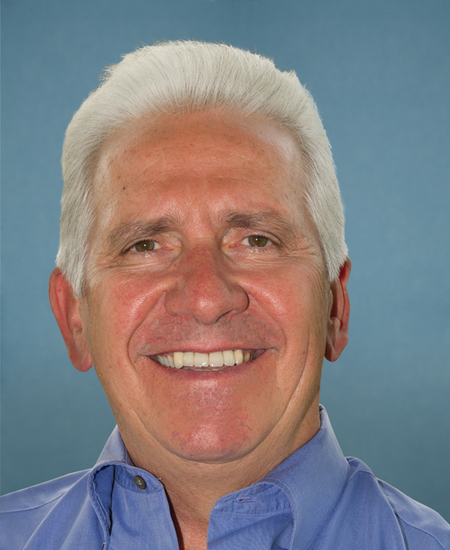
Rep. Jim Costa
Sponsored bills
Maddy summaryThe Access to Family Building Act establishes legal rights for individuals seeking fertility care and health care providers offering assisted reproductive technology (ART) services. It prohibits states or localities from imposing unreasonable restrictions on ART access - such as excessive costs, health barriers, or arbitrary limitations - that don’t advance safety or health outcomes. The bill allows patients, providers, or insurers to sue to enforce these rights, while explicitly preserving state health/safety regulations that protect patient safety. It does not override existing state insurance laws or require changes to medical facility safety standards. This bill directly affects patients pursuing fertility treatment, fertility clinics, and health insurers covering ART services.
Metastatic Breast Cancer Access to Care Act This bill expedites payment of Social Security Disability Insurance (SSDI) benefits and eligibility for Medicare coverage for those with metastatic breast cancer (i.e., breast cancer that has spread to other sites in the body). Specifically, the bill eliminates the 5-month waiting period for SSDI benefits and the subsequent 24-month waiting period for Medicare coverage for individuals with metastatic breast cancer. Under current law, individuals generally must wait 5 months after the onset of disability to begin receiving SSDI benefits and an additional 24 months to become eligible for Medicare.
Maddy summaryHR 2033, the Military Spouse Hiring Act, expands the Work Opportunity Tax Credit to include spouses of active-duty military personnel. It adds "qualified military spouse" as an eligible category for the tax credit, meaning employers who hire such spouses can claim the credit. A "qualified military spouse" is defined as someone certified by a local agency as married to an active-duty service member at the time of hire. The credit applies to hires occurring after the bill's enactment date. This directly affects military spouses seeking employment and employers hiring them, providing a tax incentive to encourage their hiring.
Maddy summaryHR 2064 establishes a federal grant program through HUD to provide up to $30,000 in assistance per household for first-time homebuyers purchasing qualifying homes. The program helps low-to-moderate income individuals (earning ≤120% of local median income, or 150% in high-cost areas) cover down payments, closing costs, or home modifications needed for occupancy. Recipients must live in the home as a primary residence for 5 years; failure to do so requires partial repayment proportional to non-occupancy. The bill authorizes $6.7 billion annually (2026-2030), reserves 3% for tribes, and excludes assistance from federal taxation.
Maddy summaryThis is a non-binding resolution (HRES 206), not a legislative bill. It expresses the House's support for preserving the "stepped-up basis" tax provision (Section 1014 of the Internal Revenue Code), which allows heirs to reset the tax cost basis of inherited assets like farmland or business equipment to their current market value. The resolution cites that 98% of farms and 19% of businesses are family-owned, noting that eliminating this provision could increase taxes for 66% of midsized farms. It specifically urges opposition to new taxes on family farms and small businesses but does not change any tax law or policy.
Maddy summaryThe Feed Our Families Act of 2025 ensures SNAP (Supplemental Nutrition Assistance Program) benefits continue for 90 days during the first government funding lapse in a fiscal year. It appropriates emergency funds from the Treasury to cover SNAP operations for the initial 90 days of a lapse in discretionary appropriations for the program. These funds are held in reserve and can only be used to maintain SNAP program services during that period. The bill directly affects millions of low-income households relying on SNAP benefits by preventing immediate disruptions during early government shutdowns.
Maddy summaryHR 1954, the "Do No Harm Act," amends the Religious Freedom Restoration Act (RFRA) to clarify that RFRA does not override specific federal laws protecting against harm. It explicitly exempts provisions related to anti-discrimination (like the Civil Rights Act), workplace protections (wages, leave, collective activity), child safety, and healthcare access from RFRA's requirements. The bill ensures RFRA cannot be used to challenge government programs or contracts that provide these essential protections. It also clarifies that RFRA applies only to disputes involving government as a party, not private disputes between individuals. This change preserves existing legal safeguards while modifying RFRA's scope.
Maddy summaryHR 1901, the CHIPP Act, makes Children's Health Insurance Program (CHIP) funding permanent for all future fiscal years, removing previous expiration dates that required annual congressional renewal. This directly affects low-income children and families who rely on CHIP coverage and the states that administer these programs. The key mechanism is amending federal law to require "such sums as are necessary" for CHIP funding starting in fiscal year 2029 and beyond. Other provisions adjust funding for related programs like pediatric quality measures and outreach, but the primary change is CHIP’s permanent funding structure.
Maddy summaryThe FISH Act of 2025 transfers responsibility for managing migratory fish species (such as salmon that spawn in freshwater and migrate to the ocean, or eels that spawn in the ocean and migrate to freshwater) from the Department of Commerce to the Department of the Interior. It amends the Endangered Species Act to update the "Secretary" reference for these species to the Secretary of the Interior and adds clear definitions for "anadromous" and "catadromous" species. The bill ensures existing permits, decisions, and legal cases involving these fish continue without interruption during the transition. It also allows for reconsideration of certain administrative decisions made by the Commerce Department within three years before the transfer, if requested within one year of the transfer.