

Delivering for Rural Seniors Act of 2025 This bill directs the Food and Nutrition Service (FNS) to award competitive grants to state agencies under a home delivery pilot program for participants in the Commodity Supplemental Food Program (CSFP). As background, the CSFP works to improve the health of low-income persons at least 60 years of age by supplementing their diets with nutritious Department of Agriculture foods. Under the pilot program, a state agency must distribute grant funds to an eligible entity (i.e., a local agency or subdistributing agency) to operate projects that facilitate home delivery of commodities to CSFP participants. Grant funds may be used for costs associated with transportation and distribution of commodities to CSFP participants, staffing required to operate home delivery services, and home delivery outreach to CSFP participants or potential participants. A state agency must prioritize eligible entities that serve CSFP participants who reside in rural areas. A state agency must also submit an annual report to FNS about the project, including best practices regarding the use of home delivery to improve the effectiveness of the CSFP.
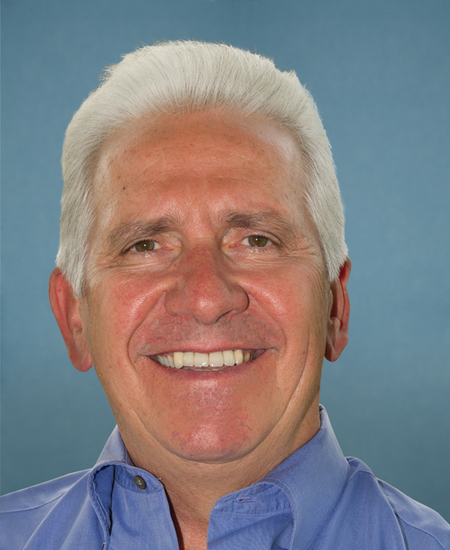
Rep. Jim Costa
Sponsored bills
Maddy summaryHR 2439 authorizes $50 million for fiscal year 2026 and $55 million for 2027 to fund the United Nations Population Fund (UNFPA), directly supporting its global programs. The bill specifies that these funds will help end preventable maternal deaths, address unmet contraceptive needs, combat gender-based violence, and end harmful practices like child marriage and female genital mutilation. UNFPA operates in over 150 countries, primarily aiding women and girls in developing nations and crisis zones, including those affected by conflict or natural disasters. The bill emphasizes UNFPA’s compliance with U.S. restrictions (not funding abortion) and its role in advancing U.S. strategic interests through voluntary family planning and reproductive health services.
Maddy summaryThis bill repeals Section 338 of the Tariff Act of 1930 (19 U.S.C. 1338), which granted the President unilateral authority to impose tariffs without Congressional approval. It directly affects the President's ability to use this specific provision for tariff actions. The key mechanism is the removal of this legal authority from U.S. trade law. The bill makes no other changes to tariff policy or procedures.
Maddy summaryHR 2457, the Mining Schools Act of 2025, establishes a competitive grant program to fund education and training programs for the U.S. mining industry. It directs the Secretary of Energy to award up to 10 annual grants to eligible "mining schools" - defined as accredited engineering programs (including Tribal Colleges) or specific geology/engineering departments at public universities in states with significant mining GDP - to recruit students and enhance curriculum. Grants must support education in critical areas like critical mineral extraction, environmental reclamation, rare earth element processing, and reducing reliance on foreign mineral supplies. The program requires geographic diversity in grant selection and mandates an advisory board (with industry and academic members) to review applications and ensure funds are used for specified educational purposes, with no new federal funds authorized.
Reclaim Trade Powers Act This bill repeals the statute that directs the President to take certain actions, such as imposing a tariff of up to 15% for up to 150 days on articles imported into the United States, when necessary to address large and serious U.S. balance-of-payments deficits or certain other situations that present fundamental international payments problems.
Maddy summaryHR 2398, the Rural Veterinary Workforce Act, amends federal tax law to exempt certain student loan repayment or forgiveness assistance from income tax for veterinarians working in rural areas. It specifically expands existing tax exclusions to include programs under the National Agricultural Research, Extension, and Teaching Policy Act (7 U.S.C. 3151a) and similar state-level programs designed to increase rural veterinary access. This change directly affects veterinarians participating in qualifying loan repayment or forgiveness programs in states prioritizing rural veterinary services. The policy change modifies IRS tax treatment to reduce the financial burden on veterinarians serving underserved rural communities.
Maddy summaryThis resolution requests the President and Secretary of State to share specific documents with the House of Representatives by April 9, 2025. It seeks all records created after January 20, 2025, related to U.S. military strikes on Yemen's Houthis and the disclosure of classified information to journalist Jeffrey Goldberg via Signal. The documents include Signal chat transcripts, strike details, legal justifications, coordination with allies, and any new security reforms following the incident. This procedural request directly affects the executive branch and aims to obtain records about sensitive national security communications.
Maddy summaryThis bill would require federal firearms licensees to prohibit sales of specific high-capacity rifles and shotguns to people under 21. It targets semiautomatic centerfire rifles and shotguns capable of holding more than 5 rounds in their magazines, raising the age limit from 18 to 21 for these weapons. Exceptions apply for active military members and certain government employees authorized to carry firearms. The law directly affects gun retailers and individuals under 21 seeking to purchase these specific firearms. It modifies existing federal gun sale rules without changing age requirements for other firearms.
Maddy summaryHCONRES 21 is a symbolic House resolution recognizing the persistent gender wage gap in the U.S., where women earn significantly less than men for comparable work. It cites specific data showing women overall earn 75 cents and women of color earn even less (e.g., 58 cents for Latinas) per dollar earned by White, non-Hispanic men. The resolution does not create new laws or policies but formally acknowledges the economic impact of this disparity, including annual lost wages exceeding $994 million for full-time women workers. It also highlights designated Equal Pay Days for different demographic groups to underscore the varying timelines to close the gap.
Maddy summaryHR 2322, the FRIDGE Act of 2025, would provide $1 million annually from 2026 to 2030 to fund technical assistance for improving cold chain infrastructure in developing countries. This aims to reduce losses of U.S. agricultural exports caused by inadequate refrigeration, transport, and storage systems, which currently result in billions of dollars in spoiled goods annually. The program would offer needs assessments, training, and support for cold storage, port upgrades, and supply chain development in target countries. It directly affects U.S. agricultural exporters who lose revenue due to spoilage and developing nations seeking to enhance their trade capabilities. The funding is specifically authorized for these infrastructure improvements under the existing Agricultural Trade Act of 1978.