

Maddy summaryHR 6361, the Ban AI Denials in Medicare Act, prohibits the U.S. Department of Health and Human Services from implementing or testing Medicare models that use artificial intelligence for prior authorization of covered services under traditional Medicare. Specifically, it blocks the existing WISeR model (described in a 2025 federal notice) and prevents future models from using AI to deny coverage for Medicare Part A or Part B services. This bill directly affects Medicare beneficiaries and healthcare providers who would otherwise face AI-driven coverage decisions. The key mechanism is an amendment to the Social Security Act, explicitly banning the use of AI in prior authorization systems within Medicare's innovation models.
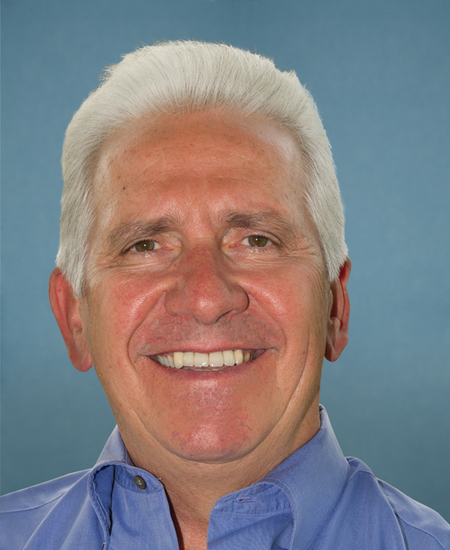
Rep. Jim Costa
Sponsored bills
Maddy summaryThis bill establishes comprehensive name, image, and likeness (NIL) rights for college athletes, prohibiting institutions from restricting athletes' ability to earn compensation for their personal branding or taking adverse action against them for doing so. It requires transparent NIL agreements for compensation over $600, including specific details about services, compensation amounts, and termination terms. The bill also amends immigration laws to better accommodate international student athletes participating in college sports and updates regulations governing sports agents. Additionally, it establishes a Commission to study college athletics governance, focusing on collective bargaining, revenue sharing, and Title IX compliance, while expanding disclosure requirements for colleges regarding athletics revenue and expenses.
Maddy summaryHR 6093, the Agricultural Cooperative Energy Savings Act of 2025, expands eligibility for certain USDA programs to include agricultural cooperatives with fewer than 2,500 employees. This change directly affects smaller agricultural cooperatives that previously did not qualify under existing rules. The bill amends Section 9007(c)(1)(A)(i) of the Farm Security and Rural Investment Act of 2002 to add these cooperatives to the list of eligible participants. The key mechanism is simply broadening the definition of qualifying entities for existing USDA program access. This is a procedural change to eligibility criteria, not a new program.
Maddy summaryThe COWS Act of 2025 creates a new program to help livestock and dairy farmers adopt manure management practices that reduce greenhouse gas emissions, such as composting, pasture-based systems, and technologies avoiding wet storage. It provides financial incentives (up to 100% of costs for planning, equipment, and implementation) with at least 50% paid upfront, prioritizing small/mid-sized operations, beginning farmers, and socially disadvantaged producers. The bill requires the Secretary to develop evaluation criteria focused on maximizing carbon sequestration, emissions reductions, and environmental benefits like improved water quality, while offering technical assistance for implementation.
Maddy summaryThe BECCS Advancement Commission Act of 2025 establishes a new federal commission within the Department of Agriculture to develop policy recommendations for bioenergy with carbon capture and storage (BECCS) systems. The commission, composed of agency officials, industry representatives (including timber and BECCS sectors), and state/federal land management stakeholders, must report to Congress within one year on key metrics like forest health, wildfire mitigation, job growth, energy costs, and economic development in forestry. It will assess how BECCS deployment affects local communities, energy reliability, and domestic supply chains, while identifying federal policy changes to support the industry. This bill directly affects federal agencies, the forestry sector, commercial timber industry, and rural counties receiving federal funds under the Secure Rural Schools Act.
Give Kids a Chance Act of 2025 This bill expands the Food and Drug Administration’s (FDA’s) authority with respect to research on rare pediatric diseases, including by permitting the FDA to take enforcement action against drug sponsors that fail to satisfy pediatric study requirements and by reauthorizing programs that support pediatric research. Specifically, the bill modifies requirements relating to molecularly targeted pediatric cancer investigations to permit research on new drugs in combination with active ingredients that have already been approved, provided certain conditions are met; permits the FDA to take enforcement action against drug sponsors that fail to comply with pediatric study requirements, if such sponsors demonstrated a lack of due diligence in satisfying the requirement; renews the FDA’s authority to award priority review vouchers to sponsors of new products intended to treat rare pediatric diseases through September 30, 2029; and reauthorizes through FY2027 certain funding for the National Institutes of Health to support priority pediatric research. The bill also provides statutory authority for the FDA’s interpretation of the orphan drug exclusivity period. The bill specifies, consistent with FDA regulations, that the seven-year market exclusivity period for drugs for rare diseases or conditions (i.e., orphan drugs) prohibits the approval of the same drug for the same approved use or indication with respect to the disease or condition. (In Catalyst Pharmaceuticals, Inc. v. Becerra , a court rejected the FDA’s interpretation and held that orphan drug exclusivity extends to all uses or indications for the disease or condition.)
Maddy summaryThe BUILD Act creates a federal grant program to support economic development in low-income communities through partnerships with qualifying colleges and universities. It provides planning grants (up to $100,000 annually for 2 years) to help institutions develop community revitalization plans, followed by implementation grants ($25-50 million over 5 years) for approved projects. Eligible projects include renovating community-accessible facilities (like housing, cultural centers, or health clinics), launching business incubators, creating local apprenticeships, and building public broadband networks. To qualify, institutions must be located in areas where median income is at least 25% below state or national averages, excluding high-research universities and military academies.
Maddy summaryThe RIDE FAST Act extends the deadline for using federal grants supporting intercity passenger rail projects from 2026 to 2032. This change directly affects states and rail operators eligible for these grants, giving them six additional years to plan and implement rail improvements. The bill amends Section 22106(a) of the Infrastructure Investment and Jobs Act to adjust the authorization period without creating new funding. It focuses solely on extending existing grant availability for rail projects.
Maddy summaryHR 5652, the Wildfire Recovery Act, increases federal reimbursement for wildfire response by setting a minimum 75% federal cost share under Section 420 of the Stafford Act, directly benefiting states, local governments, and Tribal governments that deploy firefighting resources. It requires FEMA to develop rules within three years to determine when the federal share could exceed 75% based on a state's financial impact from wildfires. The bill also updates FEMA policy to allow reimbursement for predeployment of fire assets (like crews or equipment) before a fire occurs. These changes aim to provide more predictable and timely federal support for wildfire recovery efforts.
Maddy summaryHRES 915 formally recognizes the 1932-1933 Ukrainian famine, known as the Holodomor, as a genocide perpetrated by the Soviet Union. The resolution directly affects Ukrainian victims, survivors, and communities by affirming historical truth and condemning Soviet policies that intentionally starved millions. Key provisions include declaring the Holodomor a genocide, commemorating its victims, and condemning ongoing Russian aggression against Ukraine, including Vladimir Putin’s denial of Ukrainian sovereignty. This symbolic resolution aims to educate the public and align U.S. policy with historical facts about Soviet repression.