

Processing Revival and Intrastate Meat Exemption Act or the PRIME Act This bill exempts from federal inspection requirements animals and meats that are slaughtered and prepared at custom animal slaughter facilities for distribution within the state. Under current law, a custom slaughter exemption applies if the meat is slaughtered exclusively for personal, household, guest, or employee uses. Specifically, the bill expands the federal inspection exemption to include the slaughter of animals or the preparation of carcasses, meat, and meat food products that are slaughtered and prepared at a custom slaughter facility in accordance with the laws of the state where the facility is located; and prepared exclusively for distribution to household consumers in the state or restaurants, hotels, boarding houses, grocery stores, or other establishments in the state that either prepare meals served directly to consumers or offer meat and food products for sale directly to consumers in the state. The bill does not preempt any state law concerning (1) the slaughter of animals or the preparation of carcasses, meat, and meat food products at a custom slaughter facility; or (2) the sale of meat or meat food products.
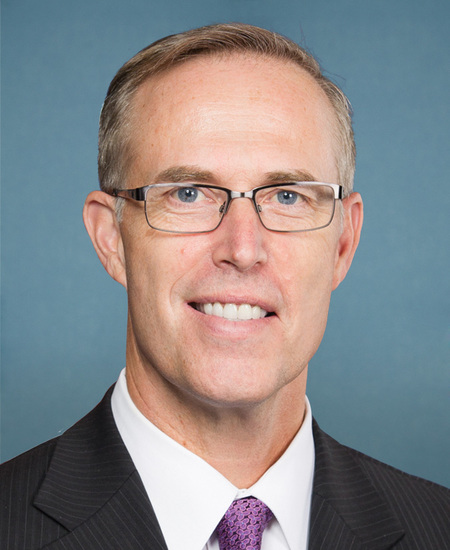
Rep. Jared Huffman
Sponsored bills
Maddy summaryThe FIGHT Act (HR 2742) amends the Animal Welfare Act to specifically target animal fighting events, such as cockfighting, by defining "rooster" as any male chicken over six months old and banning the live broadcasting (simulcasting) of such events. It prohibits using the postal service or interstate transport to move roosters for animal fighting purposes and adds civil enforcement tools allowing citizens to sue violators after a 60-day notice period. Fines up to $5,000 per violation may be imposed, and property used in animal fighting ventures can be seized. These changes strengthen enforcement against animal fighting by expanding legal remedies for the public and authorities.
Maddy summaryThis bill directs the U.S. Department of Agriculture to prioritize urban forestry assistance for communities with the lowest tree equity scores - measured by how tree canopy coverage aligns with community factors like income, race, health, and employment. It also creates a $30 million pilot program for public elementary and secondary schools to establish rooftop gardens, requiring at least 20% native plants, organic methods, and curriculum integration on urban agriculture or pollinator habitats. Schools in areas with high population density, respiratory illness rates, or low existing garden access receive priority for funding. The program mandates annual inspections of funded gardens and defines "tree equity score" using tools like American Forests' methodology.
Maddy summaryHR 3255, the Freight Rail Workforce Health and Safety Act, requires major freight railroads (Class I carriers) to provide employees with at least 7 days of paid sick leave annually. This includes leave for personal illness, family care, preventive medical visits, and situations related to domestic violence, sexual assault, or stalking. Employees can carry over unused days to the next year, and railroads cannot require workers to find replacements before taking leave or penalize them for using it. The law prohibits retaliation, such as termination or demotion, for requesting or using sick leave, and ensures paid sick leave is separate from existing vacation or holiday time.
Maddy summaryThe PAST Act of 2023 amends the Horse Protection Act to ban specific devices used to cause pain (soring) in horses at shows, particularly affecting Tennessee Walking Horses, Racking Horses, and Spotted Saddle Horses. It defines prohibited "action devices" (like boots or chains causing friction) and requires licensed, conflict-free inspectors at events to enforce rules. The bill increases penalties for violations to up to $5,000 fines or 3 years in jail, and mandates longer disqualifications for repeat offenses (180 days → 1 year → 3 years). Horse show organizers, exhibitors, and participants must comply with these new inspection and penalty requirements.
Maddy summaryHR 3235 grants a federal charter to the National American Indian Veterans, Incorporated, a nonprofit organization. This bill creates a new chapter (1504) in the U.S. Code governing the organization's structure, purposes, and restrictions. The charter allows the group to operate as a federally chartered entity with specific requirements, including maintaining tax-exempt status, prohibiting stock or dividends, and submitting annual reports to Congress. The organization will advocate for American Indian veterans' needs, promote their welfare, and provide technical assistance to tribal veterans services, without receiving federal funding or endorsement.
Maddy summaryHR 3238, the Affordable Housing Credit Improvement Act of 2023, updates the Low-Income Housing Tax Credit (LIHTC) program to increase the availability of affordable housing across the United States. The bill makes several key changes including increasing state funding formulas, modifying tenant eligibility rules to better serve vulnerable populations (such as domestic violence victims and students), and expanding credit eligibility for projects in rural and Native American communities. Specific provisions raise the credit for properties serving extremely low-income households, clarify rules around tenant income increases, and require housing providers to protect victims of domestic violence. The bill also updates terminology from "low-income" to "affordable" throughout the tax code and enhances program transparency through data sharing requirements. These changes aim to make the LIHTC program more effective at creating and preserving affordable housing units for low-income households nationwide.
Maddy summaryHR 676, the Coastal Communities Ocean Acidification Act of 2023, amends the 2009 Federal Ocean Acidification Research and Monitoring Act to improve collaboration on ocean acidification efforts. It requires the federal Advisory Board to establish ongoing input mechanisms with coastal stakeholders, fishery councils, indigenous knowledge groups, and non-Federal experts, and mandates two Indian Tribe representatives on the Board. The bill also updates definitions to specifically include "Indian Tribe" and strengthens coordination with Tribal organizations for vulnerability assessments and research planning. These changes directly affect coastal communities, fisheries, Tribal nations, and local governments managing ocean acidification impacts. The law focuses on integrating diverse stakeholder input into federal research and monitoring activities.
Maddy summaryThe Transit to Trails Act establishes a federal grant program to fund transportation projects connecting critically underserved communities - defined as areas lacking adequate park access, low-income, communities of color, or environmental justice areas - to public lands and recreational spaces. Eligible entities, including states, local governments, tribal organizations, and park districts, can apply for grants to develop transportation connectors (like bus routes) and culturally appropriate education materials, with priority for projects using low-emission vehicles and offering discounted fares for low-income riders. Grants range from $25,000 to $500,000, with federal funding covering up to 80% of costs, and recipients must report on demographics served and project outcomes. The program is funded at $40 million annually in its fifth year, aiming to improve mobility to parks and recreation in communities historically excluded from such access.
Maddy summaryHR 2757, the Puerto Rico Status Act, establishes a process for Puerto Rico to determine its political status through a plebiscite on November 2, 2025, offering three options: independence, sovereignty in free association with the United States, or statehood. If no option receives a majority in the initial vote, a runoff plebiscite would be held on March 8, 2026. The bill outlines transition processes for each option, including constitutional conventions, implementation steps, and provisions for citizenship, immigration, and economic benefits. It mandates bilingual voter education materials and requires oversight by the Elections Commission and the Attorney General to ensure fair representation of all options. This legislation directly affects Puerto Rico's residents by providing a structured process to choose their permanent political relationship with the United States.